 Listicle
What's on a Pro Drone Photography Equipment List?
Last Updated: November 4, 2026
Quick Summary
A professional drone photography equipment list is built in four layers: the aircraft, FAA Part 107 legal paperwork, the power and storage chain, and liability insurance. The aircraft is the smallest part of the budget, so plan for spare batteries, a charging hub, ND and polarizing filters, RAID storage, and coverage before you fly commercially.
- DJI Air 3S at $1,099 is the best drone for most professional photographers per Wirecutter's 2026 testing.
- FAA Part 107 certification is required before any commercial drone flight in the United States.
- Carry ND filters in 4, 8, 16, and 32 stops for 4K video at a 180-degree shutter rule.
- Budget at least 8TB of working storage plus a separate archive drive for a season of 4K work.
- Let lithium polymer batteries cool after a flight before charging to protect their lifespan.
Table of Contents
- The Core Kit: What a Professional Drone Photography Equipment List Must Include
- The Aircraft: Best Professional Drones for Real Estate Photography
- FAA Part 107 Certification Requirements Before You Fly Commercially
- Filters, Lenses, and Camera Attachments That Change Your Images
- Batteries, Charging Hubs, and Power Management on Location
- Storage, Data Redundancy, and Post-Processing Hardware
- Drone Photography Business Insurance Costs and Liability Gear
- Weather-Specific Equipment and Field Maintenance
- Book a Certified Pilot for Your Next Aerial Project
- Frequently Asked Questions
The Core Kit: What a Professional Drone Photography Equipment List Must Include
A professional drone photography equipment list starts with one truth: the aircraft is the smallest part of the budget. According to Pilot Institute's drone industry statistics, the drone market is projected to grow at a 16.77% compound annual growth rate from 2026 to 2035, reaching $209.91 billion. That growth is driven by operators who buy beyond the drone itself.
At Gods Eye Drone, we build every kit around four layers: the aircraft, the legal paperwork, the power and storage chain, and the liability coverage. Skip any layer and the shoot fails, usually at the worst moment. Below, we break down each layer with the specific gear and requirements that matter, and note where cheaper options genuinely hold up.
Quick Picks:
- Best overall aircraft: DJI Air 3S at $1,099, the best drone for most professional photographers per Wirecutter's 2026 drone testing
- Best high-end option: DJI Mavic 4 Pro, with a three-camera system and 51-minute flight time
- Non-negotiable: FAA Part 107 certification before any commercial flight
The Aircraft: Best Professional Drones for Real Estate Photography
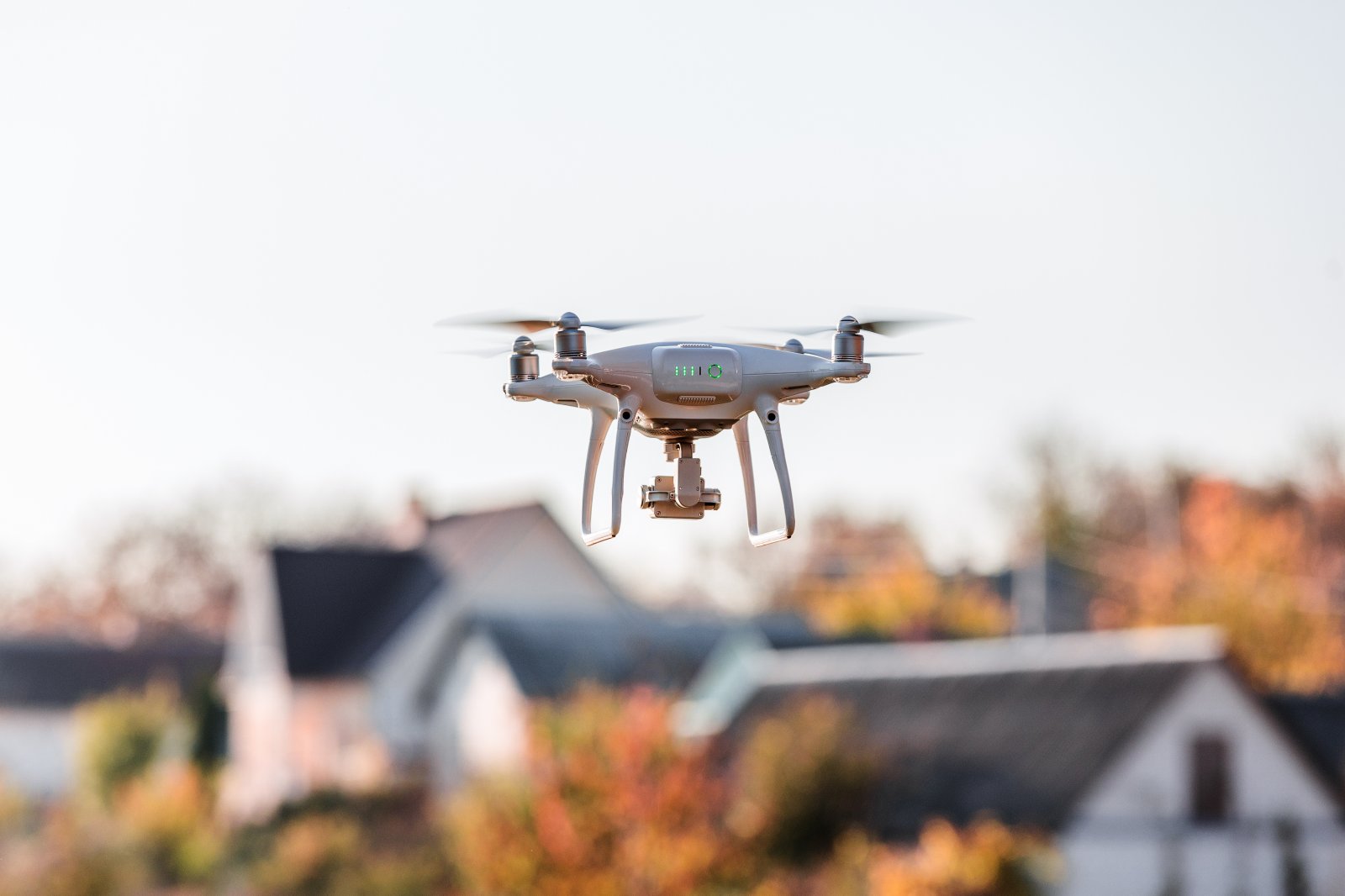
The best professional drone for real estate photography balances sensor size against portability, because listings demand fast turnaround and wide dynamic range. Drone Doctor's 2026 buyer's guide sets the professional benchmark at 14 stops of dynamic range and 20-megapixel resolution. But the aircraft is only one layer of a professional kit, and the smartest operators choose an airframe based on the deliverables they sell, not the spec sheet. Here is how the leading options compare for professional work.
| Drone | Starting Price | Sensor | Flight Time | Best For |
|---|---|---|---|---|
| DJI Air 3S | $1,099 | Dual camera, zoom | Under 45 min | Most professional work |
| DJI Mavic 4 Pro | $2,999 | 4/3-inch, three cameras | 51 min | High-end commercial |
| Autel EVO Lite+ | $1,249 | 1-inch CMOS | Under 40 min | Low-light exteriors |
| DJI Mini 4 Pro | $759 | Compact 4K | Under 35 min | Travel and quick shoots |
| Sony Airpeak S1 | $8,999 | Full-frame payload | Under 30 min | Cinema production |
A common pattern among professional operators is to carry two airframes: a primary with a 1-inch or larger sensor and a compact backup that can fly in tighter spaces. That redundancy is part of the equipment list, not an afterthought. For a deeper look at matching an aircraft to listing work, see our drone videography for real estate guide.
FAA Part 107 Certification Requirements Before You Fly Commercially
FAA Part 107 certification is required before any commercial drone flight in the United States. Check the FAA's current requirements for the certificate, testing, and renewal before you fly.
Three requirements trip up new operators:
Keep flight logs for every mission. They support insurance claims and client disputes. Our commercial drone photography licensing guide walks through the application step by step.
Filters, Lenses, and Camera Attachments That Change Your Images
ND filters and a polarizing filter are common attachments that can change aerial images, because a drone camera has no mechanical shutter to control exposure the way a ground camera does.
The rest of the camera kit:
- ND filter sets in 4, 8, 16, and 32 stops for 4K video at a 180-degree shutter rule
- Polarizing filter for reflective surfaces
- Spare gimbal guard and lens cloths because dust on a lens is invisible until post
- Sun shield for the controller screen, though JVN Photo's 2026 equipment review notes some sun shields are redundant depending on your setup
Skip specialized mounts you will not use. The research is clear that not every expensive accessory earns its place in the bag.
Batteries, Charging Hubs, and Power Management on Location
Lithium polymer batteries are the single biggest operational constraint on a shoot day. Cold weather, wind, and aggressive maneuvering all cut flight time per battery, so carry spare batteries and a charging hub.
Power management on location means:
- A portable power station rated for your charger's draw, so you can recharge between locations
- A multi-bay charging hub to cycle batteries during lunch breaks
- Battery-safe storage bags for transport and summer heat
- A voltage check routine before every flight to catch a failing cell
Watch out: charging lithium polymer batteries immediately after a flight, while they are still warm, shortens their lifespan. Let them cool first.
Storage, Data Redundancy, and Post-Processing Hardware
High-speed microSD cards and a redundant backup chain are mandatory now that 2026-era imaging systems push more data per minute. Extreme Aerial Productions' equipment guidance confirms that modern workflows require high-speed cards to handle the throughput. But the biggest gap in most equipment lists is what happens after the card leaves the drone: professional drone photography demands a post-processing hardware stack that can handle 4K and 6K footage without throttling. This is the layer most guides skip, and it is where professionals separate themselves from hobbyists.
RAID storage is the other half of the equation. A two-bay RAID enclosure in the office, mirrored, protects against drive failure without cloud latency. For a full season of 4K real estate work, budget for at least 8TB of working storage plus a separate archive drive. Our aerial photography post-production workflow guide covers the full pipeline from card offload to delivery.
Verify your backups on a second drive before you format a card, so you do not lose footage.
Drone Photography Business Insurance Costs and Liability Gear
Drone photography business insurance costs vary by coverage type, flight hours, and client requirements, so please request a quote for your project.
Liability gear beyond the policy:
- A pre-flight checklist documented for every mission
- Flight logs retained for at least the policy's claim window
- Visual line of sight spotters on complex sites
- A written weather-abort clause in every client contract
That last item answers the most common client question we hear: what happens if weather kills the shoot. Put the rescheduling terms in writing before takeoff. For budgeting benchmarks against expected revenue, our drone photography pricing guide lays out the revenue side.
Weather-Specific Equipment and Field Maintenance
Weather-specific gear is the category most equipment lists ignore, and it is where shoots are won or lost. A landing pad keeps the gimbal out of grass and dust. Propeller blades wear and should be inspected for nicks before every flight. Firmware updates close the gap on flight controller bugs.
Field maintenance essentials:
- Landing pad for clean takeoff and touchdown
- Spare propeller blades and a small tool kit
- Carbon fiber frame inspection for cracks after hard landings
- A wind meter to confirm conditions before launch
- Desiccant packs in the case for humid mornings
A pre-flight checklist that includes firmware version, propeller condition, and wind speed prevents most avoidable failures.
Book a Certified Pilot for Your Next Aerial Project
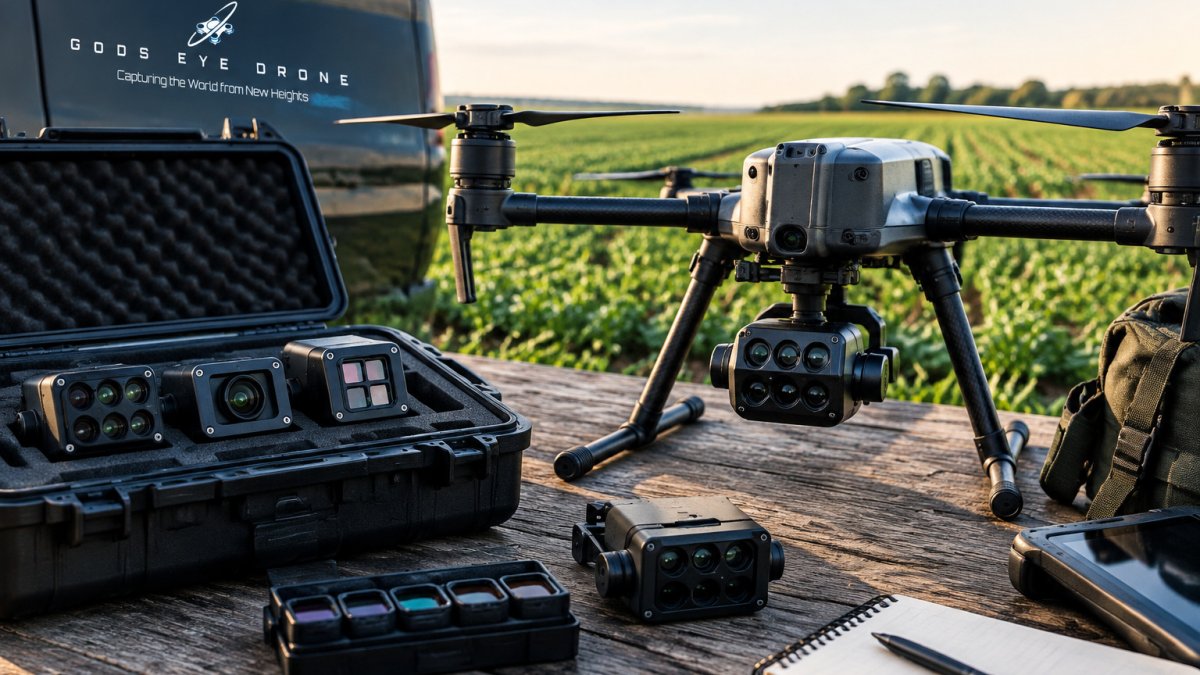
Building a compliant professional kit takes months and a five-figure budget. Hiring a certified team takes one call. Gods Eye Drone is a veteran-owned, full-service drone company with certified pilots and FLIR equipment for thermal and inspection work. We handle real estate, agriculture, weddings, and search and rescue missions.
If you would rather book than build, book a certified pilot online and tell us the site, the deliverable, and the deadline. We will confirm the aircraft, the compliance path, and the weather window before we fly.
Frequently Asked Questions
What drone do professional photographers use for commercial work?
The right drone depends on your deliverable, not the spec sheet. Higher-end cinematic work often calls for larger-sensor airframes.
What essential accessories are required for a professional drone photography business?
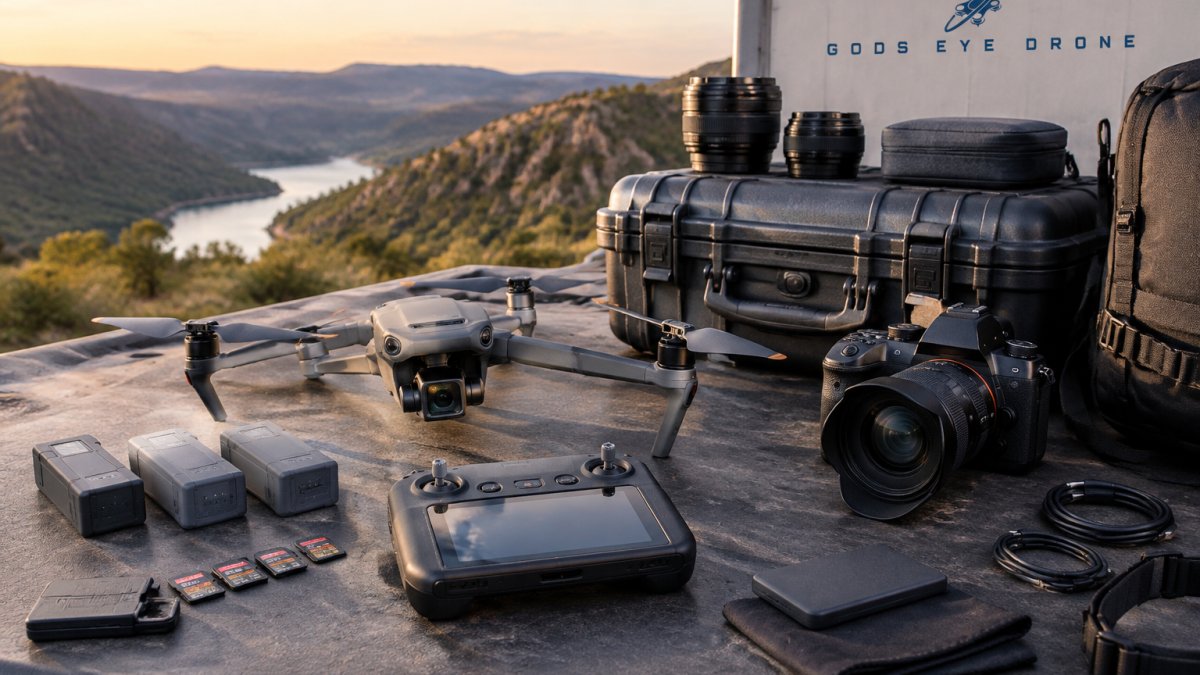
Beyond the aircraft, a drone photography equipment list needs ND and polarizing filters, at least three lithium polymer batteries, a charging hub, a power station, high-speed microSD cards, a rugged carrying case, a landing pad, and a sun shield. Add a backup controller cable and spare propeller blades. Professional workflows also require data redundancy: cards get copied to a portable SSD on site before the originals are formatted.
How do FAA regulations impact the choice of professional drone equipment?
FAA Part 107 certification requirements apply to commercial flights, so check the FAA's current requirements before you fly. Match the aircraft to the missions you actually fly.
How much should a professional budget for a complete drone photography kit?
Budget separately for filters, spare batteries, storage, a case, and post-processing hardware. Drone photography business insurance costs vary by coverage limit, payload value, and mission type, so request a quote. Visit our website for current pricing or a quote on a full-service engagement.
What are the best thermal and inspection cameras for professional drone services?
Thermal payloads matter most for search and rescue, infrastructure inspection, and agricultural monitoring. Gods Eye Drone operates advanced FLIR equipment on certified aircraft, which covers missions where a standard RGB camera cannot see the problem. For mapping and crop work, multispectral sensors paired with high-precision GPS positioning are the standard. If you are buying rather than hiring, confirm the payload is integrated with the flight controller so the thermal and visual feeds stay aligned during automated flight paths.
The equipment list above is only as good as the pilot flying it. If you want aerial environmental intelligence without managing batteries, waivers, and backup drives yourself, get started with Gods Eye Drone and put a certified crew on your next project.