 how-to
Commercial Drone Photography Licensing: A Step-by-Step Guide
Table of Contents
- Commercial Drone Photography Licensing Requirements Overview
- Understanding FAA Part 107 Certification
- Eligibility and Prerequisites for Remote Pilot Certification
- Drone Registration Requirements and FAA Compliance
- Step-by-Step Application Process Through IACRA
- FAA Airspace Authorization for Drones and Operating Rules
- Part 107 Recurrent Training and Certificate Renewal
- Photography-Specific Compliance and Post-Certification Obligations
- Frequently Asked Questions
Last Updated: October 10, 2026
Commercial Drone Photography Licensing Requirements Overview
Commercial drone photography licensing is mandatory for anyone earning money from aerial imagery. The Federal Aviation Administration requires operators to obtain a Remote Pilot Certificate under Part 107 regulations.
The licensing requirement applies to any drone operation where you receive compensation, real estate photography, agricultural surveys, construction inspections, event videography, and search and rescue support. Without proper certification, you face fines up to $27,500 and potential criminal charges.
The path to certification involves several steps: meeting eligibility requirements, registering your unmanned aircraft system, applying through IACRA, passing a knowledge test, and understanding airspace rules. The entire process typically takes 4-6 weeks from application to certificate in hand.
Understanding FAA Part 107 Certification
What Part 107 Covers
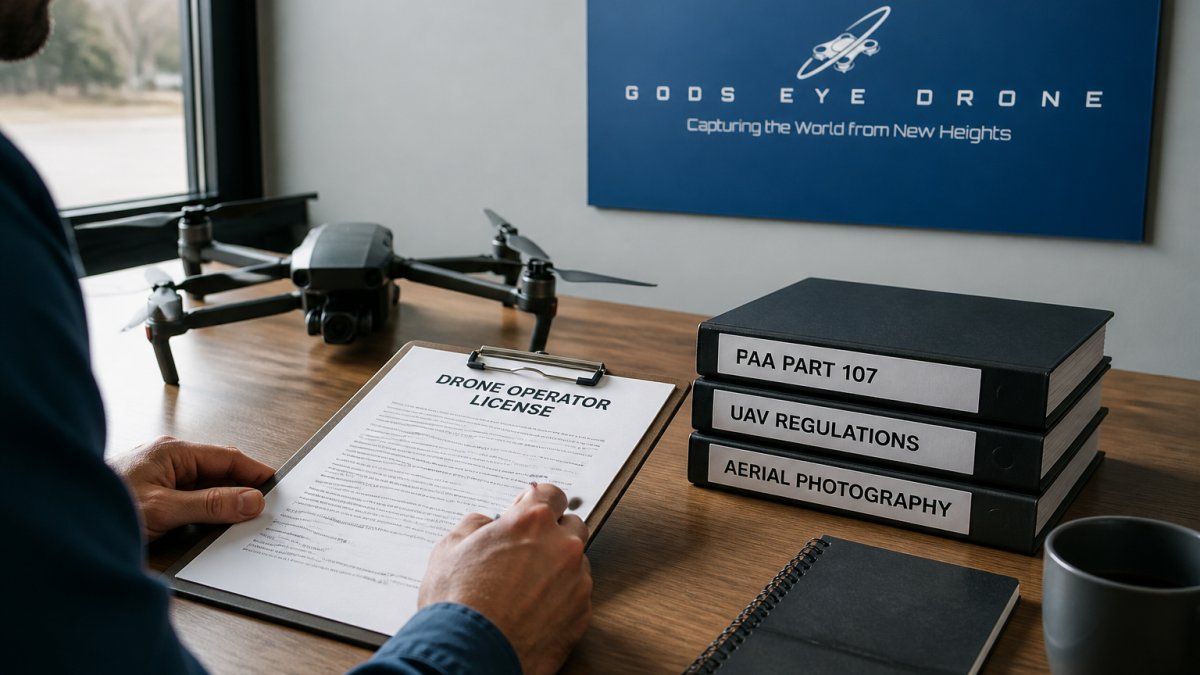
FAA Part 107 is the federal regulation governing small unmanned aircraft operations for commercial purposes. Part 107 certification proves you understand these regulations and can operate safely.
The certification covers aircraft weighing 55 pounds or less and establishes rules for altitude limits, airspace restrictions, visual line of sight requirements, and weather minimums.
Your Remote Pilot Certificate demonstrates competency in these areas:
- Aeronautical knowledge and regulations
- Weather interpretation
- Airspace classification and authorization
- Flight safety and emergency procedures
- Aircraft limitations and performance
Commercial vs. Recreational Drone Use
Recreational drone use does not require FAA licensing. However, the moment you accept payment for drone work, you must comply with Part 107.
Commercial operations require a Remote Pilot Certificate, aircraft registration, airspace authorization, and compliance with operating limitations. Recreational flying requires none of these.
Many photographers start recreationally, then transition to commercial work. That transition requires obtaining your Part 107 certificate before accepting any payment.
Eligibility and Prerequisites for Remote Pilot Certification
You must be at least 16 years old, a U.S. citizen or permanent resident, possess a valid government-issued photo ID, and demonstrate English language proficiency.
You cannot have medical conditions that impair safe aircraft operation, and the FAA conducts a background check.
Most people meet eligibility requirements. The main barrier is passing the knowledge test, which covers regulations, weather, airspace, and safety procedures.
Drone Registration Requirements and FAA Compliance
Every commercial drone must be registered with the FAA for $5 (valid three years). You can register multiple aircraft under one certificate.
Register online through the FAA portal with aircraft manufacturer, model, and serial number. Display the registration number on the aircraft fuselage.
Step-by-Step Application Process Through IACRA
Creating Your IACRA Account
IACRA (Integrated Airman Certification and Rating Application) is the FAA's online system for pilot certification applications.
Visit the IACRA website, select "Create an Account," and provide your basic information. The system generates a unique account number.
Submitting Your Application
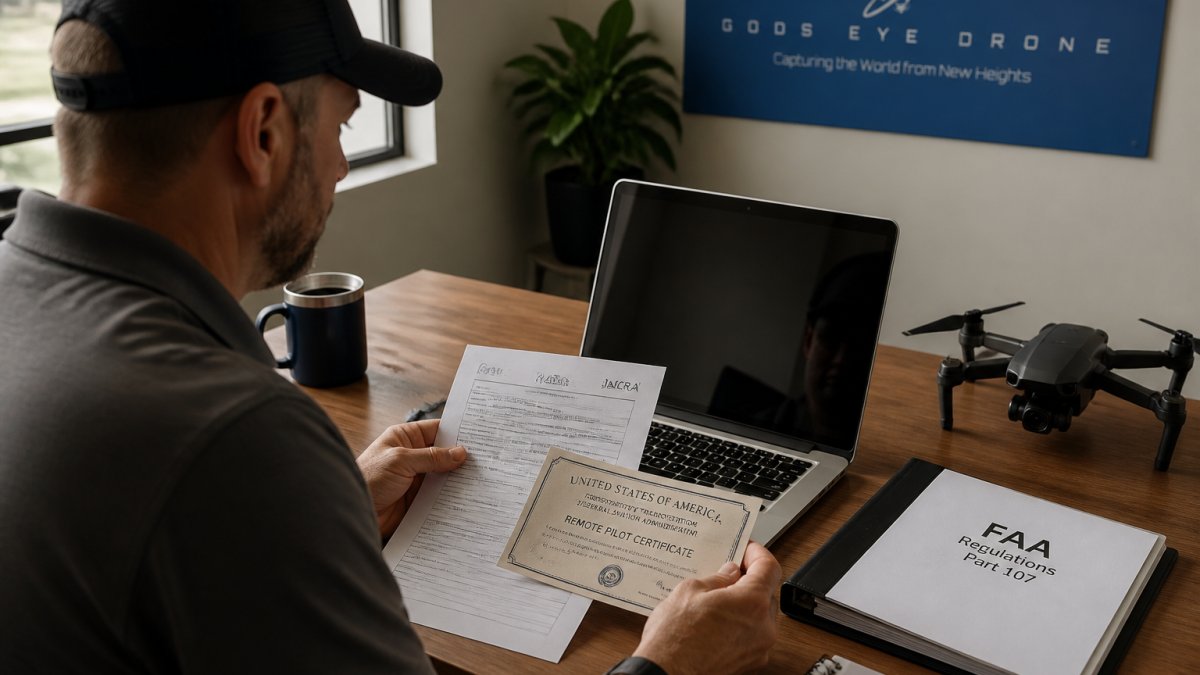
Complete your Remote Pilot Certificate application within IACRA with accurate information about your background, medical history, and aviation experience. False statements on FAA applications are federal crimes.
The FAA reviews your application in 3-5 business days and notifies you when approved for testing.
Scheduling and Taking the Knowledge Test
Schedule your knowledge test at an FAA-approved testing center. The 60-question test covers regulations, weather, airspace, and safety. Passing requires 70 percent or higher. Most candidates study 20-40 hours using the FAA's Remote Pilot Study Guide, practice tests, and online courses.
After passing, you receive a temporary certificate valid for 60 days. The FAA mails your permanent Remote Pilot Certificate within 2-3 weeks.
FAA Airspace Authorization for Drones and Operating Rules
Controlled vs. Uncontrolled Airspace
Controlled airspace exists around airports and requires authorization before flying. Uncontrolled airspace has no such requirement. Understanding airspace classification determines whether you need permission before each flight.
Controlled airspace includes Class B, C, D, and E designations. Class B surrounds major airports like Kansas City International. Class C and D protect smaller airports. Class E extends from 1,200 feet above ground level upward.
Uncontrolled airspace (Class G) allows flight without authorization. However, you must still follow altitude limits and other Part 107 rules.
Getting Airspace Clearance
Flying in controlled airspace requires authorization from air traffic control. You request clearance through the LAANC (Low Altitude Authorization and Notification Capability) system. LAANC provides real-time airspace authorization for most controlled airspace.
The process is automated and often instantaneous. You enter your flight location, altitude, and duration. LAANC either approves your request or denies it based on traffic and safety factors.
Alternative authorization methods include:
- LAANC system (fastest option)
- Phone call to local air traffic control tower
- FAA Form 7711-1 for recurring operations
- Special waivers for complex operations
Most commercial operations use LAANC for efficiency. Authorization typically takes seconds to minutes.
Part 107 Recurrent Training and Certificate Renewal
Your Remote Pilot Certificate remains valid for 24 months. Before expiration, you must complete recurrent training to renew it. The FAA requires this training to ensure pilots stay current on regulations and safety practices.
Recurrent training can be completed online or in person. The training covers updates to regulations, new procedures, and safety topics. Most pilots complete it in 1-2 hours.
You can renew your certificate up to 6 months before expiration. Submit your renewal application through IACRA with proof of recurrent training completion. The FAA processes renewals within 2-3 weeks.
Renewal requirements include:
- Current recurrent training certificate
- Completed IACRA renewal application
- Updated medical certification if needed
- Renewal fee ($175)
Failure to renew before expiration invalidates your certificate. Operating without a valid certificate is illegal, regardless of your experience level.
Ongoing Post-Certification Compliance Obligations
Certification is not a one-time achievement. The FAA imposes continuous operating requirements that photographers must follow on every flight, not just at renewal.
Remote ID Compliance
As of September 16, 2023, all commercial drones must broadcast Remote ID information in real time. Remote ID allows the FAA and law enforcement to identify your aircraft and locate the pilot remotely. You have two options:
- Built-in Remote ID: Newer drones (DJI Air 3S, Auterion, Freefly systems) include Remote ID hardware and transmit automatically.
- Remote ID Module: Older drones require an external Remote ID broadcast module that plugs into the aircraft and transmits via Wi-Fi or cellular.
If your drone cannot broadcast Remote ID, you cannot legally operate it commercially. Verify your aircraft's Remote ID capability before every commercial flight.
Operating Limits and Recordkeeping
Part 107 imposes strict operating limits that apply to every flight:
- Altitude: Maximum 400 feet above ground level (AGL) unless you have a waiver.
- Speed: Maximum 100 miles per hour.
- Visual Line of Sight (VLOS): You must maintain unaided visual contact with the aircraft at all times. Spotters do not extend VLOS range.
- Daylight Operations: Flight only during civil twilight (30 minutes before sunrise to 30 minutes after sunset) unless you have a waiver and night-vision equipment.
- Weather Minimums: Visibility of at least 3 statute miles; cloud clearance of 500 feet below, 1,000 feet above, and 2,000 feet horizontally.
- No Flights Over People: You cannot fly over people not directly involved in the operation unless they are under a covered structure or inside a vehicle.
- No Flights Over Moving Vehicles: Prohibited except on a closed set with safety protocols.
These limits apply to every commercial shoot, real estate, construction, agriculture, or events.
Maintain a flight log for every commercial operation. Document:
- Date, time, and location of flight
- Aircraft make, model, and registration number
- Purpose of the operation
- Weather conditions at flight time
- Any incidents or safety issues
- Names of crew members and spotters
The FAA can request flight logs during inspections or investigations. Incomplete or missing logs are violations in themselves and suggest non-compliance with other regulations.
Liability and Damage Reporting
If your drone causes property damage or injures someone, you must report the incident to the FAA within 10 days. Reportable incidents include:
- Serious injury to any person
- Any property damage exceeding $500
- Loss of the aircraft
- Any incident involving a manned aircraft
Failure to report is a separate violation. Even if your insurance covers the damage, you must file the FAA report independently.
Airspace Awareness and Authorization Renewal
Airspace authorization does not carry over between flights. Each commercial operation in controlled airspace requires a new authorization through LAANC or air traffic control.
Photography-Specific Compliance and Post-Certification Obligations
Property Rights and Image Use
Commercial drone photography creates legal obligations beyond Part 107 compliance. You must respect property rights and obtain permission before flying over private land. Many lawsuits arise from unauthorized aerial photography.
Clients own the images you capture unless your contract specifies otherwise. Clearly define image ownership, usage rights, and restrictions in your client agreement. Specify whether clients can resell images, use them for commercial purposes, or share them publicly.
Property and image use considerations:
- Obtain written permission to fly over private property
- Define image ownership in client contracts
- Establish usage restrictions and licensing terms
- Clarify confidentiality and non-disclosure requirements
- Address liability for image-related disputes
Gods Eye Drone includes comprehensive client contracts that protect both parties. Clear agreements prevent disputes and establish professional standards.
Insurance and Client Contracts
Commercial drone operations require liability insurance. Standard homeowner or business policies do not cover drone operations. You need specific unmanned aircraft liability coverage.
Insurance protects you if your drone damages property or injures someone. Most clients require proof of insurance before allowing flights. Coverage typically starts at $1 million per occurrence.
Client contract essentials include:
- Scope of work and deliverables
- Payment terms and cancellation policy
- Image ownership and usage rights
- Liability limitations and indemnification
- Weather contingencies and rescheduling terms
- Confidentiality and non-disclosure clauses
- Insurance requirements and proof
Professional contracts establish clear expectations and protect both parties. They reduce misunderstandings and provide legal recourse if disputes arise.
Obtaining commercial drone photography licensing requires understanding Part 107 regulations, meeting eligibility requirements, and completing the IACRA application process. Our certified pilots understand the regulatory landscape. Contact Gods Eye Drone today to discuss your commercial drone photography needs and get started with professional aerial services that meet all FAA requirements.
Frequently Asked Questions
Do you need a license to sell drone photography?
Yes. If you're selling drone photography or being paid for aerial work, you need a Remote Pilot Certificate under FAA Part 107. Flying commercially without certification violates federal law and can result in fines up to $27,500. Your commercial drone photography licensing must be current before you accept payment for any aerial work, including real estate listings, event coverage, or inspection services.
How long does it take to get FAA Part 107 certification?
Most applicants complete the process in 4-8 weeks. Timeline depends on how quickly you study for the knowledge test, schedule your exam, and pass on your first attempt. The FAA typically issues your certificate within days of passing the test. Some people complete it faster; others take longer if they need multiple test attempts. Plan ahead if you have client deadlines.
What's the difference between drone registration requirements and Part 107 certification?
Drone registration requirements apply to the aircraft itself, every drone over 0.55 pounds must be registered with the FAA, whether you fly recreationally or commercially. Part 107 certification is personal, it certifies YOU as a Remote Pilot qualified to operate commercially. You need both: a registered drone and a Part 107 certificate to legally fly for profit.
Do you need airspace authorization for every commercial drone shoot?
Not always. You need FAA airspace authorization for drones only when flying in controlled airspace near airports. Uncontrolled airspace doesn't require pre-flight approval. Check the airspace type using the FAA's B4UFLY app or contact your local airport. Even in uncontrolled airspace, you must follow all Part 107 operating rules and notify any airports within 5 miles of your flight.