 Listicle
What Should I Ask Before Booking a Drone Pilot?
Last Updated: November 1, 2026
Quick Summary
Before booking a drone pilot, ask for their current FAA Remote Pilot Certificate and verify it, then confirm their insurance limits and real-world flight experience. Also get written terms on weather, rescheduling, cancellation fees, an itemized quote and exact deliverables and image rights.
- Verify the FAA Remote Pilot Certificate number and confirm it is current before paying a deposit.
- Ask for insurance coverage limits and a certificate of insurance, not just a yes or no.
- Get weather thresholds, cancellation fees and rescheduling terms in writing before signing.
- Request an itemized quote that separates travel, airspace authorization and post-production costs.
- Confirm deliverable counts, file formats, revision rounds and who owns the footage.
Table of Contents
- Why Vetting a Drone Pilot Before You Book Matters
- Questions About Licensing and Certification
- Questions About Flight Experience and Equipment
- Questions About Insurance and Liability Coverage
- Questions About Weather, Airspace, and Rescheduling
- Questions About Pricing, Deliverables, and Image Rights
- Putting Your Answers Into a Drone Services Contract Checklist
- Booking Your Drone Pilot With Confidence
- Frequently Asked Questions
Why Vetting a Drone Pilot Before You Book Matters
Hiring a drone pilot is not like hiring a photographer for a single afternoon. The pilot flies over your property, your crops, your construction site or your guests, so booking a drone pilot carelessly can mean unusable footage, uninsured damage or a missed deadline.
Most problems trace back to a few gaps: the pilot's credentials were never checked, the coverage limits were assumed, or the deliverables were described loosely.
Questions About Licensing and Certification
Start with the pilot's credentials. Ask whether the operator holds a current FAA Remote Pilot Certificate under 14 CFR Part 107, which is the standard required for commercial drone operations in the United States. Ask for the certificate number and confirm it is active.
Ask, too, whether the pilot holds any waivers or authorizations the job requires, such as flights over people or beyond visual line of sight. A pilot with a certificate but no waiver for a specific mission may not be able to fly the job you need.
How to Verify a Pilot's FAA Credentials
Verification takes only a few minutes and should happen before you pay a deposit.
- Ask the pilot for their Remote Pilot Certificate number and the registration number of the drone.
- Confirm the certificate is current through the FAA's official resources at faa.gov.
- Check any waivers the pilot claims against the FAA documents they reference.
- Keep copies of what you verified in your project file.
FAA guidance on becoming a certificated remote pilot
Questions About Flight Experience and Equipment
A certificate proves a pilot passed a knowledge test. It does not prove they have flown in conditions like yours, so when booking a drone pilot, ask for proof of real-world experience.
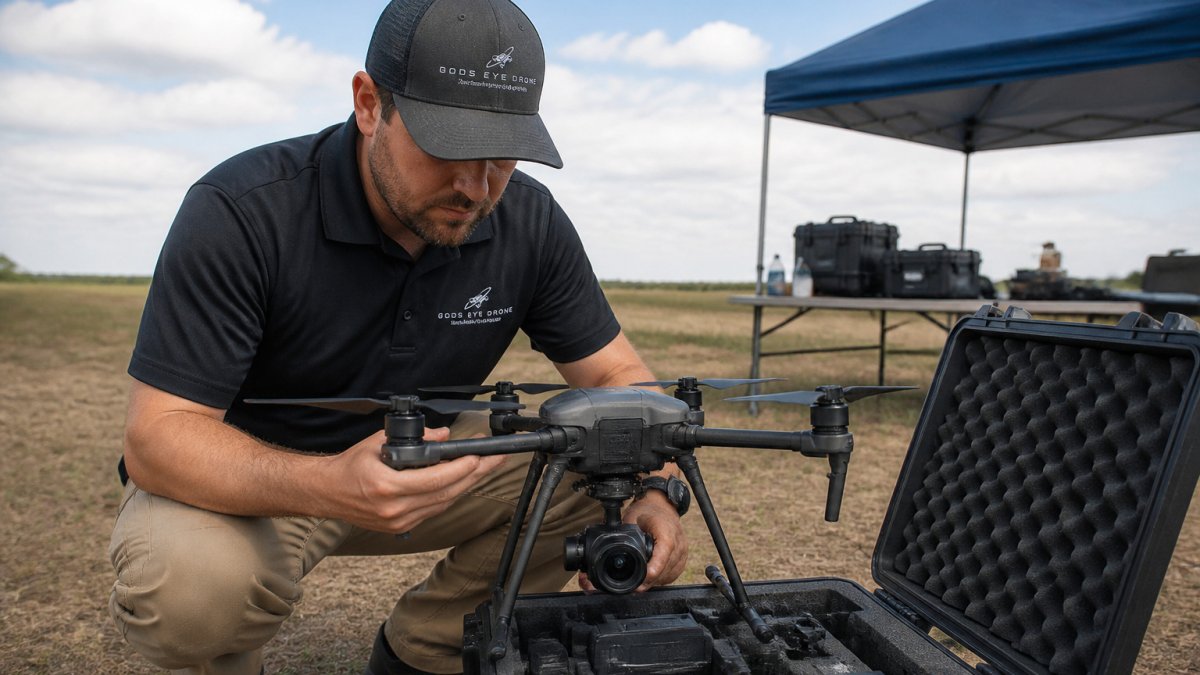
Ask about equipment, too. Which aircraft will they fly, and does it carry the camera or sensor your project needs? For inspection or search work, ask about thermal and zoom capability.
Finally, ask how the pilot plans each flight. A serious operator will describe a site assessment and pre-flight checklist. If the answer is vague, treat that as a warning sign.
Questions About Insurance and Liability Coverage
Ask whether the pilot carries commercial general liability insurance and aircraft liability coverage. Ask for the coverage limits, not just a yes or no, and request a certificate of insurance naming your company as additional insured if your contract calls for it. A common mistake is assuming a personal policy covers commercial flights.
Ask who is responsible if the drone damages property or injures someone, and how the contract allocates that risk. If a claim does arise, you can see how to file a drone insurance claim step by step.
Questions About Weather, Airspace, and Rescheduling
Ask for the pilot's actual flight thresholds. "We fly when it's safe" is not an answer.
Ask how and when they make the call. Will they check forecasts the night before, the morning of, or both?
Ask about airspace before you book, not the week of. Many sites sit inside or near controlled airspace, temporary flight restrictions, or special use airspace. Ask:
- Whether the pilot checks airspace with FAA tools such as B4UFLY or the FAA's UAS Facility Maps before quoting
- Whether the site requires LAANC authorization or a manual FAA waiver, and who files it
- How long authorization typically takes for that site, and whether the timeline fits your project date
- Whether the pilot has flown in that specific airspace before
If the pilot has not checked airspace before quoting, the quote may not be flyable at all.
Ask about rescheduling and cancellation terms in writing. This is where most clients get surprised. Pin down:
- How many days' notice the pilot needs to reschedule without penalty
- Whether a weather cancellation is billed, refunded, or rolled into a backup date
- Whether the deposit is refundable, and under what conditions
- What happens if the pilot cancels for equipment failure or illness, do they provide a backup pilot or refund?
- What happens if you cancel for reasons other than weather, and what the fee schedule is
- Whether a backup or rain date is built into the contract, and how far out it can be moved
A pilot who will not put cancellation terms in writing is telling you something about how the project will go if the weather turns.
Ask for the contingency plan. A serious operator will describe one without prompting:
- Backup aircraft, backup batteries, and backup props on site
- A second pilot or crew member if the mission requires visual observers
- Alternative flight windows if the primary window is lost
- A plan for site access if the primary launch point is unavailable
- Emergency procedures if the aircraft loses link or a person enters the flight area
Ask about the site assessment. Before the flight day, a thorough pilot will scout the launch and landing areas, check for obstacles, confirm line-of-sight, and identify any people or property that affect the flight. Ask when that assessment happens and whether it is included in the quote or billed separately. If the answer is "we'll figure it out when we get there," budget for delays.
Questions About Pricing, Deliverables, and Image Rights
Price is the easiest thing to compare and the easiest thing to misread. A single number on a quote tells you almost nothing until you know what it includes.
Ask about the cost components that are easy to miss. Common add-ons include:
- Travel and mileage beyond a local radius
- Site access fees, parking, or security escorts at industrial and event sites
- FAA airspace authorization work if the site sits in controlled airspace
- Additional flight time beyond the quoted window
- Post-production: color correction, HDR blending, stitching panoramas, orthomosaic processing, 3D modeling, or video editing
- Rush delivery and weekend or holiday scheduling
- Re-flights caused by weather, site access, or a change in scope
Ask which of these are included, which are quoted separately, and which are billed only if they occur. Get the answer in writing so a $900 quote does not become a $1,400 invoice.
Ask exactly what you will receive. Vague deliverables are the most common source of post-project disputes. Pin down:
- The deliverable count: how many final photos, how many video clips, how many minutes of edited video
- Resolution and file format: JPEG, TIFF, RAW, MP4, MOV, and whether log or flat profiles are available
- Whether unedited or RAW files are included, or only finished edits
- Turnaround time for first delivery and for revisions
- How many rounds of revisions are included, and what triggers an extra round
- How files are delivered: download link, drive, or physical media, and how long the link stays live
- How long the pilot retains the original files after delivery
Ask who owns the footage and what the pilot can do with it. Copyright and usage rights are separate from the booking fee. Ask:
- Whether you receive full usage rights or a license, and whether the license is exclusive or non-exclusive
- Whether the pilot retains the right to use the footage in their portfolio, on their website, or in marketing
- Whether you can resell or sublicense the footage to a client or partner
- Whether the pilot will sign a work-for-hire or rights-transfer agreement if your legal team requires one
Settle this before the first flight. Retrofitting ownership terms after delivery is expensive and sometimes impossible.
Pricing depends on the site, the sensor, and the deliverable. Request an itemized quote against your scope sheet from us or any pilot, and treat any quote that will not break out its components as a warning sign.
Use this table to compare what each quote should break out before you sign.
| Item | What to confirm | Why it matters |
|---|---|---|
| Base flight fee | Half-day or full-day rate, flight hours included | Shows what the quoted price actually covers |
| Travel | Billed separately beyond a local radius | Can turn a cheap quote into an expensive one |
| Airspace authorization | Whether FAA authorization work is included | Controlled-airspace sites may need it |
| Deliverables | Count, resolution and file format | Vague deliverables cause post-project disputes |
| Revision rounds | How many are included | Extra rounds can be billed separately |
| Image rights | Full rights or a license, exclusive or not | Retrofitting ownership after delivery is costly |
| Re-flights | Who pays if weather or access forces a repeat | Determines the cost of a delayed project |
Putting Your Answers Into a Drone Services Contract Checklist
Once you have answers to the questions above, turn them into a written contract. A solid drone services agreement should cover:
- Pilot name, certificate number and aircraft registration
- Insurance types and coverage limits, with a certificate attached
- Scope of work and the specific deliverables, with formats and counts
- Weather, rescheduling and cancellation terms
- Total price, payment schedule and any travel or rush fees
- Image rights, usage permissions and data handling
- Responsibility for property damage and injury
Use this list as a scorecard when comparing two or three pilots. Our drone service contract negotiation tips that protect you cover the terms worth pushing for before you sign. A candidate who answers every item clearly is usually easier to work with than one who answers only the questions you asked.
Booking Your Drone Pilot With Confidence
When you have verified the credentials, reviewed the insurance and agreed on the deliverables, you are ready to book. Start by reviewing our full range of drone services to confirm the work matches what you need. When you are ready to move forward, you can book your drone pilot online, or contact our team with your project details and any questions about the vetting process.
Frequently Asked Questions
Does a drone pilot need a license for commercial work?
Yes. Under FAA rules, pilots who fly drones for compensation or business purposes generally need a Remote Pilot Certificate under 14 CFR Part 107. Recreational flying is a different category, and it requires only the free FAA safety training and test. Before booking, ask for the pilot's certificate number and verify it through the FAA's registry. Commercial work without a certificate can expose both the pilot and your project to fines and delays, so treat this as a non-negotiable requirement.
Should a drone pilot have liability insurance?
Yes. Liability insurance protects your property, the public, and your project if a flight causes damage or injury. Ask the pilot whether they carry general liability coverage, what the per-occurrence limit is, and whether the policy covers the specific type of work you need, such as inspections over infrastructure. Request a certificate of insurance naming your company as additional insured before the shoot date.
What should a drone pilot's quote include?
A complete quote should itemize the flight time, travel and any lodging, editing and post-production, the number of photos or video deliverables, and turnaround time. Ask whether weather-related cancellations or reschedules are billed, and whether a deposit is refundable. Quotes that leave these items out often produce surprise charges later. Gods Eye Drone can provide a project-specific quote, so contact the team directly for current pricing.
How can I verify that a drone pilot is qualified for my project?
Ask for the pilot's FAA Remote Pilot Certificate number, their flight hours and examples of similar work, and the specific equipment they will use. For regulated or high-stakes projects such as infrastructure inspections or search and rescue support, ask how they plan flights, check airspace restrictions, and what safety procedures they follow. A reputable pilot will answer these questions without hesitation.