 Listicle
How to Use Drone Roof Inspections in an Insurance Claim
Last Updated: October 31, 2026
Quick Summary
Drone roof inspections give insurance claims fast, time-stamped aerial evidence of roof damage, often without anyone climbing onto the roof. Flown by trained pilots with high-resolution and thermal imaging, they can move a claim toward estimates sooner. They work best as documentation, with an in-person check where the imagery raises questions.
- Drone roof inspections are flown by trained pilots and can capture high-resolution and thermal images.
- Each image can be tied to a location and date, establishing what the roof looked like after a loss.
- Faster documentation can move a claim into the estimate stage sooner.
- Check that every photo has a date, a roof location, and a clear split between observations and conclusions.
- Drone imagery cannot test shingle bond or probe soft decking, so a human inspection may still be needed.
Table of Contents
- How Drone Roof Inspections Work for Insurance Claims
- Faster Assessments and Shorter Claim Cycles
- Documenting Roof Damage With Aerial Imagery
- What a Useful Drone Roof Inspection Report Contains
- Drone Inspection vs. Traditional Roof Inspection
- What Drone Roof Inspection Costs and What Affects the Price
- Accuracy Limits, Privacy, and Your Rights in a Dispute
- Booking Your Drone Roof Inspection With Gods Eye Drone
- Frequently Asked Questions
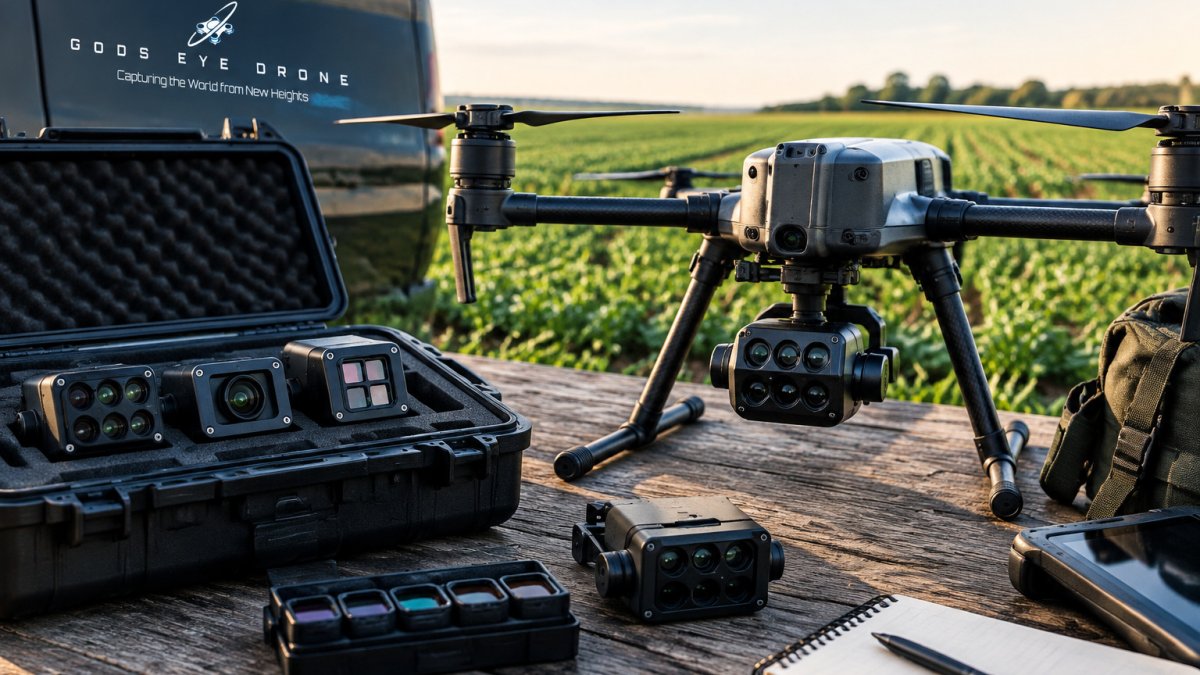
Insurance claims on roofs often stall for one reason: nobody can see the damage clearly until someone climbs up there. Drone roof inspections change that. Gods Eye Drone, a veteran-owned company, uses drones with FLIR thermal equipment and certified pilots to capture roof condition from above. For a policyholder or an adjuster, that means faster documentation and evidence that is easier to review.
How Drone Roof Inspections Work for Insurance Claims
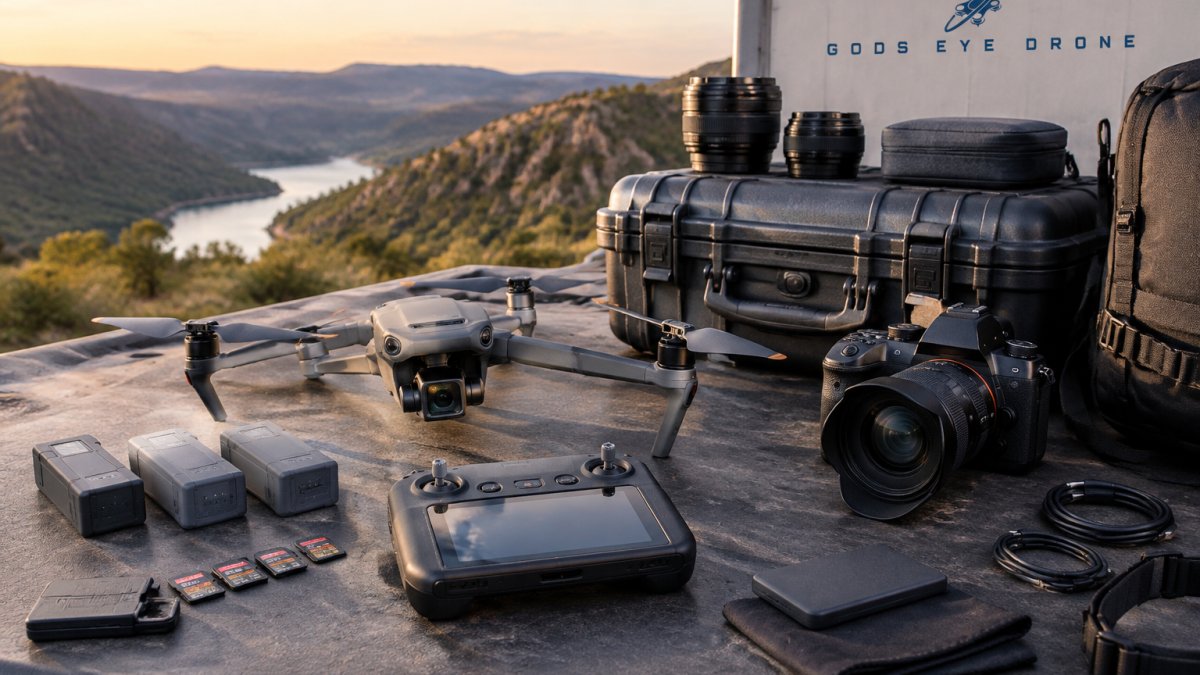
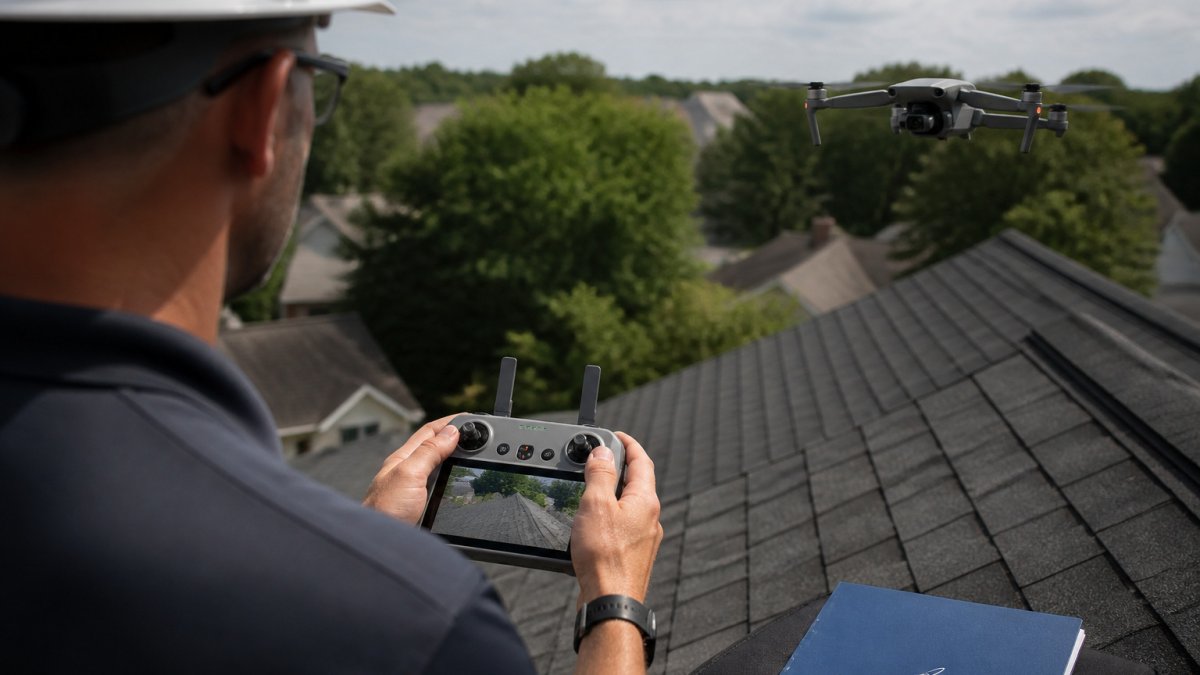
A drone roof inspection is an aerial survey of a roof, flown by a trained pilot, that produces high-resolution photos and, where useful, thermal images. Readers comparing roof inspection drones can see which models suit this work and which features matter most.
For a claim, the value lies in the evidence trail. Each image can be tied to a location and a date, which helps establish what the roof looked like after a loss event.
Faster Assessments and Shorter Claim Cycles
Speed is the most common reason carriers and property owners turn to drones. A drone can survey a large roof in a fraction of the time a manual climb takes. Faster documentation can move a claim into the estimate stage sooner, which benefits the policyholder waiting on repairs.
Industry reporting points in this direction. See how this played out in a drone roof inspection case study showing faster imaging and reduced delays.
Documenting Roof Damage With Aerial Imagery
Good damage documentation is specific. Learn how drones document storm damage with organized aerial evidence for claims. A useful set of photos shows missing or lifted shingles, cracked or displaced flashing, granule loss, and damaged vents or gutters, each with a clear view of its location on the roof.
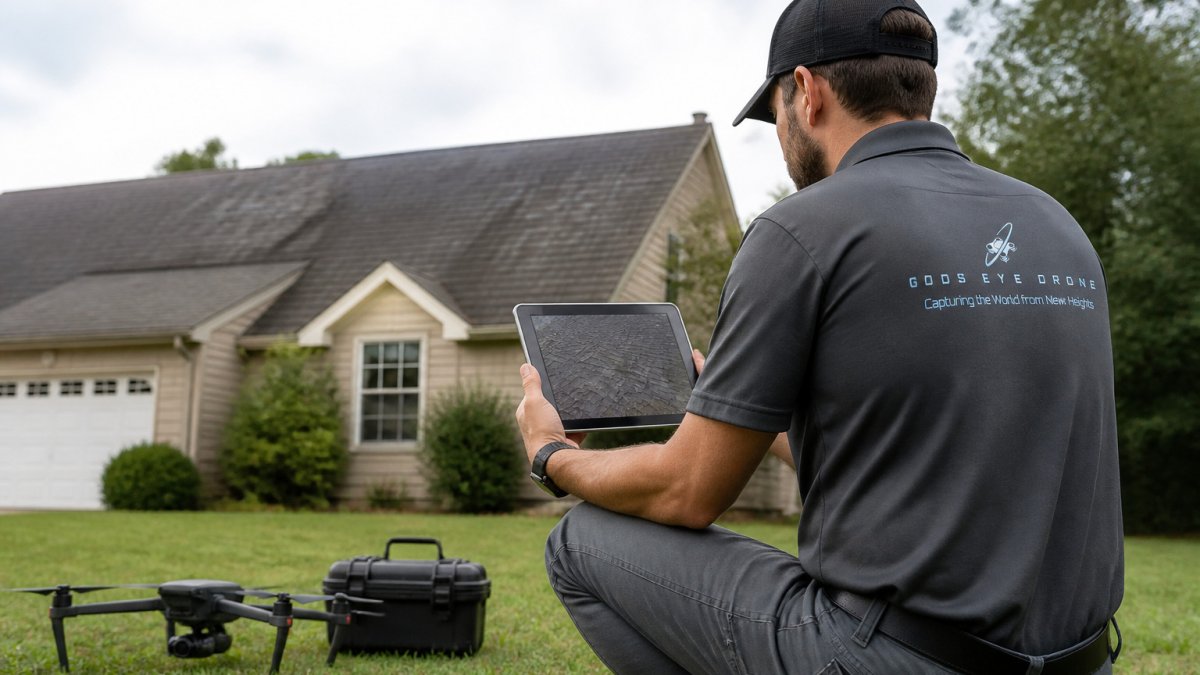
A reliable inspection also distinguishes storm damage from wear and tear. An older shingle that has curled over many years looks different from one torn off in a single wind event, and a good reviewer will note that difference rather than assume.
What a Useful Drone Roof Inspection Report Contains
The report is where a claim is often won or lost, so it is worth knowing exactly what a defensible one contains and how to check it. A useful drone roof inspection report is not a folder of pretty aerial shots; it is an evidence package an adjuster, a contractor, or a dispute reviewer can follow without calling the pilot.
Here is what to look for, and why each element matters:
- Flight metadata. Date, time, and weather conditions at capture. Without a timestamp, imagery cannot be tied to a loss event, and a carrier can argue the photos show pre-existing damage. Ask for the original file metadata, not just a date typed into a cover page.
- A roof diagram or map with photo locations. Each image should be keyed to a roof section (north slope, ridge, valley, flashing at the chimney, and so on). This lets a reviewer confirm the whole roof was covered rather than only the damaged area the homeowner already knew about.
- Labeled, high-resolution stills. Look for close-ups that show shingle edges, granule loss, lifted or missing tabs, cracked flashing, and damaged vents or gutters, paired with wide shots that establish context. Resolution matters: a wide shot that cannot be zoomed without pixelating will not support a damage finding.
- Thermal images with capture conditions noted. Thermal readings are only meaningful if the report states the temperature differential and sky conditions at the time of flight. A thermal image taken under the wrong conditions can suggest moisture where there is none.
- Pilot identification and certification details. A report should name the pilot and note the certification held. This matters if the imagery is later challenged.
Missing dates, unlabeled photos, thermal images with no conditions noted, or a summary that blends observation with conclusions should all prompt questions before the report is used in a claim. A report that fails these checks is not worthless, but it is weaker evidence, and weaker evidence is easier to dispute.
The table below summarises the report elements the article says to check before accepting a drone roof inspection report.
| Report element | What to check | Why it matters |
|---|---|---|
| Flight metadata | Date, time and weather at capture | Ties imagery to a loss event |
| Roof diagram | Photo locations keyed to roof sections | Confirms the whole roof was covered |
| Labeled stills | Close-ups paired with wide shots | Supports the damage finding |
| Thermal images | Temperature differential and sky conditions noted | Makes moisture readings meaningful |
| Pilot details | Pilot name and certification | Helps if imagery is challenged |
| Written summary | Observations separated from conclusions | Makes the report harder to attack |
Drone Inspection vs. Traditional Roof Inspection
A traditional inspection requires a person to climb onto the roof or use a lift. It allows hands-on checks, such as testing a shingle's bond or probing soft decking, which a drone cannot do.
Neither method replaces the other in every case. You can learn more about the veteran-owned Olathe, KS drone team and its roof inspection services before booking.
What Drone Roof Inspection Costs and What Affects the Price
Gods Eye Drone has not published pricing for its roof inspection services. Cost depends on factors such as roof size and complexity, the type of imagery required, the number of structures, scheduling, and delivery requirements.
When comparing quotes, confirm what each one includes: flight time, editing, a written report, and whether thermal imaging is part of the scope. A lower price that omits the report may cost more in time later.
Accuracy Limits, Privacy, and Your Rights in a Dispute
Drone imagery is strong evidence, but it is not perfect evidence, and policyholders who understand its limits and their own rights are harder to shortchange. This section covers three things competitors usually skip: what the imagery can miss, who controls the data, and what you can do if you disagree with an assessment.
Accuracy limits and when a human still needs to climb up
A drone sees the surface of a roof. For a closer look at what thermal drones detect well and where errors happen, see our guide to thermal accuracy.
Most practitioners treat drone imagery as a screening and documentation tool, not a final diagnosis. When the imagery raises a question, a soft-looking area, a stain with no obvious source, damage near a valley or penetration, an in-person inspection by a qualified roofer is still the right next step.
Privacy, consent, and data retention
Homeowners sometimes worry that drone footage will be used to find reasons to deny a claim or cancel a policy. That concern is legitimate and worth raising directly with the adjuster or the inspection vendor. Ask:
- Who will receive the images, and will they be shared with anyone beyond the claim file?
- How long will the imagery and report be retained, and can you request deletion after the claim closes?
- Will the footage be used for any purpose beyond your claim, underwriting, marketing, or training?
- Was the flight conducted in a way that captured only the roof and structure, or did it also capture neighboring property or people?
Your policy and applicable state rules govern how insurers handle claim evidence, so review your policy documents and ask the adjuster to explain the process in writing. A vendor that cannot answer these questions clearly is a reason to pause.
Your rights if you disagree with an assessment
If you believe a drone-based assessment missed damage or understated a loss, you are not stuck with it. A common pattern is to take these steps in order:
- Request the inspection record. Ask for the full image set and the written report, not just the summary page. You are generally entitled to see the evidence used to evaluate your claim.
- Ask how the damage was identified. Request the specific photos and reasoning behind any finding, including any conclusion that damage is pre-existing or excluded.
- Seek a reinspection. Ask your adjuster how to request a second inspection, and whether a contractor's report or your own drone survey can be submitted as supporting evidence.
- Follow your policy's claim procedures. Most policies set out timelines and steps for disputing a decision; missing a deadline can weaken your position.
- Escalate if needed. If the dispute continues, ask about your state's consumer complaint process for insurance claims and whether an independent appraisal or mediation is available under your policy.
Imagery supports a human review; it does not replace one. Knowing what it can miss, who holds the data, and how to challenge a finding is what turns a drone inspection from a vendor deliverable into evidence you can actually use.
Booking Your Drone Roof Inspection With Gods Eye Drone
If a drone inspection would help document your roof, Gods Eye Drone offers aerial inspection services. Certified pilots, FLIR equipment, and a veteran-owned team are the core of the service. To book, visit the Gods Eye Drone website and request a quote with your property details and the type of damage you are documenting.
Frequently Asked Questions
How can a drone roof inspection help with an insurance claim?
A drone roof inspection gives you aerial imagery of the roof surface, including areas that are hard to see from the ground, such as ridges, valleys, and the upper slopes of steep roofs. Those images can document visible damage like missing shingles, cracked flashing, or impact marks, and they create a dated record of the roof's condition. The footage supports your claim by showing the damage in a consistent, reviewable form. It does not decide the claim on its own, so pair it with your policy details, any contractor estimate, and your insurer's documentation requirements.
Do insurance companies accept drone roof inspection photos?
Many insurers accept aerial photos and inspection reports as part of a claim file, but acceptance depends on the carrier and the claim. Ask your adjuster early whether they will review drone imagery and what format they need. A clear, well-labeled report with timestamped photos of each damaged area is more likely to be useful than raw video alone. If the insurer requires an on-site inspection, a drone report can still help document the condition before the adjuster arrives.
What should a drone roof inspection report include for an insurance claim?
A useful report usually includes the property address, the inspection date and time, the pilot's name and certifications, and a map or diagram of the roof with each slope labeled. Each damaged area should have a close-up photo, a wider context shot, and a short written description of what was observed. The report should note weather and lighting conditions and state any areas that could not be inspected. Ask for the original high-resolution files in addition to any compressed versions so the images can be reviewed later.
Can an insurance company use drone images to deny a claim?
An insurer can review drone images as part of its evaluation, and a review can lead to a denial if the images show pre-existing wear, unrelated damage, or no damage that matches the claim. Denials are supposed to be based on your policy terms and the evidence in the file. If you disagree with a decision, ask in writing for the specific reasons and the evidence relied on, and request a re-inspection if you believe key damage was missed. Your state's insurance department can explain your dispute options.