 Ultimate guide
How to Start a Drone Photography Business
Last Updated: November 5, 2026
Quick Summary
To get started in drone photography, earn your FAA Part 107 Remote Pilot Certificate, register the business, and secure general liability insurance before taking any paid work. Then pick two service lines, publish pricing, and approach 20 target clients directly with a sample edit of their own property.
- The global drone photography services market was valued at USD 0.87 billion in 2025 and is projected to reach USD 4.82 billion by 2035.
- Part 107 certification costs typically run $150 to $500 including training materials.
- Enterprise-grade setups with thermal imaging and LiDAR run $15,000 to $40,000.
- A focused operator can generate around $3,000 per week using the SkyView Experts real estate model.
- Build a portfolio from three to five unpaid or discounted shoots with written permission to use the images.
Table of Contents
- Choose Your Drone Photography Business Model
- FAA Part 107 Certification Requirements
- Drone Photography Business Startup Costs
- How to Get Drone Insurance for Business
- Drone Photography Pricing Guide
- Your First 90 Days: Launch Plan and Client Acquisition
- Book Your First Professional Drone Shoot
- Frequently Asked Questions
Choose Your Drone Photography Business Model
The global drone photography services market was valued at USD 0.87 billion in 2025 and is projected to reach USD 4.82 billion by 2035, according to SNS Insider's drone photography market report. That growth curve explains why so many people ask how to get started in drone photography business work right now. At Gods Eye Drone, we have watched demand shift from generic aerial snapshots toward services that solve a specific operational problem. Your first decision is which of those problems you want to own.
Real Estate and Property Listings
Real estate photography is the traditional entry point. It is also the most crowded. Industry discussion on r/drones community analysis points to market saturation driven by an influx of operators chasing the same listings, not by a lack of buyer interest. If you enter here, compete on turnaround time and editing quality rather than price. Agents with 15 to 20 active listings per month need a vendor who delivers consistently, not the cheapest quote.
Inspection, Agriculture, and Specialized Services
Specialized work commands better margins. Thermal imaging and LiDAR capabilities now drive demand in inspection, agriculture, and public safety, with enterprise-grade setups running $15,000 to $40,000 according to Drone Bundle's business cost analysis. Multispectral crop monitoring, roof and infrastructure inspection, and search-and-rescue support all require certification and equipment that casual operators cannot match. That barrier is your advantage.
FAA Part 107 Certification Requirements
Every commercial drone operation in the United States requires a Remote Pilot Certificate under Part 107, as the FAA's drone getting-started guidance states plainly. Recreational rules do not apply once you accept payment. Certification costs typically run $150 to $500 including training materials, per UAV Coach's Part 107 cost breakdown. Our commercial drone licensing walkthrough covers the application step by step, and beginners should pair it with our guide to learning drone flight before test day.
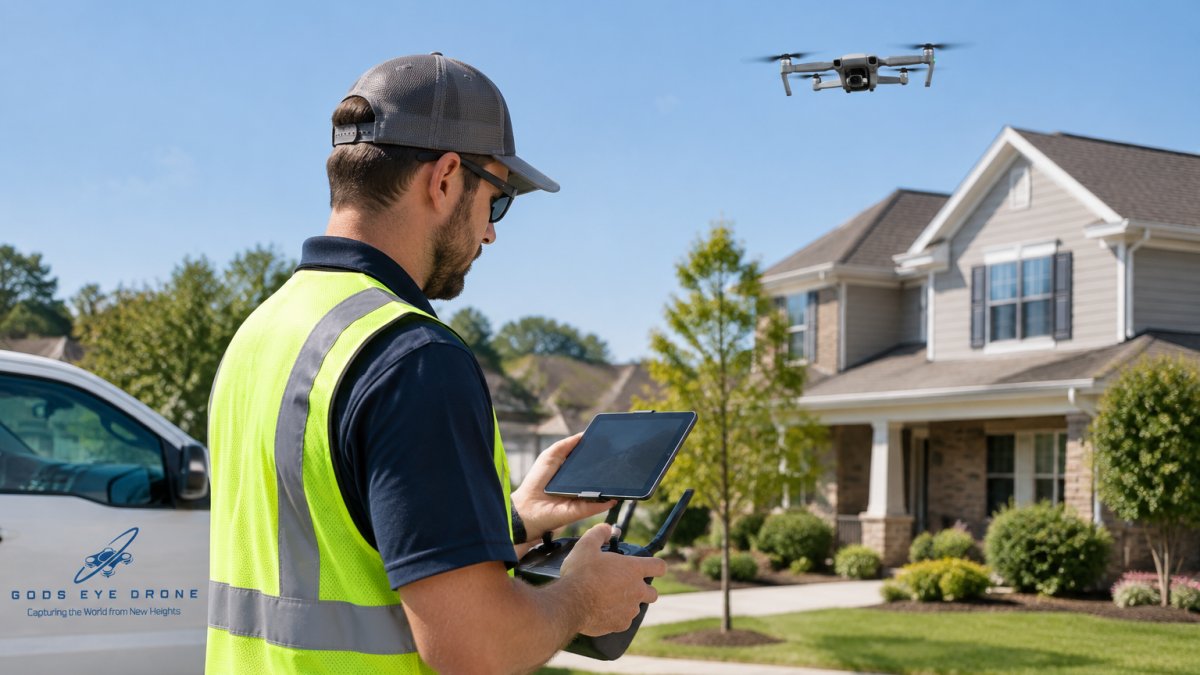
Drone Photography Business Startup Costs
Startup costs split into two tiers. An enterprise-grade operation with thermal cameras and LiDAR requires a substantially larger budget than a basic setup. Budget separately for the certificate, insurance, and business registration. Ongoing expenses include battery replacement, storage, software subscriptions, and marketing. Our professional drone equipment checklist lists what to budget for at each tier.
How to Get Drone Insurance for Business
Business insurance is not optional when you fly commercially over property and people. You need general liability coverage at minimum, and many inspection clients require proof of hull coverage and a certificate naming them as additional insured. Premiums vary by flight hours, equipment value, and service type. Watch out: a homeowner policy will not cover commercial operations, and flying uninsured on a critical infrastructure job can leave you personally exposed to a claim.
Drone Photography Pricing Guide
Set pricing from your cost structure, not from what competitors charge. A defensible model combines a base shoot fee, a per-deliverable rate for edited images or video, and travel beyond a set radius. Real estate packages price per listing; inspection work prices per asset or per flight hour. a focused operator can generate around $3,000 per week, as demonstrated by the SkyView Experts real estate model covered on YouTube business case coverage. Our 2026 drone photography pricing guide breaks down rate benchmarks by service line.
| Service Line | Pricing Basis | Typical Deliverable |
|---|---|---|
| Real estate | Per listing | 15-25 edited stills |
| Roof/infrastructure inspection | Per asset or flight hour | Annotated image set, report |
| Agriculture | Per acre or per flight | Multispectral index maps |
| Events and weddings | Per event, half or full day | Edited highlight video |
Build a package from labor, travel, and editing time
Most solo operators underprice because they quote the flight and forget the desk work. A workable real estate package starts with a base shoot fee that covers travel, setup, and flight time, then adds a per-deliverable rate for edited stills and a separate line for video. Pricing for a standard listing depends on the shoot scope, the number of deliverables, and travel distance.
Watch out: quoting a flat per-listing price without counting editing hours is the fastest way to work a full schedule at a loss, because a 20-image real estate set can take longer to cull, color-correct, and deliver than the flight did.
Work a break-even example
Consider a hypothetical real estate package with a set number of edited stills included. Track the total labor hours for shoot, travel, and editing, then compare them against the price before taxes, software, insurance, and battery wear are counted. Raise the price, cut the included image count, or add a rush fee for 24-hour turnaround rather than absorbing the editing time. The same logic applies to inspection work: price per asset high enough that the report writing is covered, not just the flight.
Put contract terms in writing before the first flight
Pricing and contract terms are the same conversation. A commercial drone photography agreement should state the scope of the shoot, the number of deliverables, the delivery format and resolution, the revision allowance, the deposit and cancellation terms, and who owns and may license the footage. Commercial clients often need a license to use the images in advertising, on listing platforms, or in printed materials, and that usage right should be priced and described separately from the shoot itself.
Watch out: delivering full-resolution files with no written license language can leave you unable to control how the client resells or redistributes the work, and it can complicate any later claim that the images were used outside the agreed scope.
Track profitability per service line
Once you have three months of jobs, sort revenue and hours by service line. Real estate may produce steady volume at a lower margin, while inspection and agriculture produce fewer jobs at a higher margin but require more expensive equipment and more report time. Keep a simple spreadsheet of shoot hours, editing hours, travel miles, and direct costs per job, then compare the effective hourly rate across lines. Operators who do this usually find one line subsidizes another and adjust their package mix accordingly. That is also the point at which a per-deliverable rate and a travel surcharge become easier to defend in client conversations, because you can show what the work actually costs to produce.
Your First 90 Days: Launch Plan and Client Acquisition
Days 1-30: earn the Part 107 certificate, register the business, secure insurance, and build a portfolio from three to five unpaid or discounted shoots. Days 31-60: define two service lines, publish pricing, and approach 20 target clients directly with a sample edit of their own property. Days 61-90: deliver, collect testimonials, and ask every client for one referral. Retention matters more than acquisition; a single property developer with recurring sites can sustain a solo operation. Build a preflight checklist covering airspace authorization, weather minimums, and site hazards, and document every flight.
Weeks 1-4: certification, entity, and insurance
Week 1 is paperwork and study. Book the Part 107 knowledge test, work through airspace classes, weather, loading, and emergency procedures, and schedule the exam before you buy additional equipment. Week 2 is the business setup: choose a structure, register the entity, open a business bank account, and set aside the certificate and registration costs as startup expenses.
Watch out: flying a paid job before the Remote Pilot Certificate is issued, or before insurance is active, can void coverage and expose you personally, so keep the first month strictly to study, setup, and unpaid portfolio work.
Weeks 5-8: define two service lines and start direct outreach
Pick two service lines rather than five. Real estate plus roof or infrastructure inspection is a common pairing because the same drone and the same editing workflow serve both, while agriculture and events pull in different equipment and different clients. Publish a simple pricing page with your packages, deposit terms, and turnaround times. Then start direct outreach: build a list of 20 target clients such as real estate agents with active listings, property managers, roofing contractors, and small developers, and send each one a short message that names a specific property or site and offers a sample edit of one of their own images.
Weeks 9-12: deliver, collect proof, and build repeat work
Deliver every job on the promised timeline and in the promised format, then ask for a testimonial and one referral in the same message. Referrals convert far better than cold outreach, so make the ask specific: ask the agent which lender or contractor they work with, and whether they would introduce you. Local partnerships are the other repeatable channel; title companies, staging firms, roofing contractors, and property managers all serve the same clients and are usually willing to exchange referrals. Track every client in a simple follow-up system with a next-contact date, because a single property developer or property manager with recurring sites can sustain a solo operation through repeat work alone.
Plan for weather, site, and data risk
Build a rescheduling policy into every contract before the first flight: state that weather or airspace restrictions may force a reschedule, and that deposits carry to the new date. Do a site survey before the shoot day where possible, check airspace authorization and local restrictions, and carry backup batteries and a backup memory card. Have a data-handling routine: offload and back up footage the same day, keep client files in a named folder structure, and confirm in writing how long you retain originals. Document every flight with a preflight checklist covering airspace, weather minimums, site hazards, and crew, because that record protects you if a client or insurer asks questions later.
Book Your First Professional Drone Shoot
The gap between a hobbyist with a drone and a business that clients trust comes down to certification, insurance, and consistent delivery. If you would rather hire that capability than build it, Gods Eye Drone brings certified pilots, advanced FLIR thermal equipment, and full-service aerial photography, videography, and inspection coverage to every project. Our team supports real estate, agriculture, construction, and search-and-rescue work with precise, results-focused output. Get started with Gods Eye Drone and book your shoot online to see how a professional aerial partner raises the standard of your next project.
Frequently Asked Questions
Do I need a license to start a drone photography business?
Yes. Any commercial drone operation requires a Remote Pilot Certificate under FAA Part 107. You must pass the knowledge test at an FAA-approved testing center. Recreational flyers are exempt, but paid work for real estate, events, or inspections is not. Operating without certification can lead to fines and voids most insurance policies.
How much does it cost to start a drone photography business?
Basic startup costs include a Part 107 certification and a capable drone. Enterprise-grade setups with thermal and LiDAR equipment cost substantially more. Most beginners spend less by starting with a mid-range drone and adding specialized gear as client demand grows. Budget for insurance, a business license, and marketing, then price your services to recover those costs within your first few projects.
Is a drone photography business profitable?
It can be, but entry-level real estate work is saturated with new operators. Success comes from specializing in higher-value services like thermal inspections, agricultural monitoring, or construction progress documentation. Profitability depends on your pricing, repeat clients, and controlling equipment and insurance costs.
What equipment do I need to start a professional drone photography business?
At minimum: a commercial-grade drone with a high-quality camera, extra batteries, a controller with a bright display, and a rugged case. For specialized work, add thermal or multispectral sensors. You will also need editing software, a computer that handles large files, and a preflight checklist. Many pilots start with a mid-range drone and upgrade once they land consistent contracts.