 how-to
Drone Service Contract Negotiation Tips That Protect You
Table of Contents
- Why Drone Service Contract Negotiation Decides Your Profit
- Step 1: Assess Client Requirements Before You Quote
- Step 2: Nail Down Drone Project Scope and Deliverables
- Step 3: Build Your Drone Services Pricing Case
- Step 4: Use a Drone Service Agreement Template as Your Starting Point
- Step 5: The Drone Service Contract Clauses That Matter Most
- Step 6: Negotiate Rates, Handle Objections, and Manage Difficult Clients
- Step 7: Control Change Orders, Revisions, and Scope Creep
- Frequently Asked Questions
Last Updated: October 20, 2026
Why Drone Service Contract Negotiation Decides Your Profit
A drone service contract is the document that decides whether a job pays you or costs you. Most pilots lose money not because they fly badly, but because they signed terms that let the client expand the work for free. We have watched this play out across real estate, agriculture, and inspection work. The flight is the easy part.
Below, we walk through a seven-step negotiation process built for drone work specifically. Each step covers what to say, what to put in writing, and where deals usually fall apart.
Step 1: Assess Client Requirements Before You Quote
Ask before you price. A drone service provider who quotes blind is guessing, and the client can tell. Spend ten minutes on questions and you will quote with confidence.
Questions to Ask Every Prospect
- What is the site, and how large is the survey area?
- What is the final product: photos, video, maps, or a report?
- Who reviews the work, and what format do they need?
- What is your deadline, and is it fixed?
- Do you need thermal imaging or standard visuals?
- Has anyone flown this site before? Any access limits?
- What is your cost limit for this project?
That last question is not rude. It saves both sides time. If their budget cannot cover a safe, insured flight, you need to know now.
Step 2: Nail Down Drone Project Scope and Deliverables
Drone project scope and deliverables are the backbone of the whole agreement. Write down exactly what you will deliver, in what format, and by when. Then write down what you will not deliver. That second list protects you more than the first.
A tight scope section names:
- Number of flight days and approximate flight time
- Deliverable count, such as edited photos or minutes of video
- File format and resolution
- Delivery date and method
- Number of revision rounds included
Vague language like "aerial coverage as needed" invites scope creep. Replace it with a fixed list.
Step 3: Build Your Drone Services Pricing Case
Drone services pricing should reflect the value of the result, not just the time in the air. A fifteen-minute flight over a construction site may take two hours of travel, setup, processing, and reporting. Price the whole job.
Know your real costs before you negotiate: equipment, insurance, travel, processing time, and your own labor. Then set a floor you will not go below.
Compare the Pricing Models Before You Quote
Each model fits a different job, and each has a failure mode. Pick the model that matches the work, then defend it with the numbers behind it.
| Pricing Model | Best For | Main Risk |
|---|---|---|
| Hourly flight time | Small one-off shoots | Punishes efficiency |
| Day rate | Multi-flight inspection days | Client packs in extra flights |
| Per acre | Agriculture, large surveys | Acreage disputes at the edges |
| Per deliverable | Real estate, events | Unclear revision limits |
| Project flat fee | Inspections, surveys | Scope creep if loose |
| Retainer | Repeat clients, monitoring | Unused hours become a credit fight |
| Value-based | High-stakes work | Needs a clear value story |
Hourly flight time is simple and caps your income. Day rates smooth out weather and setup time but invite the client to add flights. Per-acre pricing scales with the site but needs a written definition of the measured boundary. Per-deliverable pricing is easy to compare but needs a revision limit. Flat fees reward efficiency but punish a loose scope. Retainers build repeat revenue but need rules for unused time.
Build the Number From the Bottom Up
Before you quote, add up the real cost of the job: travel to and from the site, setup and breakdown, flight time, processing and editing, reporting, insurance allocated to the project, equipment wear, and your own labor. Add a contingency for weather and rescheduling. That total is your floor. Your quote sits above it, and the gap is your margin.
A Worked Negotiation Example
A property developer asks for aerial photos and video of a 40-acre site for a listing. They mention a competing quote that is lower.
- Qualify first. Ask what the final product is, who reviews it, the deadline, and whether the site has access limits. Ask what their cost limit is.
- Scope the job. Two flight days, 30 edited stills, a 60-second video, one revision round, delivery in five business days.
- Build the number. Travel, setup, two flight days, processing, insurance allocation, and a weather contingency produce your floor. Your quote is the floor plus margin.
- Choose the model. Per-deliverable fits the listing; a flat fee fits the two-day scope. Quote the flat fee and state the deliverable count.
- Handle the lower quote. Ask what it includes. Often the competing quote prices flight time only and excludes travel, processing, revisions, and insurance. Walk through the full workflow behind the shot.
- Hold the floor. If the client pushes for a discount, trade scope for price, fewer deliverables, fewer revision rounds, or a shorter video, rather than cutting the rate. A discount with the same scope teaches the client that your first number was soft.
- Put it in writing. Send the proposal with scope, deliverables, revision limit, payment schedule, and change-order terms. Clients who see the limits up front rarely argue about them later.
The lesson: the rate you quote matters less than the scope you lock down. A fair price with a loose scope always loses to a firm price with a tight one.
Step 4: Use a Drone Service Agreement Template as Your Starting Point
A drone service agreement template saves time, but only if you customize it. A generic template will not cover airspace rules, weather delays, or data ownership. Start from a solid template, then edit it for each client.
The problem with most templates is that they stop at a list of sections. A list does not tell you what the clause should actually say. Below is a clause-by-clause walkthrough of the terms that matter in drone work, with sample language you can adapt.
Clause-by-Clause Guidance for Drone Contracts
Scope and deliverables. Name the number of flight days, the deliverable count, file formats, resolution, delivery date, and revision rounds.
Airspace and site access. State who is responsible for confirming airspace authorization and site access.
Weather and rescheduling. Define unsafe conditions and who makes the call.
Safety responsibilities and site hazards. Allocate responsibility for site hazards, bystanders, and ground safety.
Privacy. Address how the provider will handle incidental capture of people and private property.
Liability and insurance. State insurance limits and the liability cap.
Termination. Give both sides a clear exit.
How to Customize Without Starting Over
Keep a master version and adjust the specifics per project: site details, deliverable counts, fee schedule, and insurance limits. Never send a template you have not read line by line. The clauses above are the ones most likely to be tested when something goes wrong, so review them first on every deal.
Step 5: The Drone Service Contract Clauses That Matter Most
Drone service contract clauses do the heavy lifting when something goes wrong. Most disputes trace back to a clause that was missing or vague. Here are the ones we would never sign without.
Payment, Cancellation, and Weather Terms
Payment terms should state the amount, the due date, and any deposit. A common approach is a deposit up front and the balance on delivery. Late fees should be spelled out, not implied.
Cancellation terms need to cover both sides. If the client cancels late, you may still owe travel and setup costs. Say so in writing.
Weather is the clause most pilots forget. Wind, rain, and low visibility can ground a flight. Your agreement should state that unsafe conditions trigger a reschedule, not a refund dispute.
Step 6: Negotiate Rates, Handle Objections, and Manage Difficult Clients
Negotiation is a conversation, not a fight. Prepare your case, then stay calm and respectful. Confidence comes from knowing your numbers.
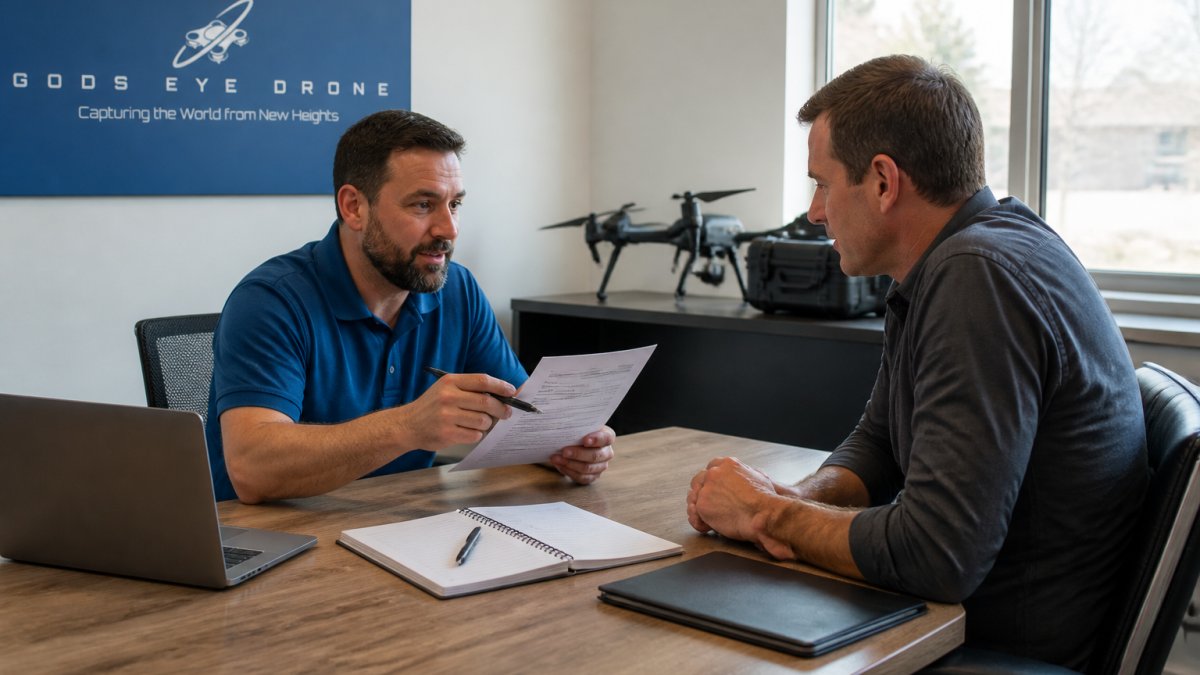
When a client says your rate is high, do not drop it on the spot. Ask what they are comparing it to. Often they are pricing flight time only. Walk them through travel, insurance, processing, and the certified pilot behind the controls.
Common objections and how to answer them:
- "It's just a quick flight." Show the full workflow behind the shot.
- "The other quote was lower." Ask what that quote includes.
- "Can you throw in extra edits?" Point to your revision limit.
Difficult clients test your terms early. If someone pushes hard on scope before signing, expect the same after. A respectful "no" now saves a painful project later.
Step 7: Control Change Orders, Revisions, and Scope Creep
Scope creep is the quiet killer of drone profit. It starts small: one more angle, one more edit, one more site. Each request feels minor. Together they erase your margin.
Build a change order process into the contract. Any work outside the agreed scope gets a written change order with its own price and timeline. No signature, no extra work.
A simple process:
- Client requests new work.
- You confirm it falls outside scope.
- You send a short change order with cost and time.
- Client approves in writing.
- You do the work and bill it.
This protects the client relationship too. Everyone knows what is included and what costs more.
Frequently Asked Questions
What should a drone service contract include?
A solid drone service contract covers the project scope and deliverables, the survey area or flight locations, the report format, the fee and payment schedule, and a deposit or advance authorization. Add weather and cancellation terms, revision limits, change-order procedures, insurance and liability language, and who owns the footage. It should also name the certified pilot, confirm FAA Part 107 compliance, and state how you handle a cost limit or contingency. Every project, even a small one-off job, deserves a written agreement.
How do you negotiate pricing for drone services?
Prepare your case before the call. Know your true operating costs, the billable hours involved, and the value of the deliverable to the client, then anchor your proposal on outcomes rather than flight time. Value-based pricing lets you justify a higher rate when the footage supports a six-figure listing or an inspection that avoids downtime. When a client pushes back, ask what budget they had in mind, offer a reduced scope instead of a discount, and hold your rate with respectful communication. Confidence plus a clear cost breakdown wins more deals than cutting price.
Who owns the photos and video captured by a drone service provider?
Ownership depends on what your drone service contract says. Many providers grant the client a license to use the final deliverables for agreed purposes while the provider retains copyright, which protects you if you want to reuse footage in a portfolio. Others transfer full ownership for a higher fee. Spell out the license scope, whether raw files are included, and any restrictions on resale. Put the terms in writing before the flight so there is no dispute after delivery.
How should a drone service contract address insurance and liability?
Name your coverage in the contract, including hull and general liability limits, and require the client to confirm site access and any airspace restrictions. State who is responsible if a flight is grounded by FAA airspace rules or a temporary flight restriction, and how risk is allocated for property damage or injury. Ask clients to carry their own coverage on high-value assets. A clear liability section protects both sides and often shortens negotiation because the client sees you are a professional services provider, not a hobbyist.
Negotiating a drone service contract is a skill, and it protects both sides. The right terms keep projects profitable and clients happy. If you would rather spend your time flying than drafting clauses, Gods Eye Drone handles the full job with certified pilots, advanced FLIR equipment, and precise aerial inspections. Book now and get a contract and crew that protect your project from day one.