 How-to
How to File a Drone Insurance Claim: Step-by-Step
Last Updated: October 22, 2026
Quick Summary
To file a drone insurance claim, contact your insurer within 24 hours with your policy number, complete the claim form with a detailed incident narrative, and submit a documentation package including photos, flight logs, proof of ownership, and your incident description according to your insurer's preferred method.
- Report your claim within 24 hours; late reporting is a common denial trigger.
- Gather baseline documents before calling: policy number, proof of ownership, FAA registration if applicable, and flight logs.
- Organize evidence by type in one folder with consistent file naming and a cover letter listing all submitted documents.
- Most straightforward hull claims resolve in a few weeks; liability and theft claims take longer.
- Follow up in writing with your claim number and keep a dated log of all communication with your adjuster.
Table of Contents
- What to Do Immediately After a Drone Incident
- Drone Insurance Claim Checklist: Essential Documents and Evidence
- Drone Insurance Claim Documentation: How to Organize Your Evidence
- Step-by-Step: How to File a Drone Insurance Claim
- Drone Insurance Claim Timeline: What to Expect
- Understanding Coverage: Hull, Liability, and Third-Party Claims
- Drone Insurance Claim Denial: Common Reasons and How to Appeal
- Frequently Asked Questions
What to Do Immediately After a Drone Incident
Your first moments after a drone incident determine how smoothly things go when you file a drone insurance claim.
Check yourself and anyone nearby for injuries. If someone was hurt, seek medical attention immediately and contact emergency services. This becomes critical for liability claims.
Finally, locate your policy documents and proof of ownership, you'll need them within hours, not days.
Drone Insurance Claim Checklist: Essential Documents and Evidence
A generic checklist may get a hull claim paid but can sink a liability claim. Insurers evaluate each coverage line against different evidence, so build your package around your type of loss.
Baseline documents every claim needs
- Policy number and declarations page. The declarations page shows your coverage parts, limits, and deductible. Pull it before you call the insurer so you can confirm which coverage you are invoking.
- Proof of ownership. A purchase receipt or invoice showing the drone model, serial number, and purchase date. For used aircraft, include the bill of sale and any transfer paperwork. Match the serial number on the airframe or battery to the receipt.
- Proof of airworthiness and registration. Include FAA registration if registered. For commercial operations, have your Remote Pilot Certificate and any Part 107 waiver on hand; the adjuster will check whether the flight was lawful.
Hull damage claims
Hull coverage pays to repair or replace your aircraft. The adjuster needs to separate crash damage from pre-existing wear. Include:
- Photos of every damaged component before you disassemble or repair anything.
- The aircraft's maintenance and repair history, if you keep one.
- Any firmware or app error messages captured at the time of the flight.
Don't ship the drone for repair before the adjuster authorizes it unless the policy explicitly allows emergency mitigation, unauthorized repairs commonly reduce hull payouts.
Theft claims
- Police report. File one and include the report number. Most policies require prompt reporting to law enforcement for theft.
- Proof the aircraft was secured. Where it was stored, how it was locked, and who had access. Insurers look for signs the loss fits the policy's theft terms.
- Serial number and any distinguishing marks. This helps recovery and confirms the stolen item is the insured aircraft.
Liability and third-party property damage claims
Liability claims are about the other party, not your drone. Preserve:
- Contact and statement information for the injured person or property owner. Names, phone numbers, and a short factual account.
- Photos of the third-party damage from multiple angles, plus the scene context.
- Medical or repair records the third party shares with you. Do not request or pressure; forward what you receive.
Notify your insurer before discussing fault or offering payment. A well-intentioned apology or cash offer can complicate the liability investigation.
Payload and camera claims
If a gimbal, camera, or sensor was damaged, document it separately from the airframe. Include the payload's serial number, purchase receipt, and close-up photos. Some policies sublimit or exclude payload, so confirm the declarations page before assuming it is covered.
Build a claim folder the day you buy the drone: receipt, serial number photo, registration, and a current declarations page. When an incident happens, you are assembling evidence, not hunting for it.
Drone Insurance Claim Documentation: How to Organize Your Evidence
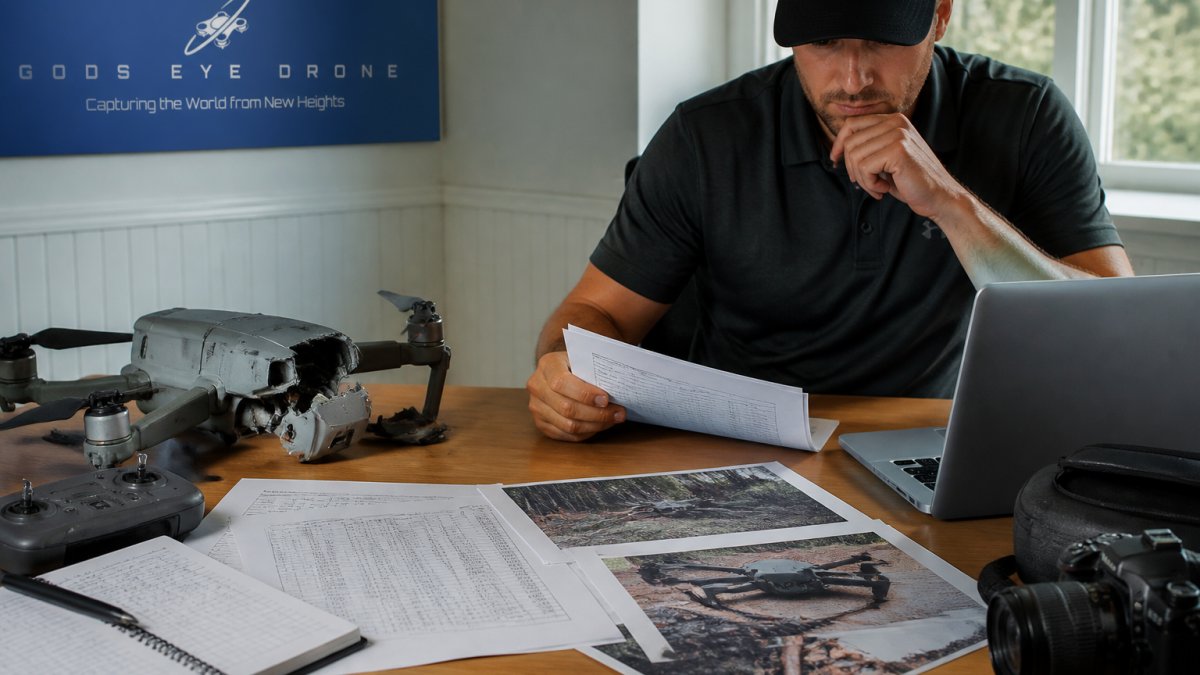
Organization makes your claim stronger. Create one folder for all evidence, labeled clearly with dates and descriptions.
Scan paper documents to PDF, back them up to cloud storage, and use consistent naming like "Incident_Photos_20261022" or "FlightLogs_20261022."
Group evidence by type, photos, documents, flight logs, which shows professionalism and helps the adjuster work faster.
Write a one-page cover letter listing the documents submitted and briefly explaining the incident to guide the adjuster through your package.
Step-by-Step: How to File a Drone Insurance Claim
Filing your claim involves several steps; take them in order.
Step 1: Contact Your Insurance Provider
Call your insurer within 24 hours, most policies require prompt notification. Find the claims number on your policy documents.
Briefly and factually describe what happened, provide your policy number, and get a claim number and your adjuster's name in writing.
Ask what documents they need, the submission deadline, and how they prefer to receive evidence, email, claims portal, or mail.
Step 2: Complete the Claim Form
Fill out the claim form completely and accurately; write "N/A" for sections that don't apply.
In the narrative, be detailed but concise and stick to facts, the adjuster needs clear information, not opinions or emotion.
List all damage, including the drone and any other property, estimate repair or replacement costs if you can, and be honest about what you don't know.
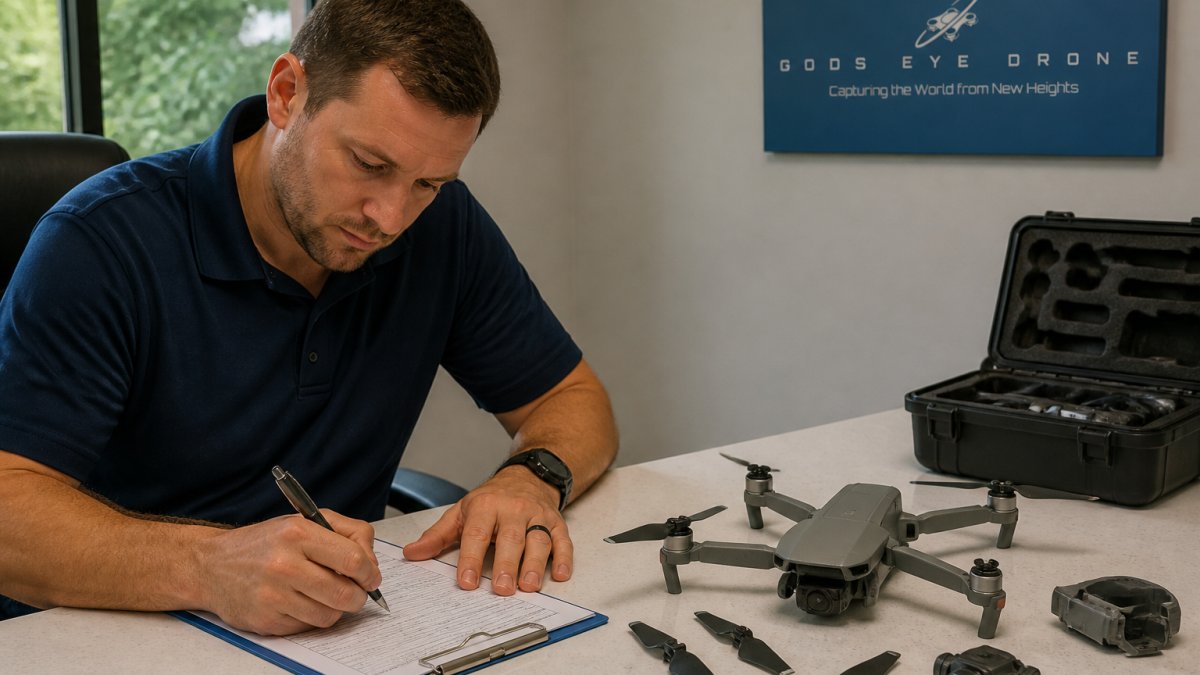
Sign and date the form. Keep a copy for your records. Submit it according to your company's instructions.
Step 3: Submit Your Documentation Package
Gather everything you've organized. Create a checklist of what you're sending. Include:
- Completed claim form
- Copy of your policy
- Proof of ownership (receipt or invoice)
- Photos of the damaged drone
Package materials per the insurer's preference, a clear folder structure for email, or tracked mail, and include a cover letter listing what's enclosed.
Step 4: Track Your Claim Status
Ask your adjuster for a review timeline; most companies aim for 30 days, but complex claims take longer.
Follow up weekly if you haven't heard back, politely ask what else they need, and respond quickly to requests.
Document all communication, save emails and log call dates and times, in case you need to appeal later.
Drone Insurance Claim Timeline: What to Expect
Timelines vary by insurer and loss type, but the sequence is predictable, knowing the milestones lets you spot a stalled claim early.
Typical milestones
- First notice of loss. Report within 24 hours; late reporting is a common denial trigger. You should get a claim number and adjuster assignment within one to two business days.
- Acknowledgement and assignment. The insurer confirms receipt and names the adjuster; ask for direct contact and the claim portal login.
- Investigation. The adjuster reviews documents, may request more photos or logs, and may arrange an inspection. Simple hull claims move faster than third-party liability claims.
- Evaluation and coverage decision. The adjuster determines coverage, applies the deductible, and calculates the settlement.
Realistic time ranges
A straightforward hull claim with complete documentation commonly resolves in a few weeks; liability, theft, and disputed claims take longer. Treat any number as a planning estimate and confirm the insurer's timeline in writing.
How to follow up without hurting your claim
- Follow up in writing. Email the adjuster with your claim number in the subject line and a short list of questions.
- Keep a communication log. Date, time, who you spoke with, and what was said, it matters if you appeal.
- Respond to requests fast. Send requested information promptly and confirm receipt.
- Escalate politely. If you haven't heard back within the stated window, ask for a supervisor and reference your log.
Do not ignore insurer requests or miss stated deadlines. A slow response can be treated as a failure to cooperate, which is itself a basis for denial under many policies.
If your claim is delayed or denied
- Request the denial in writing with the specific policy provisions cited.
- Compare the denial to your policy language. Errors happen; a coverage part the letter ignores may still apply.
- Submit an appeal in writing with any new evidence: additional photos, witness statements, or a repair estimate.
- Escalate to your state insurance regulator if the insurer does not respond to a documented appeal. Regulators accept complaints at no cost and can prompt a response.
The operators who resolve claims fastest are the ones who report immediately, submit a complete coverage-specific package, and keep a written record of every exchange. Timeline management is mostly documentation discipline.
Understanding Coverage: Hull, Liability, and Third-Party Claims
Your policy includes different coverage types; understanding them tells you what's covered.
Hull coverage protects your drone itself against accidents, crashes, and weather, paying for repair or replacement. Most policies carry a $250-$1,000 deductible.
Third-party property damage is a type of liability coverage for damage to someone else's car, house, fence, or equipment, up to your policy limit.
Review exclusions carefully: most policies don't cover mechanical failure, intentional acts, or regulatory violations, and may exclude certain weather conditions or altitudes.
Drone Insurance Claim Denial: Common Reasons and How to Appeal
Not every claim gets approved; understanding denials helps you avoid them.
Why Claims Get Denied
Policy exclusions also cause denials, flying outside your authorized area, violating regulations, or flying in excluded weather conditions means coverage doesn't apply.
Lapsed or inactive policies lead to denials; your policy must be active on the incident date.
Misrepresentation on your application, about flying experience, drone modifications, or intended use, can cause denial.
Mechanical failure is often excluded: insurance covers accidents, not manufacturing defects or component breakdowns.
How to File an Appeal
If your claim gets denied, don't accept it without reviewing it carefully.
Gather additional evidence, more photos, witness statements, or documentation, and submit it; it might change the adjuster's decision.
File a formal written appeal with your new evidence and a letter explaining why you believe the denial was wrong.
Filing a drone insurance claim requires organization and attention to detail.
Frequently Asked Questions
What should I do immediately after a drone accident?
Stop flying immediately and secure the area to prevent further damage or injury. Take photos and video of the damaged drone from multiple angles, the incident site, and any surrounding property or people affected. Write down the exact time, location, weather conditions, and what happened. Collect the drone's flight logs if possible. Do not attempt repairs until your insurance company has reviewed the damage. Contact your insurance provider within 24-48 hours to report the incident and begin the claims process.
What documents do I need for a drone insurance claim?
You'll need your policy number, proof of ownership (purchase receipt or serial number), flight logs from the incident, photos and video of the damage, a written description of what happened, incident-site photos, and any supporting documentation like weather reports or witness statements. If third-party property or bodily injury is involved, gather information about the affected parties and any damage to their property. Organize these into a single package before submitting your claim to speed up the review process.
How long does a drone insurance claim take to resolve?
Most insurers acknowledge claims within 2-5 business days. The full review and approval process typically takes 10-30 days, depending on claim complexity and documentation completeness. Simple hull damage claims with clear evidence usually resolve faster. Claims involving third-party liability, bodily injury, or property damage may take longer because they require additional investigation. Your claims team should provide a timeline estimate after your initial submission. Stay in contact with your adjuster for status updates.
Why would my drone insurance claim be denied?
Common denial reasons include operating outside your policy's coverage limits, flying in violation of FAA regulations or your certification level, failure to disclose pre-existing damage, intentional damage, or operating under the influence. Claims may also be denied if documentation is incomplete or inconsistent, if repairs were made before inspection, or if the incident falls under a policy exclusion. Review your policy carefully before filing. If denied, request a detailed explanation and consider filing an appeal with additional evidence if you believe the denial is incorrect.