 How-to
How Do Weather Conditions Affect Drone Photography Shoots?
Last Updated: November 11, 2026
Quick Summary
Weather affects drone photography shoots by controlling flight safety, battery life, visibility, and image quality. Wind and rain can ground a flight, while cold drains batteries and fog blocks the lens. Cloud cover and sun angle decide whether shadows help or ruin a shot.
- Wind is the number one reason we ground a flight, and gusts are the real threat.
- Check the aircraft manufacturer's published wind-resistance rating, and fly well below that maximum.
- A forecast of 8 mph sustained wind with gusts to 25 mph is more dangerous than a steady 12 mph.
- Rain ends a shoot, full stop, and even a light drizzle is a no-go.
- On overcast days, set white balance manually and boost contrast later in editing.
Table of Contents
- Why Weather Decides Whether a Drone Photography Shoot Happens
- What Is the Best Weather for Drone Photography?
- Wind Limits for Drone Photography: Go/No-Go Rules
- Drone Photography in Cold Weather: Batteries, Ice, and Lens Fog
- Rain, Humidity, and Water Damage: What Ends a Shoot
- How to Read a Weather Forecast for Drone Flying
- How Weather Changes Your Camera Settings and Shot List
- Book a Weather-Checked Drone Shoot With Gods Eye Drone
- Frequently Asked Questions
Why Weather Decides Whether a Drone Photography Shoot Happens
Weather is the single variable that can cancel a drone photography shoot at the last minute, and it is the first thing our certified pilots check before any flight. Wind, rain, cold, and cloud cover all change what a drone can do and what the camera captures. This guide from Gods Eye Drone explains how each condition affects a shoot, so you can plan around the sky instead of hoping for the best.
The stakes are real. A gusty afternoon can ground a flight entirely, while a flat gray morning can actually produce the cleanest images of the week. Understanding the difference is what separates a shoot that happens from one that gets rescheduled.
Below, we break down the conditions that matter, the go/no-go rules we use, and how weather reshapes camera settings and shot lists.
Weather affects drone photography shoots by controlling flight safety, battery life, visibility, and image quality. Wind and rain can ground a flight, while cold drains batteries and fog blocks the lens. Cloud cover and sun angle decide whether shadows help or ruin a shot.
What Is the Best Weather for Drone Photography?
The best weather for drone photography is light wind, good visibility, and either soft overcast light or a clear golden hour. There is no single perfect forecast. Different conditions suit different shots, and the smartest approach is to match the weather to the goal.
Overcast Skies: Soft Light Without Harsh Shadows
Overcast skies can be an asset, not a setback. A photography studio notes that cloud cover spreads light evenly and cuts harsh shadows and bright hot spots. For real estate and property work, that means clean, balanced exposures with fewer blown-out highlights.
The trade-off is flat contrast. Gray skies can make a scene look dull, so plan for tighter compositions and stronger subjects.
Clear Mornings and the Golden Hour
Clear mornings and the hour after sunrise give warm, directional light and long shadows that add depth. This is the window most property and event shoots want. The catch is that clear skies also mean stronger sun later, which brings glare and hard shadows by midday.
Wind Limits for Drone Photography: Go/No-Go Rules
Wind is the number one reason we ground a flight, and it is also the condition where vague advice does the most damage. Most consumer and prosumer drones handle steady breezes well, but gusts are the real threat.
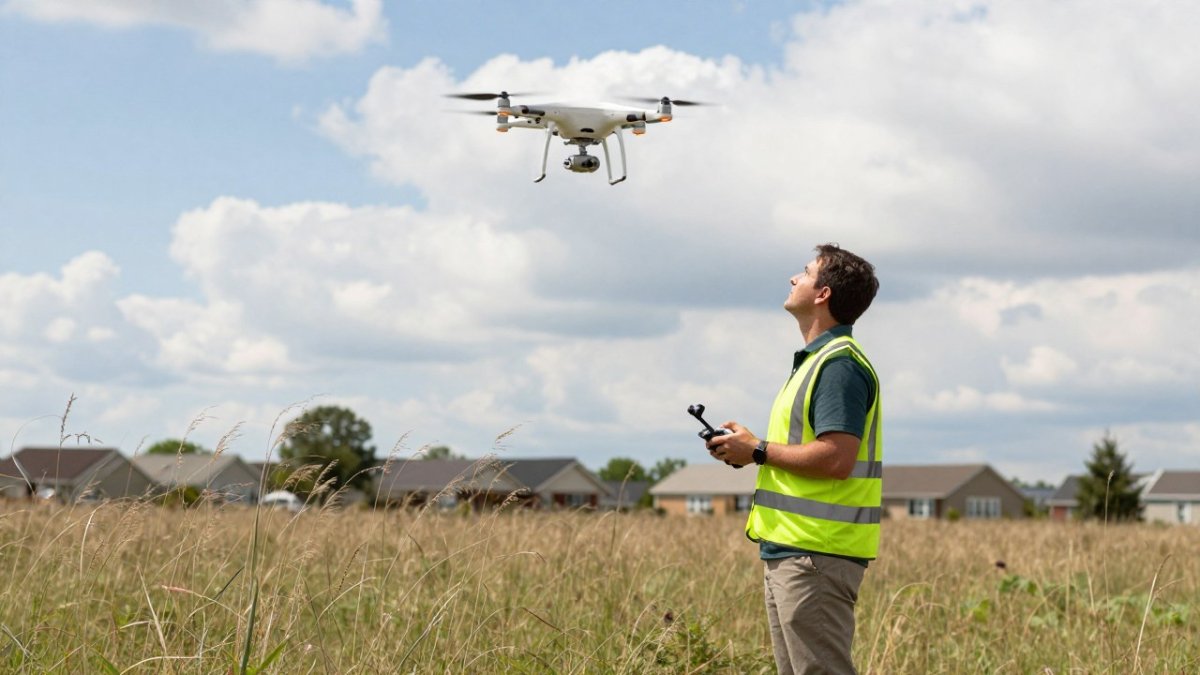
The first rule is not ours to set: check the aircraft manufacturer's published wind-resistance rating for your specific model. That rating is the ceiling, not a target.
A useful decision framework is built around sustained wind and gust spread rather than a single average number:
These thresholds are starting points, not absolutes. A light drone with a high-resolution camera and a small airframe behaves very differently from a larger aircraft, and wind at altitude is often stronger than wind at ground level. A common pattern is for the surface forecast to read calm while the drone encounters a stiff breeze at 200 feet, so always test the air with a short hover before committing to a full flight plan.
Gust spread matters as much as the average. A forecast showing sustained wind of 8 mph with gusts to 25 mph is far more dangerous than a steady 12 mph, because the aircraft must constantly correct and the camera never settles.
Wind also drains battery faster because the drone works harder to hold position. On a breezy day, plan on shorter flights and more battery changes than the same shoot would need in calm air.
Finally, wind advice does not replace your responsibility as the pilot. Local aviation rules, airspace restrictions, and the manufacturer's guidance all still apply, and the pilot in command is the one who decides whether a flight is safe. When in doubt, the answer is to wait.
Drone Photography in Cold Weather: Batteries, Ice, and Lens Fog
Cold weather shortens battery life and can fog the lens when you move between temperatures. Lithium batteries lose capacity as they chill, so flights get shorter and voltage sags faster. Keep spare batteries warm in a pocket or insulated case until launch.
Lens fog is the second cold-weather trap. Bringing a cold drone into a warm car or building fogs the glass. Let the gear adjust to temperature before you shoot.
Ice is a hard stop. Never launch with ice on the props or body. It throws off balance and can damage the aircraft.
Rain, Humidity, and Water Damage: What Ends a Shoot
Rain ends a shoot, full stop. Most drones are not built to fly in rain, and moisture can short electronics and damage the camera. Even a light drizzle is a no-go.
High humidity is subtler. It can fog the lens and add haze to wide shots. A common mistake is ignoring the dew point. When the air is close to saturation, expect fog on the glass and in the frame.
Watch out: flying right after rain risks water damage and murky, hazy footage. Wait for surfaces to dry and the air to clear.
How to Read a Weather Forecast for Drone Flying
A weather forecast for drone flying means reading wind speed, gusts, visibility, and cloud cover together, not just the temperature. Check a dedicated aviation or drone weather app rather than a basic phone forecast. Look at the gust column, not just the average wind.
Here is our pre-flight check, in order:
- Check sustained wind and gust spread.
- Confirm visibility and cloud ceiling.
- Note temperature and battery impact.
- Scan for rain and humidity in the window.
- Pick the best hour, usually early morning.
If you are planning a property shoot, knowing how long drone real estate photography takes helps you fit the work into a clear weather window. Preparing the site in advance also cuts the odds of a reshoot, and our guide on how to prepare a property for drone photography covers exactly that.
How Weather Changes Your Camera Settings and Shot List
Weather should change both your settings and your shot list, and this is where a weather-aware photographer separates from one who simply waits for a clear day.
Start with the light. On bright, clear days, the sun is a hard source that creates deep shadows and bright highlights.
On overcast days, the cloud layer becomes a giant softbox. Light is even, shadows are gentle, and exposures are easier to balance. The trade-off is flat contrast, so raise contrast in editing and favor tighter compositions with a strong subject.
Fog and haze are atmosphere, not obstacles. Shoot into the light for layered depth, expose for the midtones rather than the bright sky, and let the haze separate foreground from background. These conditions reward wide shots and long lenses that compress layers.
Wind changes your shot list more than your settings. Favor stills over long video passes, because the aircraft never settles enough for a clean moving shot.
Here is how a weather-aware plan can be adjusted on site:
- Bright sun: shoot early or late, cut glare with angle and filters, avoid midday shadows, and protect highlights with negative exposure compensation.
- Overcast: lean on even light, set white balance manually, boost contrast later, and favor tight compositions with strong subjects.
- Fog or haze: shoot layered scenes with depth, expose for midtones, and use the atmosphere as a feature rather than fighting it.
- Post-rain: shoot reflective surfaces and saturated color once it is safe to fly, and watch for lens fog when moving between temperatures.
- Wind: favor stills over long video passes, keep clips short, and fly upwind first.
Watch out: auto white balance and auto exposure can chase changing light under broken cloud, causing color and brightness shifts between frames. Lock exposure and white balance when conditions are stable, or plan to correct in post.
A fixed-wing flight study in research published in Drones shows how harsh weather stresses flight operations, which is why we build weather checks into every shoot plan.
Here is how a weather-aware plan can be adjusted on site.
| Condition | Settings and approach | Shot list focus |
|---|---|---|
| Bright sun | Negative exposure compensation, ND filter, watch glare | Shoot early or late, avoid midday shadows |
| Overcast | Set white balance manually, boost contrast later | Tight compositions with strong subjects |
| Fog or haze | Expose for midtones | Layered scenes with depth |
| Post-rain | Watch for lens fog between temperatures | Reflective surfaces and saturated color |
| Wind | Keep clips short | Favor stills over long video passes, fly upwind first |
Book a Weather-Checked Drone Shoot With Gods Eye Drone
Weather is unpredictable, but our process is not. Gods Eye Drone's certified pilots are available to discuss weather planning for your project. Contact us to learn how scheduling and rescheduling are handled.
Before you book, it helps to know what to ask before booking a drone pilot, including how a provider handles weather. If budget is on your mind, our drone photography pricing guide explains what drives cost. When you are ready, you can book online and lock in a weather-checked shoot.
Weather will always have a say in aerial work, but the right partner turns a risky forecast into a planned, confident shoot. Gods Eye Drone brings certified pilots, advanced FLIR equipment, and full-service aerial photography and videography to every project, from property listings to inspections. Get started with Gods Eye Drone and schedule a shoot built around the conditions, not against them.
Frequently Asked Questions
What temperature is too cold for a drone?
Most drone batteries lose capacity fast below freezing, and many manufacturers rate safe operation only down to about 32°F (0°C). Below that, expect shorter battery life, sluggish response, and a higher risk of voltage drops mid-flight. For drone photography in cold weather, keep spare batteries warm in an inside pocket, shorten each flight, and watch for ice on the props and lens fog when you move between cold air and a warm vehicle. If the forecast calls for single digits, reschedule.
Can you fly a drone in 100-degree weather?
It is possible, but heat pushes both the drone and the battery toward their limits. Many manufacturers list a maximum operating temperature around 104°F (40°C), and batteries degrade faster when they run hot. Shoot early in the morning, keep batteries out of direct sun and out of a hot car, and let the aircraft cool between flights. Watch for camera overheating warnings, which can shut down recording mid-shoot. High heat also softens image sharpness through heat shimmer near pavement and rooftops.
How does wind affect drone photography?
Wind is the single biggest factor in whether a shoot happens. Gusts tilt the aircraft, cause camera vibration, and blur long exposures, and strong sustained wind drains battery life as the drone fights to hold position. A practical rule many pilots use is to avoid flying when sustained wind is above roughly 15 to 20 mph, or when gusts exceed the aircraft's rated wind resistance. Check wind speed at your planned altitude, not just at ground level, because it is often stronger higher up.
What happens if the weather turns bad on a booked shoot day?
A professional drone company monitors the weather forecast for drone flying in the days before the shoot and will contact you if conditions look unsafe or unlikely to produce usable footage. Reputable operators typically reschedule rather than fly in rain, high wind, or low visibility. Ask about the weather policy before you book, including how much notice you get and whether a deposit carries to the new date. Building a backup date into your listing or project timeline saves stress.