 how-to
How to Prepare Property for Drone Photography
Table of Contents
- What You'll Need Before You Start
- Real Estate Drone Photography Checklist: Exterior and Grounds
- Drone Photography Staging Tips for Interior and Exterior Shots
- Best Time of Day for Aerial Photography: Timing Your Shoot
- FAA Part 107 Requirements for Real Estate Drone Shoots
- Working With a Certified Drone Pilot: What to Expect
- Common Mistakes to Avoid When Preparing a Property
- Conclusion
- Frequently Asked Questions
Last Updated: September 14, 2026
What You'll Need Before You Start
Preparing a property for drone photography means staging the home, grounds, and flight plan so aerial images capture the property at its best. At Gods Eye Drone, we've learned the shoot is only half the job, the rest happens on the ground.
A common mistake is treating drone day like any other photo appointment. Aerial cameras see everything: roof debris, parked cars, patchy lawns, trash bins, and stray tools that vanish at ground level but dominate an aerial frame.
Here's what to line up before the pilot arrives:
- A confirmed date and time, with a backup window for weather
- The property address, gate codes, and any access instructions
- Vehicles moved off the driveway and street frontage
- Exterior surfaces, lawns, and landscaping tidied
- Interior blinds and lights set for any window-facing shots
- A note on neighbors, pets, and anyone who should be told about the flight
Handle those six items and the shoot runs faster, the footage looks cleaner, and you avoid a reshoot.
Real Estate Drone Photography Checklist: Exterior and Grounds
A real estate drone photography checklist keeps prep work from slipping through the cracks. The exterior and grounds do the heaviest lifting in an aerial frame, so start there. What separates a clean aerial image from an amateur one is usually whether the roof, lawn, driveway, and pool deck were handled in the right order.
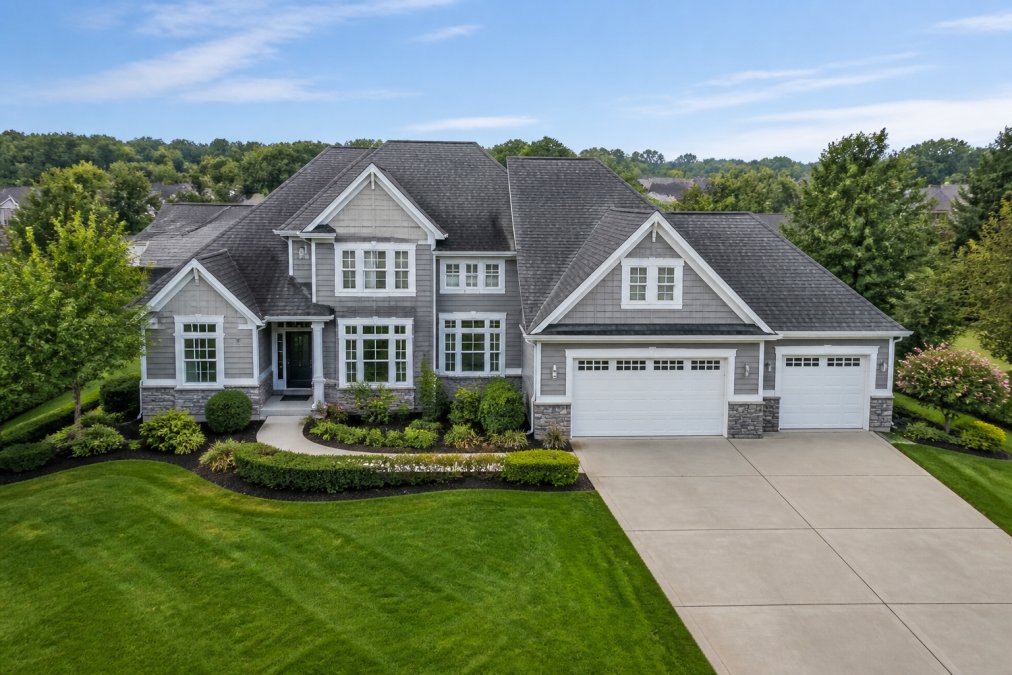
Cleaning Exterior Surfaces and Landscaping
Curb appeal reads differently from 120 feet up. What looks fine from the sidewalk can look neglected from the air. Work top-down so you are not re-soiling surfaces you already cleaned.
Roof and gutters. Roof lines are a primary subject in aerial real estate shots. Clear leaves, branches, and debris from valleys and ridges. Check gutters for visible sagging or overflow staining. If the roof has moss, algae streaks, or missing shingles, flag it to the seller before the shoot, a drone will make those defects the most prominent feature in the frame.
Siding, walkways, and driveways. Power-wash where staining shows. Oil spots on concrete and mildew on north-facing siding are the two most common surface issues that read as neglect from altitude. A quick pass with a surface cleaner the day before is usually enough.
Lawn and beds. Mow the day before, not the morning of, fresh clippings and mower tracks look worse than slightly longer grass. Edge walkways and driveways so boundaries read cleanly, and trim hedges to a consistent height; uneven hedges create a jagged shadow line that flattens the front elevation.
Pool and deck. Skim the pool and run the filter so the water reads blue rather than green, and clear the deck of towels, floats, and furniture. If the pool has a cover, decide in advance whether it stays on, a clean cover reads better than a leaf-strewn pool, but an uncovered, clear pool is stronger when the water is balanced.
Landscaping does more for an aerial listing photo than almost any other prep task. Overgrown beds and patchy grass are the two most common reasons a wide approach shot looks amateurish.
Seasonal Preparation Adjustments
Most checklists are written for a mild spring day, but the prep that matters shifts with the season.
Spring. Peak bloom is the best window, but lawns are patchy from winter dormancy and beds are full of debris. Overseed thin areas at least three weeks out, rake out winter kill, refresh mulch so bed lines read crisp from above, and clear downed branches.
Summer. Heat stress turns lawns brown and irrigation heads leave visible wet spots. Water deeply the evening before rather than the morning of, mow slightly higher to reduce stress, and watch for midday glare on pools and windows, this is when a sunrise or late-afternoon slot matters most.
Fall. Leaf drop is the dominant problem. Blow leaves off the roof, gutters, lawn, and driveway the morning of the shoot if possible, since one windy afternoon can undo a full day of raking. Bare branches also expose neighboring structures and utility lines that summer foliage hides, check the flight path for new clutter.
Winter. Snow can help or hurt: fresh, even cover reads clean and bright, while patchy snow with visible dead grass reads neglected. Clear the driveway and walkways fully rather than partially, half-shoveled paths are a common winter aerial eyesore. Remove holiday decorations if the listing isn't seasonal, and flag roof or gutter ice to the seller as a maintenance issue.
Removing Vehicles, Clutter, and Visual Distractions
Move every vehicle off the driveway and away from the street frontage, a single parked car can block the best angle on a garage, entryway, or side yard. That includes the seller's, the agent's, and any contractor vehicles.
Then walk the property and remove:
- Trash bins and recycling containers
- Garden hoses, tools, and lawn equipment
- Kids' toys, bikes, and sports gear
- Patio furniture that looks worn or mismatched
- Signage, for-sale boards, and temporary stakes you don't want in frame
- Pet bowls, tie-outs, and waste bags
The goal is a clean visual line from the street to the roofline; anything that breaks it gets moved.
Drone Photography Staging Tips for Interior and Exterior Shots
Staging for drone work differs from staging for a ground photographer: you're not just arranging furniture, you're thinking about what the camera sees through windows and from above.
Lighting Preparation Inside and Out
Turn on every interior light and open all blinds and curtains. Aerial cameras often capture the home from an angle that looks through upper windows, and dark glass reads as an empty or closed-off room.
Exterior lighting matters just as much. Replace burned-out bulbs, test porch and pathway lights, and clean fixtures so they don't look dingy in a twilight shot. In late afternoon the sun does most of the work, but interior lights still help windows read as warm and lived-in rather than black rectangles.
Privacy and Neighbor Etiquette
Tell the neighbors before the flight. A drone hovering over a residential block draws attention, and a quick heads-up prevents a police call or a confrontation mid-shoot.
Keep the flight path over the subject property as much as possible, and avoid framing neighboring yards, pools, or windows in wide establishing shots. If a neighbor asks you to avoid their property, adjust the flight path rather than argue.
Privacy and neighbor etiquette aren't just polite; they protect the shoot. A complaint can end a session early and cost you the day.
Best Time of Day for Aerial Photography: Timing Your Shoot
The best time of day for aerial photography is the two hours after sunrise and the two hours before sunset. Low-angle light creates soft shadows, warm color, and depth that midday sun flattens out.
Midday shoots are the most common scheduling mistake: the sun sits directly overhead, shadows fall straight down, and the property looks two-dimensional. If you must shoot midday, aim for an overcast day, which diffuses light evenly.
For most residential listings, a late-afternoon slot gives the best combination of warm light, long shadows, and clear visibility for the establishing shot. Morning slots are better when the property faces east, when the backyard is the primary selling feature, or when afternoon shadows from tall trees or neighboring structures would fall across the front elevation.
Weather Contingency Planning
Weather is the one variable you can't stage. Build a contingency plan into every booking and decide in advance what triggers a reschedule versus a shoot-through, so you never fly in unsafe conditions or cancel a shoot that would have produced usable images.
Wind. Most consumer and prosumer drones have a safe operating limit in the 20-25 mph range, but the practical limit for clean real estate footage is lower, sustained winds above roughly 15 mph introduce visible gimbal vibration and make smooth orbit and reveal shots difficult (faa.gov). Gusts matter more than averages. Check the forecast the evening before and again the morning of, and be ready to move the shoot earlier, when surface winds are typically calmer.
Rain and fog. Active rain grounds the flight and risks water intrusion on non-weather-sealed aircraft. Light fog can produce a soft, atmospheric image, but anything obscuring the roofline or property boundary defeats the purpose of an aerial shot. Low cloud ceilings are a separate problem, even with clear ground, a ceiling below roughly 400 feet can force the drone lower than the composition needs.
Overcast. A flat overcast sky is not a dealbreaker, it diffuses light evenly and eliminates harsh shadow lines, making it the best fallback for a midday slot. The trade-off is a gray, featureless sky in wide shots, so plan tighter compositions and consider bracketing exposures so the sky can be recovered in post.
Smoke, haze, and air quality. Wildfire smoke and regional haze reduce contrast and shift color toward orange or gray. These conditions are hard to correct in post and are worth a reschedule when the forecast shows them persisting.
The 48-hour backup window. Hold a backup window within 48 hours of the primary date. Beyond 48 hours, the property's condition, mowed lawn, cleared clutter, staged interior, may no longer match what was prepped, and the listing calendar has usually moved on. Confirm the rescheduling policy in writing before the shoot day so there is no dispute about who absorbs the cost of a weather cancellation.
A clear contingency plan means a rained-out morning doesn't become a lost week on the listing calendar.
FAA Part 107 Requirements for Real Estate Drone Shoots
FAA Part 107 requirements for real estate govern every commercial drone flight in the United States. Any drone operation done for compensation, including real estate listing photography, falls under Part 107 and requires a certified remote pilot (faa.gov).
The FAA's Part 107 small UAS rule sets the operating framework: a remote pilot certificate, registration of the aircraft, visual line of sight at all times, and compliance with airspace rules. Flying commercially without certification exposes the operator and the client to federal penalties.
Airspace Authorization and Flight Restrictions
Most residential areas sit inside Class G airspace, which generally doesn't require prior authorization. Controlled airspace around airports does. Pilots use the FAA's LAANC system to request near-real-time authorization before flying in those zones.
Temporary flight restrictions can appear with little notice for events, emergencies, or VIP movement. A certified pilot checks for active restrictions the morning of the shoot, not the week before.
Property Releases and Legal Documentation
A property release is a signed document giving the photographer permission to use images of a specific property. For real estate listings, the listing agreement usually covers this, but it's worth confirming in writing before the shoot.
A model release covers identifiable people in the footage. If anyone will appear in the final images, get a signed release. Keep both documents filed with the project so there's no question later about usage rights.
Working With a Certified Drone Pilot: What to Expect
Hiring a certified pilot changes prep from "figure it out" to "follow the checklist." A professional operation handles flight planning, shot composition, airspace checks, and post-production, leaving you to focus on the property.
Gods Eye Drone is a veteran-owned, full-service drone company with certified pilots and advanced FLIR equipment. For real estate clients, that means high-resolution imagery, clean shot composition, and a pilot who knows how to read a property from the air. The same team handles infrastructure inspections, agricultural monitoring, and search and rescue support, so the technical standard carries across every job.
Expect a pre-shoot walkthrough, a flight plan built around the property's best angles, and a clear timeline for deliverables. Ask about insurance, liability coverage, and turnaround time before you book, a pilot who answers without hesitation runs a professional operation.
Common Mistakes to Avoid When Preparing a Property
The same handful of mistakes show up on almost every rushed shoot. Avoiding them is faster than fixing them in post-production.
| Mistake | Why It Hurts | The Fix |
|---|---|---|
| Shooting midday | Flat light, harsh shadows, no depth | Book sunrise or late afternoon |
| Leaving cars in the driveway | Blocks key angles and entryways | Move all vehicles off the frontage |
| Skipping the roof | Debris and damage dominate aerial frames | Clear roof and gutters before the shoot |
| Forgetting the neighbors | Complaints can end the flight early | Give a heads-up the day before |
| No weather backup | One rained-out morning kills the week | Hold a 48-hour backup window |
Most of these take minutes to fix and hours to regret. The prep work is the cheapest insurance you'll buy on a listing.
Conclusion
Aerial imagery only performs when the property is ready for it. Clean exteriors, staged grounds, correct lighting, and a solid flight plan separate a listing that stands out from one that blends in.
Gods Eye Drone handles the technical and legal side of every shoot, from FAA Part 107 compliance and airspace authorization to high-resolution capture and post-production. Certified pilots, advanced FLIR equipment, and a veteran-owned operation built on precision. Book now with Gods Eye Drone and get aerial imagery that makes the property impossible to scroll past.
Frequently Asked Questions
Do I need a license to fly a drone for real estate photography?
Yes, any commercial drone operation, including real estate photography, requires a Remote Pilot Certificate under FAA Part 107. The pilot must pass an aeronautical knowledge test and hold current certification. Recreational flyers cannot legally shoot listing photos for compensation. When hiring a drone company, ask to see their Part 107 certificate and liability insurance before booking.
What should I remove from my yard before drone photography?
Remove cars from the driveway, store trash bins, garden hoses, toys, and lawn equipment out of sight. Clear patio furniture of cushions and personal items. Park vehicles down the street so the driveway and street frontage look open. These small changes dramatically reduce visual clutter in wide aerial shots and help the property's best features stand out.
How does weather affect drone photography scheduling?
Wind above 15-20 mph, rain, snow, and low cloud ceilings can ground a drone flight or ruin image quality. Smoke and haze also reduce clarity. Reputable drone companies build weather contingency into their scheduling and will reschedule at no penalty when conditions do not cooperate. Ask about the rescheduling policy before you book.
What are the FAA regulations for drone photography over private property?
The FAA governs the airspace, not the property below it, so flying over private land is generally legal for a Part 107 pilot. However, pilots must avoid reckless operation, respect temporary flight restrictions, and never fly over people without a waiver. For real estate shoots, the pilot should also secure a property release from the homeowner before publishing images.