 How-to
How to Understand Drone Photography Contracts
Last Updated: October 26, 2026
Quick Summary
Drone photography contracts are written agreements between a client and a drone operator that set the scope, price, deliverables, and legal terms for an aerial shoot. A solid agreement covers client and operator details, project scope, deliverables, pricing and payment terms, usage rights, cancellation and weather terms, and liability and insurance clauses.
- A deposit is not the same as a cancellation fee, and the contract can distinguish the two.
- Buying a shoot does not automatically grant unlimited, forever, everywhere usage rights.
- Commercial drone operations in the United States fall under Federal Aviation Administration Part 107 rules.
- A template is a starting point, not a finished contract, so adapt it for each job.
- Insurance, liability, and indemnification do different jobs and are separate from each other.
Table of Contents
- What a Drone Photography Contract Must Cover
- Using a Drone Photography Contract Template
- Drone Photography Pricing and Contracts: Fees, Deposits, and Payment Terms
- Drone Photo Usage Rights and Licensing
- Drone Shoot Cancellation Policy and Weather Rescheduling
- Flight Restrictions, Insurance, and Liability Clauses
- Book a Contract Review with Gods Eye Drone
- Frequently Asked Questions
What a Drone Photography Contract Must Cover
Drone photography contracts are written agreements between a client and a drone operator that set the scope, price, deliverables, and legal terms for an aerial shoot. It can serve as a project blueprint and help clarify expectations.
A solid agreement can clarify these items:
- Client and operator details: legal names, contact info, and business entities
- Project scope: property address, shot list, and services (aerial photography, drone videography, inspections)
- Deliverables: number of edited photos, video footage length, and file formats
- Project dates: shoot day, backup date, and final delivery window
- Pricing and payment terms: service fees, deposit, and balance due date
- Flight time and coverage limits: minutes of flight and area covered
- Usage rights and licensing: who can use the images and where
- Cancellation, weather, and rescheduling terms
- Liability, insurance, and indemnification clauses
- Signatures: wet or online signing to make it binding
The list looks long. Each clause can help clarify expectations.
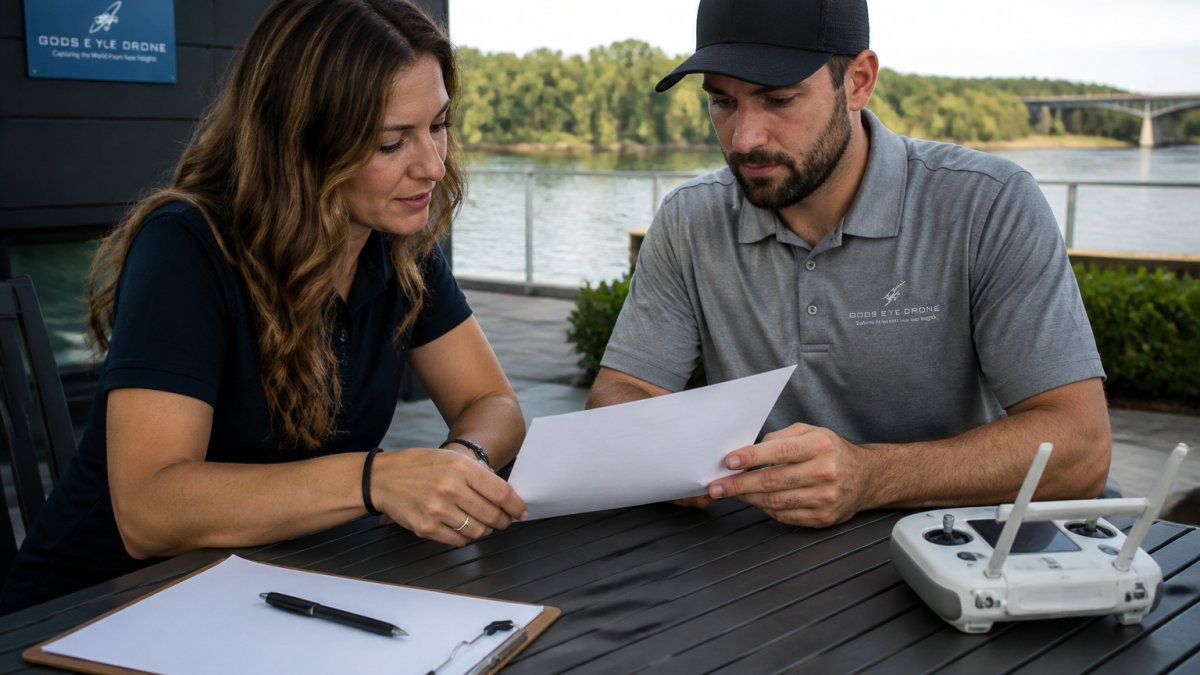
"Aerial shots of the property" can mean different things to a client and a pilot. Write the exact number of edited photos and the video length.
Before you sign, read drone service contract negotiation tips that protect you so you know which terms to push back on.
Using a Drone Photography Contract Template
A contract template is a pre-written agreement you adapt to each project instead of drafting from scratch. Templates are pre-written agreements that can be adapted to a project.
But a template is a starting point, not a finished contract. Here are steps to adapt one for a job:
- Swap in the client's legal name and project address.
- Set the deliverables and flight time for this specific shoot.
- Adjust the pricing menu and deposit amount.
- Add any additional services, like thermal imaging or multispectral crop monitoring.
- Update the cancellation and weather clause if the season demands it.
- Confirm the usage rights match how the client plans to publish the images.
If a template contains generic language, make sure the written terms reflect the agreed expectations.
Templates can spell out expectations in plain terms. A project-specific copy can reflect the terms agreed for a booking.
Drone Photography Pricing and Contracts: Fees, Deposits, and Payment Terms
A drone photography contract can state the total service fee, any deposit, and the payment schedule. It helps to understand each term before signing.
Here is what the money section needs to spell out:
- Total service fee for the agreed scope
- Deposit required to lock the date, and whether it is refundable
- Balance due date, usually before or on final delivery
- Additional services and their rates, listed as a pricing menu
- Late payment terms and any fees
- What triggers a refund versus a credit
What each pricing clause means in practice
A deposit is not the same as a cancellation fee. A cancellation fee is what the client owes if they back out inside a notice window. The contract can distinguish the two.
The balance due date can be tied to a milestone, such as delivery of edited files. Tie the trigger to something the client can verify.
Late payment terms can state a grace period and a consequence. The contract can specify what happens if payment is late.
Scope changes can be addressed in the contract. If the client requests additional work, the contract can state how the change will be handled and confirmed in writing.
Sample clause language you can adapt
The wording should be specific. Here is illustrative language for the core money terms:
:::tip Sample deposit and payment clause "Client shall pay a deposit of [amount] to reserve the shoot date. The deposit is non-refundable if Client cancels within [number] days of the shoot. The remaining balance is due within [number] days of delivery of the edited files. Late balances accrue a fee of [percentage] per month after a [number]-day grace period, and Operator may withhold licensing until the balance is paid in full."
:::tip Sample scope-change clause "Any addition to the agreed shot list, flight time, or deliverable count will be quoted at Operator's published rates and must be approved in writing before the additional work begins."
How pricing is actually built
Pricing depends on the project. A single-property real estate shoot differs from a multi-day construction inspection. When you compare quotes, ask what flight time and how many edited images are included. For a fuller breakdown of fees and deposits, see this drone photography pricing guide.
Here are the money terms a drone photography contract should spell out, and what each one means in practice.
| Item | What it covers | Note |
|---|---|---|
| Total service fee | Fee for the agreed scope | State the full amount |
| Deposit | Locks the shoot date | Not the same as a cancellation fee |
| Balance due date | When the remainder is owed | Often tied to delivery of edited files |
| Additional services | Extra work and rates | Listed as a pricing menu |
| Late payment terms | Grace period and consequence | Can include a monthly fee |
| Refund vs credit | What triggers each | Contract can distinguish the two |
| Scope changes | How added work is handled | Must be approved in writing |
Drone Photo Usage Rights and Licensing
Usage rights define how, where, and for how long a client can use the photos and video. Licensing is the permission granted, and it should be written into the contract, not assumed.
The default assumption many clients make is wrong. Buying a shoot does not automatically grant unlimited, forever, everywhere rights. The contract should state:
- Where the images can appear (listing sites, social media, print, broadcast)
- How long the license lasts
- Whether the client can resell or sublicense
- Whether the operator can use the images in a portfolio
- Exclusivity, if the client wants the images kept off other listings
A real estate agent may need listing rights. A developer may need marketing rights across several channels. Those are different licensing needs.
Commercial use also ties into aviation rules. Flying for a business purpose falls under Federal Aviation Administration Part 107 rules, which you can review through the FAA's Part 107 overview. If you plan to license footage commercially, our step-by-step commercial licensing guide walks through the requirements.
Drone Shoot Cancellation Policy and Weather Rescheduling
A cancellation policy sets what happens when a shoot cannot go forward, whether the client cancels or the weather does. Clear terms here prevent the angriest disputes.
Weather can affect whether an aerial shoot can proceed. The contract should separate two cases:
- Client cancellation: how much notice is required, and whether the deposit is refunded, credited, or forfeited
- Weather or safety cancellation: the operator's right to reschedule, and how the deposit carries to the new date
A clear policy can set expectations for both sides.
Flight Restrictions, Insurance, and Liability Clauses
Flight restrictions, insurance, and liability clauses address what may happen when something goes wrong. This section can be included in an agreement.
Flight restrictions and what an operator can legally promise
Flight restrictions cover where a drone may legally fly. In the United States, commercial drone operations fall under Federal Aviation Administration Part 107 rules, which you can review through the FAA's Part 107 overview. Those rules set limits on altitude, visual line of sight, operations over people, and flight in controlled airspace.
Flying in certain airspace may require prior authorization through the FAA's Low Altitude Authorization and Notification Capability (LAANC) system or a waiver. A contract can address the possibility that a shot may be unavailable if authorization is denied or delayed.
Temporary flight restrictions (TFRs) may affect whether a flight can proceed (Federal Aviation Administration). A contract can address how a TFR or safety condition affects a planned flight.
Property access and consent can be addressed in the contract.
Insurance, liability, and indemnification, the difference matters
These three terms do different jobs:
- Insurance is a policy that may cover claims, subject to its terms. The contract can identify the coverage and limits.
- Liability is who is legally responsible when something goes wrong. The clause should allocate responsibility for property damage, injury, and third-party claims.
- Indemnification is a contractual obligation concerning responsibility for certain claims. It is separate from insurance.
Contract terms can address each party's responsibilities. The wording should reflect the parties' agreement.
:::tip Sample insurance and liability clause "Operator maintains general liability insurance covering its drone operations and will provide a certificate of insurance on request. Client is responsible for obtaining permission from the property owner or manager for access and flight over the site. Each party shall indemnify the other for claims to the extent caused by its own negligence or willful misconduct."
Incident procedures: what happens after something goes wrong
A contract can set an incident procedure, including who gets notified and what documentation follows.
An incident clause can address:
- Notification, the contract can specify whether and when the operator notifies the client of an incident.
- Documentation, the contract can specify what documentation is retained.
- Cooperation, the contract can address cooperation with a claim or investigation.
- Remediation, the contract can address how the parties will handle affected deliverables.
The contract can address how the parties will handle a lost flight. If something does go wrong, this step-by-step guide to filing a drone insurance claim explains how claims work.
Book a Contract Review with Gods Eye Drone
Reading a drone photography contract is one thing. Getting the terms right for your project is another.
Gods Eye Drone is a veteran-owned, full-service drone company with certified pilots. We bring state-of-the-art technology, including advanced FLIR equipment, to every job. Our team supports real estate listings, agriculture, infrastructure inspections, weddings, and search and rescue operations.
Whether you are a real estate agent booking aerial shots or a project manager scheduling an inspection, contract terms can be reviewed before signing.
Ready to discuss a drone project? Book online with Gods Eye Drone.
Frequently Asked Questions
Who owns the rights to drone photos and video?
A contract can specify who owns the photos and video and what rights the client receives. Review the usage rights clause to confirm the terms, including whether the rights are exclusive, how long they last, and whether sublicensing is allowed. If you need full ownership, address that in writing before signing.
What should a drone photography service agreement say about deliverables?
A deliverables clause can list the agreed number of edited photos, video length, and delivery timeline. It can also address file formats, raw files, backups, and what happens if files are lost or corrupted. For real estate work, specify the resolution needed for MLS uploads. A written shot list and delivery schedule can clarify expectations before the flight.
What happens if weather or airspace restrictions prevent a drone shoot?
A weather clause and a drone shoot cancellation policy can explain rescheduling rights, notice requirements, and any deposit terms. Weather or flight restrictions may affect whether a shoot can proceed. Confirm the policy in writing, especially if you have a listing deadline.
Should a drone photography contract include a deposit and cancellation terms?
A contract can state whether a deposit is required and set out cancellation terms. Review the payment schedule and any applicable notice period or refund and rescheduling terms. Confirm the terms in writing before signing.