 ultimate-guide
Professional Drone Service Deliverables Timeline: A Complete Guide
Table of Contents
- Understanding Professional Drone Service Deliverables Timeline
- Types of Drone Deliverables and What to Expect
- Factors Affecting Drone Delivery Time
- Drone Service Workflow From Start to Finish
- Post-Processing Workflow Transparency and Deliverable Formats
- Expedited Drone Data Delivery and Revision Cycles
- Pricing Models and Timeline Impact
- What Makes Professional Drone Service Deliverables Timeline Realistic
- Frequently Asked Questions
Last Updated: July 29, 2026
Understanding Professional Drone Service Deliverables Timeline
When Gods Eye Drone manages a project, clients ask: how long until I get my deliverables? The answer depends on multiple variables, but understanding the professional drone service deliverables timeline upfront prevents frustration and sets realistic expectations. A typical drone project moves through distinct phases: pre-flight planning, flight execution, post-processing, and delivery, each with its own time requirements.
Most clients underestimate how much time data processing requires. The real complexity happens after the drone lands, when raw footage transforms into actionable deliverables through photogrammetry, orthomosaics, 3D modeling, or edited video. Understanding this workflow helps you budget time accurately and avoid costly delays.
Types of Drone Deliverables and What to Expect
Different deliverable types require vastly different processing times. A raw video file takes minutes to deliver. A georeferenced orthomosaic can take days or weeks.
Orthomosaics and Photogrammetry
An orthomosaic is a georeferenced aerial map created by stitching hundreds of overlapping drone photos into a single, geometrically accurate image. A 50-acre construction site with standard resolution typically takes 2-5 business days to process. Higher-resolution imagery or larger areas extend that to 7-14 days. Processing happens in cloud-based platforms like DroneDeploy or Pix4Dmapper, which handle the computational work automatically.
Photogrammetry, the science of extracting 3D spatial data from 2D images, powers both orthomosaics and 3D models. Turnaround time ranges from same-day (for small sites under 10 acres with expedited processing) to 2-3 weeks (for complex terrain or survey-grade accuracy requirements).
Aerial Photography and Videography
Raw footage from a flight mission is ready within hours, sometimes same-day. Edited video requires color grading, transitions, music licensing, and client revisions. A 2-3 minute real estate video typically takes 5-7 business days from flight to final delivery. A 30-second social media clip takes 2-3 days.
The key variable is revision cycles. Professional drone operators typically include 1-2 revision rounds in base pricing; beyond that, expect hourly rate adjustments.
3D Modeling and Point Cloud Data
3D models and point clouds represent the highest complexity in drone deliverables. Photogrammetry-based 3D models take 7-14 business days for typical sites. LiDAR point clouds process faster in some cases, 5-10 days, but require specialized equipment. Both require client review and revision cycles. Very large sites (500+ acres) can stretch timelines to 3-4 weeks.
Factors Affecting Drone Delivery Time
The professional drone service deliverables timeline flexes based on project scope, weather, equipment capabilities, and client expectations.
Project Scope and Flight Mission Complexity
A 5-acre residential lot requires one 15-minute flight and produces deliverables in 2-3 days. A 200-acre industrial site requires multiple flight missions and 10-14 days of processing. Flight mission complexity adds layers: simple nadir photography is fast; oblique angles for 3D reconstruction add flight time and processing complexity. LiDAR missions require specialized flight patterns and more powerful processing.
Deployment frequency also matters. A one-time survey takes 10-14 days total. A weekly construction monitoring program compresses the per-project timeline because the workflow becomes routine.
Data Processing and Cloud-Based Platform Speed
The cloud-based platform you choose directly impacts turnaround time. DroneDeploy processes standard orthomosaics in 24-48 hours for most sites. Pix4Dmapper is slower but more accurate, 3-7 days for survey-grade outputs. SkyeBrowse specializes in fast videogrammetry and delivers 3D models in hours instead of days.
Processing speed trades off against accuracy. Fast platforms sacrifice sub-centimeter precision. Most commercial projects don't need survey-grade accuracy, so faster platforms work fine.
Weather, Lead Time, and Scheduling
Weather is the silent killer of drone project timelines. Rain, high winds, or low visibility ground the aircraft. Professional drone operators build 5-10 day buffers into quoted timelines to absorb weather delays.
Lead time is separate from processing time. If you book a drone service for next week, the pilot needs 3-5 business days notice to schedule the flight and prepare equipment. Ongoing deployments eliminate lead time variability because flights are pre-scheduled.
Drone Service Workflow From Start to Finish
Pre-Flight Planning and Site Survey
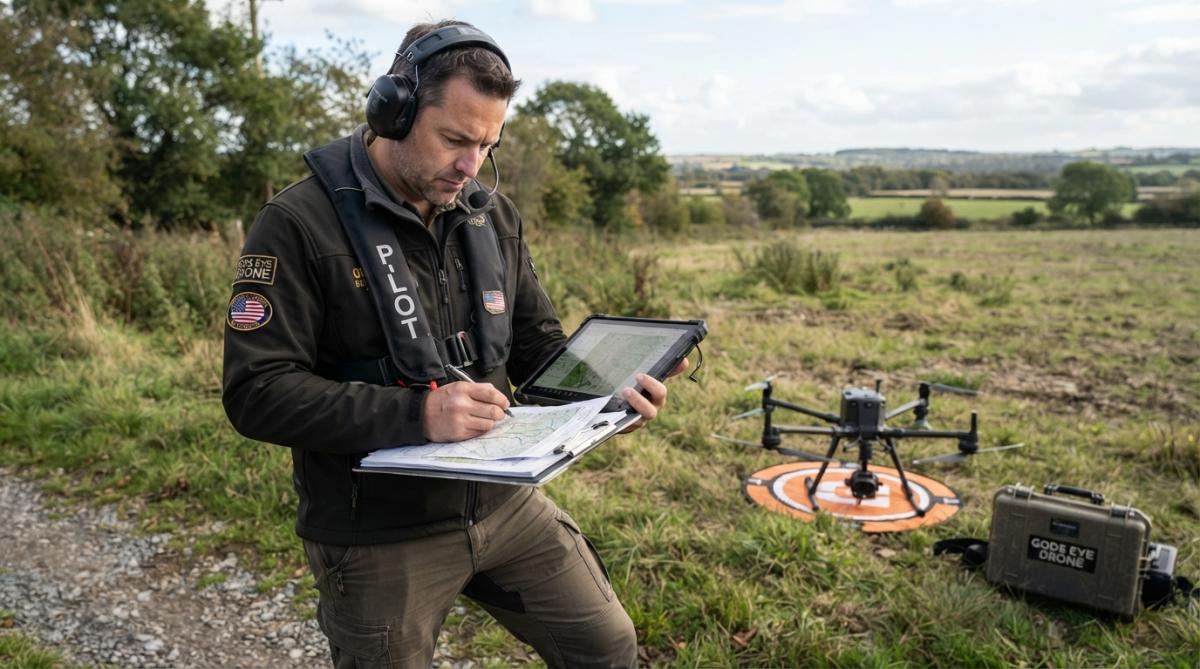
Before the drone launches, the pilot conducts a site survey and plans the flight mission. This phase takes 2-5 business days for new sites. For repeat sites, this shrinks to 30 minutes. The site survey determines flight parameters: altitude, speed, image overlap, and battery requirements. The pilot also files any necessary FAA waivers or airspace approvals if flying near airports or restricted zones.
Flight Execution and Raw Data Capture
The actual flight is the fastest phase. Most drone missions take 15-45 minutes of airtime. A large site might require 3-4 battery swaps, extending the on-site visit to 2-3 hours. The pilot transfers files to secure storage immediately after landing.
Post-Processing and Data Delivery
Post-processing is where the professional drone service deliverables timeline extends significantly. Raw images transform into orthomosaics, 3D models, or edited videos through software processing. This phase takes 3-14 business days depending on deliverable type.
For orthomosaics, the workflow is: upload images to cloud platform → software stitches images into georeferenced map → pilot reviews for accuracy → client reviews for completeness → revisions if needed → final delivery. Each step adds 1-2 days. Expedited processing compresses this to 24-48 hours but costs 30-50% more.
For edited video, post-processing includes color grading, transitions, music selection, voiceover, and graphics overlays. This manual work takes 5-7 days minimum.
Post-Processing Workflow Transparency and Deliverable Formats
Professional drone operators differ significantly in how transparent they are about post-processing and file formats. This transparency directly impacts the professional drone service deliverables timeline and usability of your final files.
File Format Compatibility Guide
Drone deliverables come in multiple formats, and not all are compatible with every software.
| Deliverable Type | Standard Formats | Best For | Compatibility Notes |
|---|---|---|---|
| Orthomosaics | GeoTIFF, JPEG2000, Cloud-optimized GeoTIFF | GIS analysis, mapping, printing | Requires GIS software for full functionality |
| 3D Models | OBJ, LAS (point cloud), E57 | CAD software, 3D visualization, volumetric analysis | OBJ is most universal; LAS requires specialized viewers |
| Aerial Video | MP4, ProRes, DNG sequence | Editing software, web playback, archival | MP4 is most compatible; ProRes better for professional editing |
| Raw Photos | JPEG, RAW (DNG), TIFF | Archival, future reprocessing, professional editing | RAW preserves maximum data for future reprocessing |
| Thermal Data | TIFF, radiometric JPEG, radiometric MP4 | Thermal analysis, infrastructure inspection, search and rescue | Radiometric formats preserve temperature data |
Before booking your drone service, confirm that the deliverable formats are compatible with your software. Format mismatches delay project completion by 1-3 days while the drone operator re-exports files.
Raw Footage vs. Edited Video and Processed Data
Raw footage is available within hours of landing. It's unedited and often requires significant work to make usable. Raw footage also consumes massive storage; a 30-minute flight produces 100-200 GB of video files.
Edited video takes 5-7 days but is production-ready. For geospatial data, processed orthomosaics and 3D models are ready for analysis. Raw image sets require you to run them through processing software yourself. Most clients prefer processed deliverables even if they take longer.
Expedited Drone Data Delivery and Revision Cycles
When timelines are tight, expedited processing is an option. Understanding how it works and what it costs helps you make informed trade-off decisions.
Standardized Service Level Agreements (SLAs)
Professional drone operators should offer transparent SLAs that specify delivery timelines and revision policies. A typical SLA might read:
- Standard delivery: 7-10 business days from flight date
- Expedited delivery: 2-3 business days (premium pricing: +30-50%)
- Rush delivery: Same-day or next-day (premium pricing: +50-100%, availability limited)
- Included revisions: 2 revision rounds included; additional rounds billed hourly
- Revision turnaround: 2-3 business days per revision round
SLAs reduce ambiguity. When both parties understand the timeline upfront, missed deadlines become negotiable exceptions rather than surprises.
Revision Cycles and Feedback Timelines
Revision cycles are the hidden timeline killer. A project scheduled for 10 days slips to 20 days if the client requests 3 revision rounds with 2-3 day gaps between each.
Establish revision policies upfront: How many revision rounds are included? What counts as a revision? How long does each round take? What happens if feedback is late?
The fastest projects have minimal revision cycles because the client knows exactly what they want and approves the first deliverable.
Pricing Models and Timeline Impact
Pricing models directly impact timelines because they determine whether speed or cost takes priority.
Hourly Rate vs. Project-Based Pricing
Hourly rate pricing charges per flight hour plus processing fees. A 1-hour flight costs $500-1,500 depending on pilot experience and equipment. This model creates timeline uncertainty because final cost depends on actual flight time and processing complexity.
Project-based pricing quotes a fixed fee for the entire project, flight, processing, and revisions included. This model creates timeline certainty because the scope and deliverables are defined upfront. Project-based pricing incentivizes efficiency; the operator wants to deliver quickly to maximize profit per hour worked.
Construction Monitoring and Ongoing Deployments
Construction monitoring contracts establish recurring drone flights on a fixed schedule. These ongoing deployments compress the professional drone service deliverables timeline because:
-
Pre-flight planning happens once. The flight path is established in week 1 and reused for subsequent flights.
-
Processing becomes routine. The operator uses the same software settings and delivery format every week.
-
Client expectations stabilize. After the first delivery, the client approves subsequent deliverables faster.
A one-time construction site survey takes 10-14 days. A weekly monitoring program delivers each week's orthomosaic in 3-5 business days after the flight.
What Makes Professional Drone Service Deliverables Timeline Realistic
Not all drone operators deliver on their promised timelines. Understanding what separates reliable operators from unreliable ones helps you choose a partner that won't disappoint.
Certified Pilots, Insurance, and Compliance
A certified Remote Pilot in Command (RPIC) under FAA Part 107 regulations has demonstrated competency and knowledge. Certified pilots are more reliable because they understand regulatory constraints and plan accordingly. Insurance matters too; a fully-insured drone operator carries general liability and drone-specific coverage. Compliance with FAA regulations also impacts timelines. Operating near airports requires airspace approval, which adds 3-5 days. A compliant operator factors these delays into timeline estimates.
Managing Client Expectations
Before booking, ask these questions:
- What's your typical turnaround time for [specific deliverable]?
- How many revision rounds are included?
- What happens if weather delays the flight?
- What's your SLA if you miss the deadline?
- Do you provide progress updates during processing?
Specific answers with written SLAs suggest professionalism. Gods Eye Drone provides transparent timelines because reliability builds reputation. Our certified pilots, state-of-the-art equipment, and cloud-based processing infrastructure ensure we deliver on schedule or communicate delays immediately.
Professional drone service deliverables timeline expectations are achievable when you understand the workflow, choose the right service tier, and establish clear SLAs with your operator. The fastest projects combine simple scope, expedited processing, and minimal revision cycles. Plan accordingly, communicate clearly, and your drone project will deliver on time. Contact Gods Eye Drone today to discuss your project timeline and get a realistic quote with a written SLA.
Frequently Asked Questions
How long does it typically take to receive drone deliverables after the flight mission?
Turnaround time for professional drone service deliverables timeline depends on project complexity and deliverable type. Simple aerial photography may take 3-5 business days; orthomosaics and 3D models from photogrammetry can take 7-14 days due to data processing and post-production. Cloud-based platforms accelerate delivery, but lead time also accounts for weather delays and revision cycles. Always confirm expected delivery dates in your Service Level Agreement (SLA) before deployment.
What factors affect the timeline for drone survey deliverables?
Key factors affecting drone delivery time include project scope size, flight mission complexity, weather conditions, and processing method. Larger sites require more flight time and data processing. Point cloud and 3D modeling projects take longer than simple aerial photography. Weather delays can extend lead times significantly. Cloud-based platform processing is faster than desktop software. The remote pilot in command's experience and equipment quality also influence turnaround. Discuss these variables with your drone service provider upfront.
Can I get expedited drone data delivery, and what does it cost?
Many professional drone services offer expedited options for rush projects. Expedited drone data delivery typically involves priority processing, overtime post-production work, and faster revision cycles. However, pricing depends on quantity, dates, and the specific deliverable formats requested. Contact Gods Eye Drone directly for current expedited options and pricing. Note that weather and equipment availability may still impact even accelerated timelines, so confirm realistic delivery windows before committing.
What's the difference between raw footage and processed deliverables in terms of timeline?
Raw footage delivery is fastest, typically available within 24-48 hours post-flight. Edited video, orthomosaics, and processed geospatial data require significant post-production and data processing time, extending timelines to 7-21 days depending on complexity. File format compatibility and revision cycles add additional days. Clarify which deliverable formats you need early; mixing raw and processed outputs in one project can affect overall turnaround. Professional drone services should provide transparent post-processing workflow timelines for each file type requested.
This article was written using GrandRanker