 how-to guide
How to Choose a Drone Service: A 2026 Vetting Guide
Table of Contents
- How to Choose a Drone Service: Key Evaluation Criteria
- Verify FAA Part 107 Certification and Regulatory Compliance
- Assess Insurance, Liability Coverage, and Contractual Protections
- Understanding Types of Drone Services and Specializations
- Evaluate Equipment, Flight Time, and Technical Capabilities
- Review Portfolio, Case Studies, and Experience for Your Industry
- Drone Service Cost and Pricing Models: What to Expect
- Questions to Ask When Hiring a Drone Pilot
- Frequently Asked Questions
Last Updated: July 28, 2026
When evaluating how to choose a drone service, the stakes are higher than many realize. According to [FAA Commercial Drone Operations(/post/top-traits-of-professional-drone-pilots) Report 2026 | faa.gov], over 450,000 commercial drone operations now occur monthly across the United States, yet nearly 30% of service failures stem from inadequate vetting during the selection process. At Gods Eye Drone, we've analyzed hundreds of project outcomes to understand what separates successful drone service partnerships from costly missteps. Below, we'll show you exactly how to choose a drone service by evaluating the criteria that actually matter, from regulatory compliance to equipment specifications to contractual protections that shield your operation from liability.
How to Choose a Drone Service: Key Evaluation Criteria
Selecting the right drone service provider means matching your specific project needs with a provider whose capabilities, certifications, and operational standards align with your risk tolerance and timeline. The best approach is systematic: evaluate providers across regulatory standing, insurance coverage, equipment quality, industry experience, and contractual clarity.
Verify FAA Part 107 Certification and Regulatory Compliance
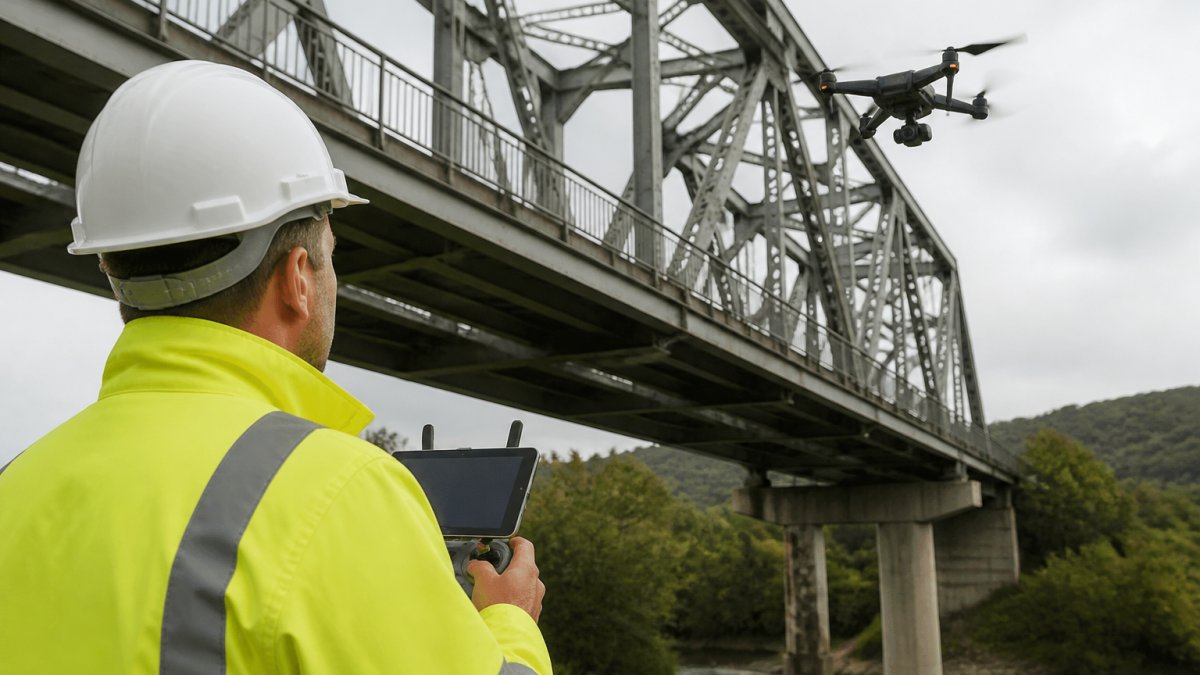
Every commercial drone pilot operating in U.S. airspace must hold an FAA Remote Pilot Certificate under Part 107 regulations. Before you sign anything, confirm that your service provider holds this certification and can provide proof.
What the Remote Pilot Certificate Means
The Remote Pilot Certificate demonstrates that a pilot has passed the FAA's aeronautical knowledge test covering airspace classifications, weather factors, emergency procedures, and operational limitations. FAA Part 107 Remote Pilot Certificate Requirements outlines the specific knowledge areas tested.
However, holding a certificate is just the baseline. Ask how often they conduct continuing education, whether they're part of professional drone organizations, and how they stay current with regulatory changes.
Confirming Airspace Authorization and Flight Planning
Commercial drone operations require airspace authorization in controlled airspace. The LAANC (Low Altitude Authorization and Notification Capability) system allows pilots to request real-time airspace clearance for flights below 400 feet. Your service provider should be familiar with LAANC and understand when to request formal waivers from the FAA.
Ask your potential service provider:
- Do you use LAANC for all flights in controlled airspace?
- How do you handle situations where LAANC access is unavailable?
- Have you obtained any Part 107 waivers, and for what operations?
- What's your process if airspace authorization is denied on your scheduled flight date?
Experienced providers have contingency plans for airspace denials and understand that some projects require advance waiver applications.
Assess Insurance, Liability Coverage, and Contractual Protections
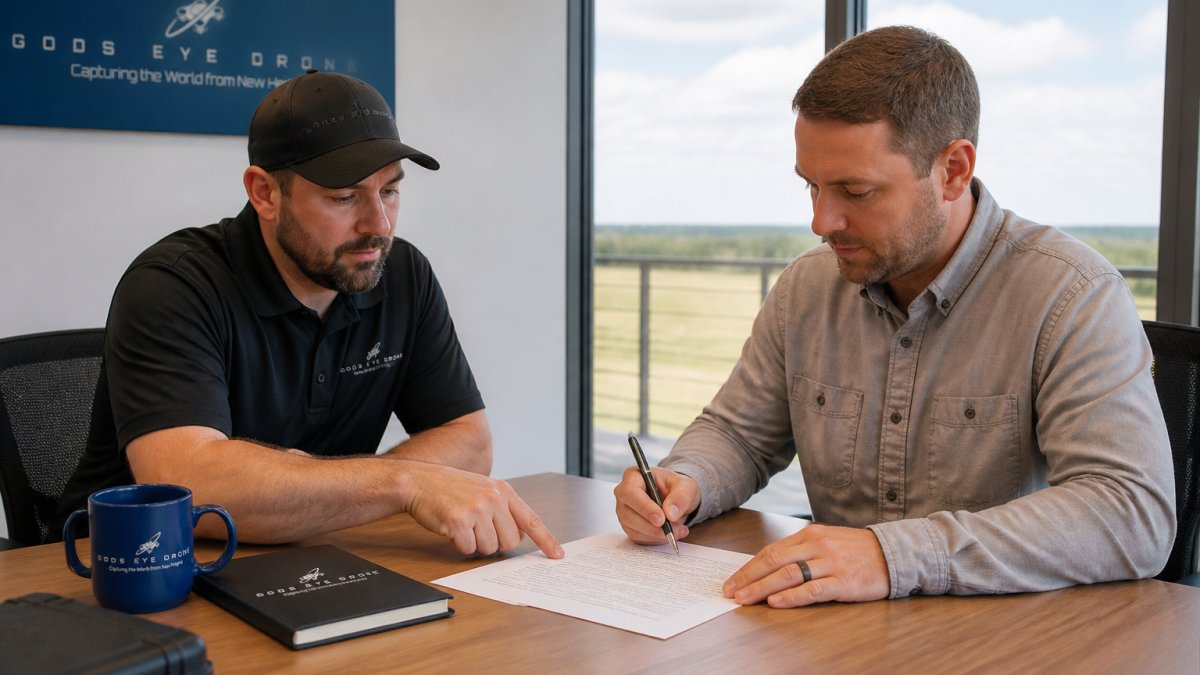
A drone service provider with excellent equipment and certifications but inadequate insurance is a liability risk. You need to understand what happens if the drone crashes, damages property, or injures someone.
Commercial drone operations typically require general liability (covering bodily injury and property damage) and hull coverage (covering drone damage). SkyWatch.AI Commercial Drone Insurance Guide provides a clear breakdown of coverage types and typical policy limits.
Ask for proof of insurance, an actual certificate of insurance naming your project as an additional insured. The minimum liability limit should be $1 million, though $2-5 million is more common for high-risk operations.
Red Flags in Service Agreements
Read the contract carefully. Here are specific language patterns that signal problems:
- "Liability limited to the cost of the flight", If the drone crashes into your building and causes $50,000 in damage, they're only liable for the $500 flight fee. Unacceptable.
- "All footage is owned by the service provider", You're paying for the work but don't own the deliverables. Demand ownership transfer language.
- "No warranty on data quality", If thermal imaging is part of the scope, the provider should guarantee that equipment is calibrated and data is usable.
- Vague scope of work, Specify number of flights, flight time, specific angles, deliverable formats, and revision limits.
A well-drafted agreement includes clear definitions of success, payment terms tied to deliverable milestones, cancellation policies, and data ownership transfer to you.
Understanding Types of Drone Services and Specializations
Not all drone services are created equal. A provider excellent at real estate photography may be completely out of their depth with thermal inspections. Understanding the different service categories helps you match your project to the right expertise.
Thermal Imaging and Specialized Inspections
Thermal imaging drones use infrared cameras to detect heat signatures, making them invaluable for infrastructure inspections, electrical system diagnostics, and search and rescue operations. Gods Eye Drone specializes in thermal imaging with state-of-the-art FLIR equipment, delivering precise results for critical inspections where accuracy directly impacts safety decisions.
Thermal imaging requires understanding thermal physics, interpreting false positives, and maintaining equipment calibration. If you're hiring for thermal work, ask about:
- What thermal camera model do they use, and when was it last calibrated?
- What training have they completed in thermal image interpretation?
- Can they provide thermal images from similar past projects?
- Do they understand the limitations of thermal imaging in different weather conditions?
Photogrammetry, LiDAR, and Data Deliverables
Photogrammetry converts hundreds of aerial images into 3D models, orthomosaics, and point clouds using specialized software. LiDAR uses laser pulses to create highly accurate 3D maps, particularly useful for surveying and construction applications.
These services require post-flight data processing expertise. Ask your potential provider:
- What photogrammetry software do you use (Pix4D, DroneDeploy, etc.)?
- What's your typical processing timeline from flight to final deliverables?
- What formats do you deliver (GeoTIFF, LAS, OBJ, etc.), and are they compatible with our existing systems?
- Do you provide ground control points for increased accuracy?
The quality of deliverables depends heavily on post-processing expertise, not just flight execution.
Evaluate Equipment, Flight Time, and Technical Capabilities
The drone itself matters less than you might think, but certain specifications directly impact project feasibility and deliverable quality.
Sensor Resolution, Gimbal Stabilization, and Obstacle Avoidance
Camera sensor resolution affects detail capture. For real estate and general photography, 20-megapixel sensors are standard. For detailed inspections or large-area mapping, 45+ megapixel sensors provide better clarity.
Gimbal stabilization keeps the camera steady during flight. Three-axis gimbals (pitch, roll, yaw) are the standard for professional work. Obstacle avoidance systems use sensors to detect and avoid collisions, critical for flights in tight spaces.
Battery Life, Payload Capacity, and Return-to-Home Features
Most commercial drones achieve 20-30 minutes of flight time under ideal conditions. Real-world flight time is shorter due to wind and payload weight. A provider should plan flights conservatively.
Payload capacity determines what cameras and sensors can be attached. Thermal cameras are heavier than standard RGB cameras, so confirm the drone can carry your required payload.
Return-to-home (RTH) is an automated safety feature that flies the drone back to its launch point if the pilot loses signal or battery drops critically low.
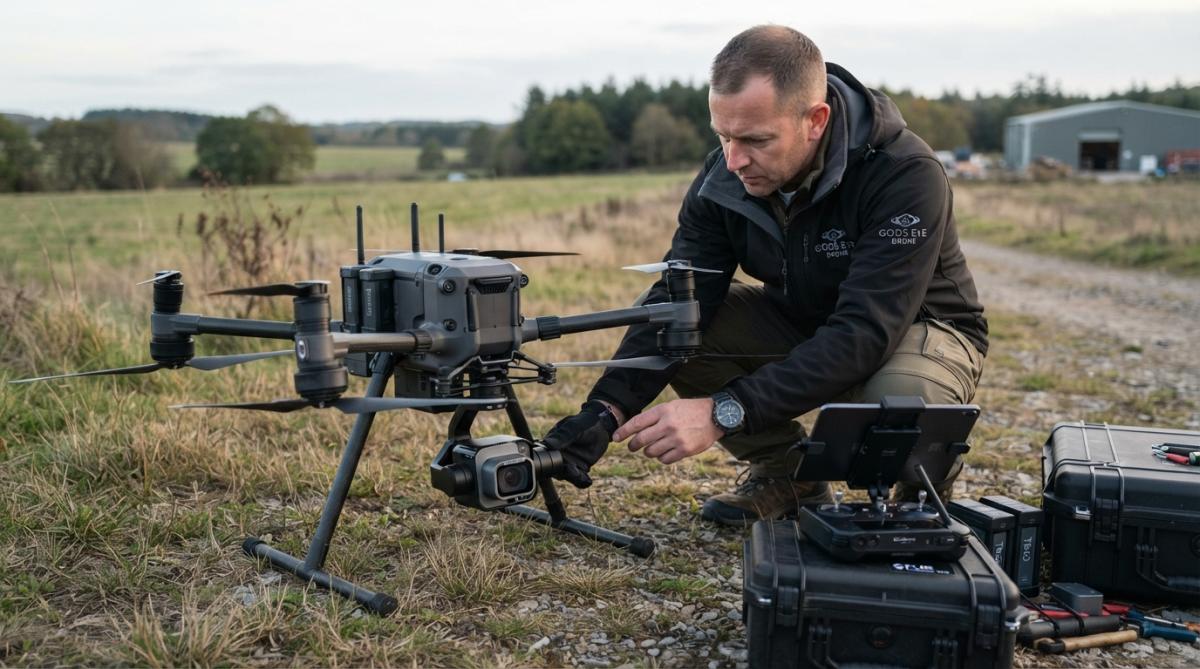
Review Portfolio, Case Studies, and Experience for Your Industry
A strong portfolio tells you what a provider has actually accomplished. Ask to see projects similar in scope and complexity to yours. If you need thermal inspections on a commercial building, you want to see examples of commercial thermal work, not just residential projects.
Request case studies that include specific outcomes. "We identified $45,000 in roof damage that the inspector missed, saving the client from a failed sale" demonstrates real value delivery.
Vetting for Niche Expertise: Thermal vs. Cinematic vs. Search and Rescue
Different drone service specializations require different expertise:
| Service Type | Key Skills | Equipment Focus | Risk Level |
|---|---|---|---|
| Thermal Inspection | Physics knowledge, equipment calibration, data interpretation | FLIR cameras, radiometric processing | Medium, data accuracy impacts decisions |
| Cinematic Video | Composition, color grading, aerial choreography | High-quality RGB cameras, stabilization | Low, aesthetic, not safety-critical |
| Search and Rescue | Real-time situational awareness, rapid deployment, high-stress decisions | Thermal + RGB, extended flight time | High, lives depend on accurate data |
| Real Estate Photography | Quick turnaround, property knowledge, editing | Standard RGB cameras, wide-angle lenses | Low, marketing material |
| Infrastructure Inspection | Technical understanding of systems, safety protocols, detailed documentation | Specialized cameras (thermal, multispectral), high altitude capability | High, safety and regulatory compliance |
Gods Eye Drone's expertise spans thermal inspection and search and rescue operations, with state-of-the-art FLIR equipment and certified pilots trained for high-stakes emergency response. For specialized work, narrow your search to providers with proven experience in that specific niche.
Drone Service Cost and Pricing Models: What to Expect
Pricing varies dramatically based on scope, complexity, location, and turnaround time. Simple real estate photography might run $200-500 per property. Thermal inspections for commercial buildings typically cost $1,500-5,000+ depending on building size and complexity. Search and rescue operations are often charged hourly or on a retainer basis.
How Pricing Structures Vary by Scope and Turnaround Time
Most drone service providers use one of these pricing models:
Per-flight pricing, You pay a flat fee for a single flight or flight session. This works well for one-off projects like real estate photography or a single building inspection.
Hourly billing, The provider charges for flight time plus travel and setup time. This model is common for search and rescue or multi-location surveys.
Project-based pricing, A fixed fee for the entire project regardless of flight hours. This requires a clear scope of work and is common for large infrastructure projects.
Retainer agreements, For ongoing needs, a monthly fee provides priority scheduling and predictable costs.
When comparing quotes, ensure they're apples-to-apples. Ask about:
- What's included in the base fee?
- What are the additional charges (travel time, processing, revisions)?
- What's the payment schedule (upfront, milestone-based, upon delivery)?
- What's the cancellation policy?
A provider who can articulate their pricing model clearly and justify the costs is more trustworthy than one who gives a vague estimate and surprises you with add-ons later.
Questions to Ask When Hiring a Drone Pilot
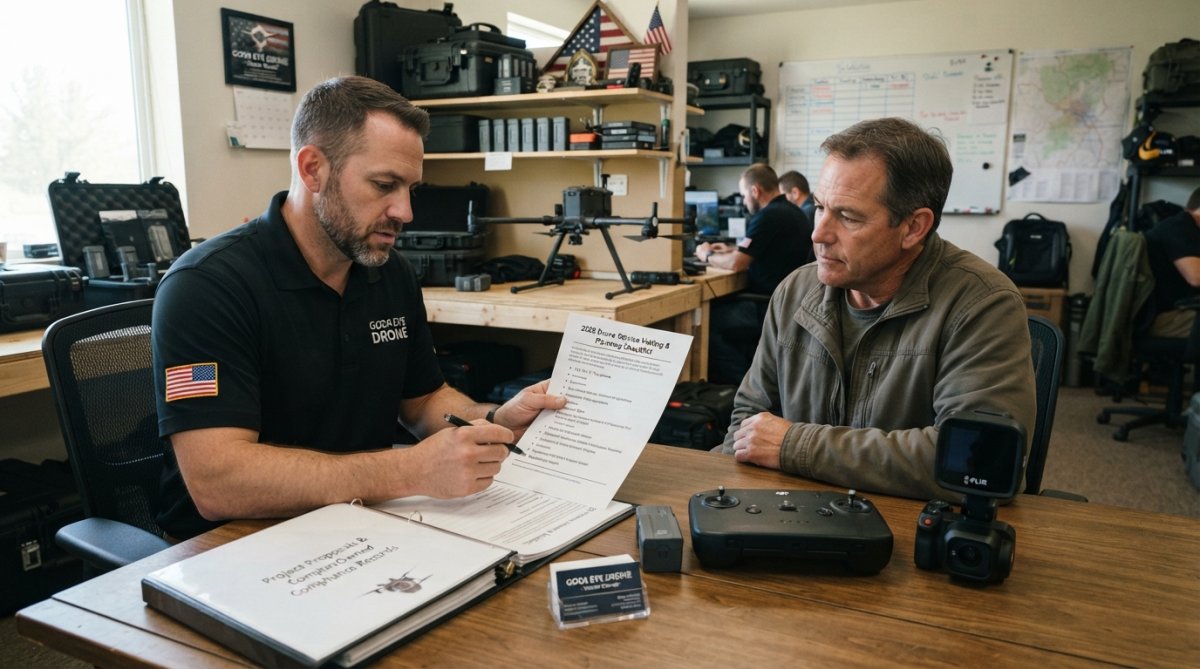
Before signing a contract, have a detailed conversation with your potential service provider. The quality of their answers reveals how seriously they take their work.
Safety Protocols, Data Security, and Post-Flight Deliverables
Ask about their safety procedures:
- What's your pre-flight checklist, and how long does it take?
- How do you handle unexpected obstacles or weather changes during a flight?
- What's your minimum wind speed threshold for operations?
- Do you have backup equipment if your primary drone malfunctions?
Data security matters, especially for sensitive projects:
- How do you store flight footage and raw data?
- How long do you retain data after project completion?
- What encryption or access controls do you use?
- Can you sign a data confidentiality agreement?
Post-flight deliverables define what you actually receive:
- What file formats do you deliver (MP4, ProRes, DNG, GeoTIFF)?
- Are deliverables color-graded or raw?
- How many revisions are included?
- What's your timeline from flight to final delivery?
A provider with thoughtful answers to these questions demonstrates repeatable processes and understands the full scope of professional drone operations.
Ask about their experience with your specific use case:
- Have you worked on similar projects in our industry?
- Can you provide references from clients in our sector?
- What challenges did you encounter on similar projects, and how did you solve them?
- What would you recommend for our specific situation?
The willingness to discuss past challenges and lessons learned signals confidence and experience.
Choosing a drone service requires evaluating regulatory compliance, insurance coverage, equipment capability, and industry experience in a systematic way. The lowest-cost option often becomes the most expensive when quality issues or liability problems emerge. Gods Eye Drone brings veteran-owned expertise, state-of-the-art FLIR thermal equipment, and certified pilots trained for high-stakes operations including search and rescue. For projects where precision, reliability, and professional-grade results matter, their combination of advanced technology and operational discipline delivers the aerial intelligence your project demands. Get started with Gods Eye Drone and move your project forward with confidence.
Frequently Asked Questions
What should I look for when hiring a drone pilot for my project?
When hiring a drone pilot, verify their FAA Part 107 Remote Pilot Certificate, check their liability insurance coverage (typically $1-10 million), review their portfolio for relevant experience, and confirm they understand your specific project scope. Ask about their equipment capabilities, safety protocols, and data handling procedures. Request references from previous clients in your industry and clarify turnaround times for deliverables. A qualified drone service provider should answer detailed questions about airspace authorization, flight planning, and contingency plans if weather disrupts the shoot.
How much do drone services typically cost, and what affects pricing?
Drone service pricing depends on several factors: project scope, flight time required, equipment specialization (thermal imaging or LiDAR costs more than standard photography), location, airspace complexity, and turnaround time. Prices vary significantly based on whether you need simple aerial photography or complex data processing like photogrammetry or 3D modeling. For accurate pricing tailored to your project, contact service providers directly with detailed requirements. Comparing quotes from multiple providers helps you understand the market rate while ensuring you're not sacrificing quality for a lower price.
What certifications and insurance should a professional drone service provider have?
A legitimate drone service provider must hold an FAA Part 107 Remote Pilot Certificate, which requires passing the aeronautical knowledge test and demonstrating flight proficiency. They should carry commercial liability insurance covering at least $1 million in general liability and preferably hull coverage for equipment damage. Ask to see proof of current certificates and insurance policies. Verify their insurance covers your specific use case, some policies exclude certain industries or high-risk operations. Certified pilots with comprehensive insurance protect both your interests and demonstrate their commitment to safety and regulatory compliance.
What questions should I ask a drone service provider before booking?
Ask about their FAA Part 107 certification, insurance coverage limits, equipment specifications (sensor resolution, flight time, obstacle avoidance), experience with your specific industry or project type, safety protocols, weather contingencies, data security practices, and how they handle raw footage. Request examples of previous work (portfolio or case studies), turnaround time for deliverables, and their process for flight planning and airspace authorization (LAANC). Clarify payment terms, what happens if weather cancels the shoot, and how they store and protect your data. These questions reveal whether they're professional, experienced, and aligned with your project needs.
This article was written using GrandRanker