 ultimate-guide
Hire a Drone Pilot for Events: A Complete Guide
Table of Contents
- Why Hire a Drone Pilot for Your Event
- What FAA Part 107 Certified Drone Pilots Must Know
- Understanding Drone Event Photography Pricing
- Drone Liability Insurance Requirements for Events
- How to Book a Professional Drone Pilot
- Step 1: Identify and Vet Candidates
- Step 2: Provide Event Details and Airspace Information
- Step 3: Understand Airspace Authorization Requirements
- Step 4: Discuss Safety and Crowd Management
- Step 5: Clarify Deliverables and Timeline
- Step 6: Finalize the Contract
- What to Ask Before Booking
- Timeline and Deliverables
- Common Mistakes to Avoid When Hiring a Drone Operator
- Frequently Asked Questions
Last Updated: September 22, 2026
Why Hire a Drone Pilot for Your Event
When you hire drone pilot events, aerial footage captures your entire event story, something ground-level photography cannot. That's where a professional drone pilot becomes essential.
A professional drone pilot delivers cinematic videography with wide-angle establishing shots and dynamic movement that standard cameras cannot achieve. More importantly, a certified professional brings safety, legal compliance, and technical expertise that protects your event and liability.
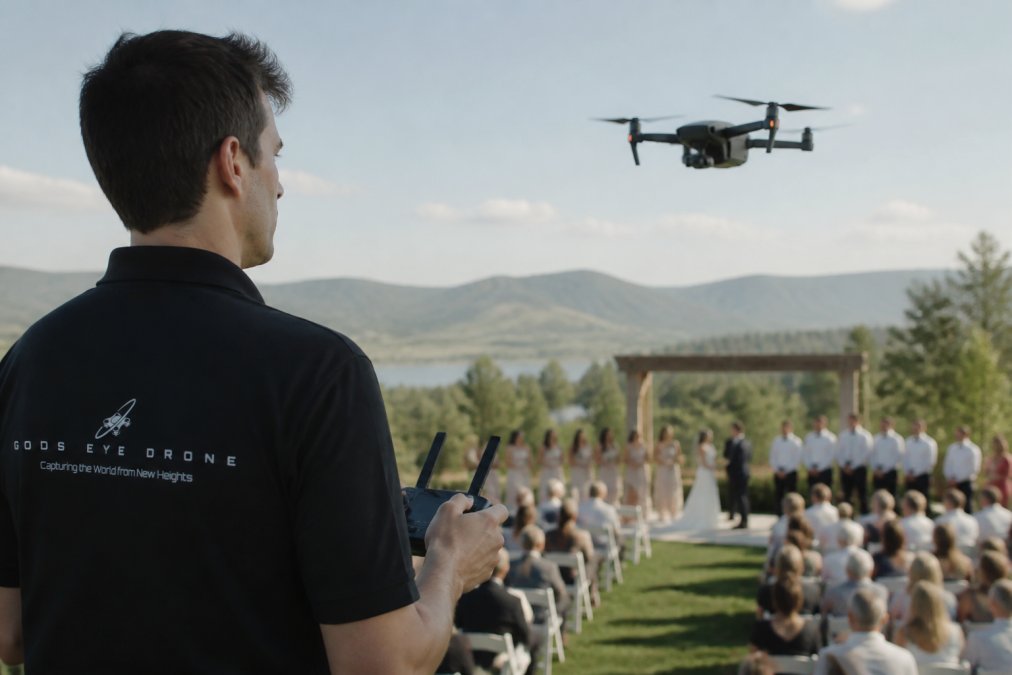
Professional drone coverage consistently becomes the centerpiece of how events are marketed and remembered, from a bride's first look captured from 50 feet up to a corporate retreat's group shot showing 200 attendees in formation.
The challenge is finding someone who understands event logistics, knows airspace rules, carries proper insurance, and delivers polished final product.
What FAA Part 107 Certified Drone Pilots Must Know
The Federal Aviation Administration requires commercial drone operators to hold a Part 107 certification, confirming they've passed a knowledge test and understand federal airspace rules.
When you hire a drone pilot for events, verify they hold an active Part 107 certificate. This is federal law for commercial drone work and confirms they understand airspace restrictions, weather limitations, and safety protocols.
Part 107 compliance means your pilot knows how to request airspace authorization through LAANC when flying near airports and understands altitude restrictions that vary by location.
A certified pilot understands gimbal stabilization, payload limitations, and how weather conditions affect flight safety and video quality.
Understanding Drone Event Photography Pricing
Pricing depends on event duration, complexity, travel distance, post-production requirements, and deliverable type. Understanding the rate structure helps you budget accurately and identify fair quotes.
Typical Pricing Models
Professional drone operators structure pricing in three primary ways:
Hourly Rates:
Flat Project Fees:
Package-Based Pricing:
What Affects Your Quote
Event Duration:
Travel Distance:
Post-Production Complexity:
Equipment and Crew:
Airspace Complexity:
Real-World Examples
Examples: Suburban wedding (3 hours, edited reel, raw clips) = $1,500-$2,200. Corporate team photo (1 hour, raw footage) = $300-$600. Full-day festival (6-8 hours, multiple videos, stills) = $3,500-$6,000+.
Evaluating Quotes
Compare proposals on: deliverables (raw files, edited video, stills, revisions), timeline (rush delivery costs more), equipment quality (current-generation drones with professional gimbals), experience level (5+ years preferred), and insurance/licensing (Part 107 certification and liability insurance required).
Drone Liability Insurance Requirements for Events
If a drone malfunctions and damages property or injures someone, liability depends on your insurance and your pilot's insurance.
How to Book a Professional Drone Pilot
Step 1: Identify and Vet Candidates
Start by identifying operators who specialize in event coverage. Look for portfolios that show weddings, corporate events, or the specific type of event you're planning. Check their Part 107 certification status (ask for their certificate number; the FAA maintains a public registry, though most reputable operators will show you credentials upfront). Verify they carry liability insurance and ask for a certificate of insurance showing coverage amount and active policy dates.
Step 2: Provide Event Details and Airspace Information
Once you've identified candidates, reach out with comprehensive event information:
- Event date, time, and duration
- Exact venue address and GPS coordinates (this matters for airspace checks)
- Type of event (wedding, corporate, festival, real estate, etc.)
- Expected number of attendees (affects safety planning)
- Specific shots you want captured (ceremony, crowd, venue overview, details)
- Venue restrictions (does the venue allow drones? Are there building restrictions or airspace concerns?)
- Expected weather conditions (seasonal wind patterns, typical cloud cover)
Step 3: Understand Airspace Authorization Requirements
LAANC (Low Altitude Authorization and Notification Capability): If your event is within 5 nautical miles of an airport, your pilot must request authorization through LAANC before flying. This is a real-time system that checks airspace availability and issues instant approvals (or denials) for flights up to 400 feet above ground level. LAANC requests take seconds to minutes and are usually approved automatically. Your pilot handles this, you don't need to do it, but you should confirm they understand the requirement.
Step 4: Discuss Safety and Crowd Management
If your event has attendees, safety protocols are essential. Ask your drone pilot:
- How will you maintain visual line of sight? (The pilot must see the drone at all times; this affects where they can position themselves and what shots are possible.)
- What's your plan if the drone malfunctions during flight? (They should have backup equipment or a clear protocol for stopping the flight.)
- How will you manage the crowd? (For events with attendees, the pilot needs a clear area to launch and land. They should brief event staff on keeping people back from the drone's flight path.)
- What's your weather abort threshold? (Wind speed, rain, lightning, when do you stop flying?)
- Do you need a safety spotter? (For complex events, a second person watches the airspace while the pilot focuses on camera control. This is best practice for large events.)
Step 5: Clarify Deliverables and Timeline
Before signing a contract, nail down exactly what you're getting:
- Format and resolution: 4K video? 1080p? What file format (MP4, ProRes, etc.)?
- Edited vs. raw: Are you getting a polished highlight reel, raw footage, or both?
- Number of deliverables: How many edited videos? How many raw clips for social media?
- Revisions included: Can you request edits or changes? How many rounds are included?
- Delivery timeline: When will you receive files? (Rush delivery costs more.)
- Usage rights: Can you use the footage commercially, or just for personal sharing? Can you post it on social media?
- Storage and backup: Will they provide cloud storage access, or just download links? How long will files be available?
Step 6: Finalize the Contract
A professional operator will provide a written agreement covering:
- Scope of work (event details, flight duration, deliverables)
- Pricing and payment terms (deposit required, balance due date)
- Cancellation and weather policies (What happens if storms roll in? Can you reschedule for free?)
- Liability and insurance (Confirmation of their coverage and what it protects)
- Intellectual property (Who owns the footage? Can you edit it or use it commercially?)
Don't skip the contract. It protects both parties and prevents misunderstandings when emotions are high (like the day before your wedding).
What to Ask Before Booking
Before committing to a drone pilot, ask these critical questions:
- Are you FAA Part 107 certified? Request their certificate number and confirmation that it's current.
- Do you carry liability insurance? Ask for proof of coverage and the policy amount ($1-$2 million is standard).
- Have you flown events like mine? Look at their portfolio. Have they shot similar events successfully?
- What's included in your package? Clarify whether you're getting raw footage, edited highlights, or both. How many revisions are included?
- What happens if weather cancels the shoot? Ask about rescheduling options and cancellation policies upfront.
- How long until I receive deliverables? Understand the timeline for editing and final delivery.
- What equipment do you use? Ask about camera quality, gimbal stabilization, and whether they have backup equipment if something fails.
- Have you flown at this venue before? If not, will you scout it in advance? Understanding the venue layout, wind patterns, and airspace is critical.
- Who handles airspace authorization? Confirm they'll manage LAANC requests and any necessary waivers.
Timeline and Deliverables
Most professional drone operators need 2-3 weeks to deliver final edited video after an event. This accounts for footage review, color correction, audio mixing, and any custom editing you've requested. Raw footage often arrives within a few days, but don't expect polished final product overnight.
Common Mistakes to Avoid When Hiring a Drone Operator
Avoid these mistakes: booking based on price alone (cheap quotes often mean inexperienced pilots or minimal post-production), not verifying Part 107 certification and liability insurance, failing to communicate your vision clearly, assuming the operator has scouted your venue, and signing contracts without understanding cancellation and weather policies.
Frequently Asked Questions
What qualifications should I look for when hiring a drone pilot for an event?
Your drone pilot must hold an FAA Part 107 certificate, demonstrating they've passed the remote pilot knowledge test and met aeronautical experience requirements. Verify they carry liability insurance specifically for commercial drone operations and ask about their experience with events similar to yours. Request a portfolio or demo reel showing previous event coverage, and confirm they understand local airspace restrictions and LAANC (Low Altitude Authorization and Notification Capability) procedures for your location.
How much does drone event photography pricing typically depend on?
Drone event photography pricing depends on several factors: event duration, complexity of shots needed, whether you want raw footage or edited deliverables, travel distance, weather contingencies, and the pilot's experience level. Cinematic videography with gimbal stabilization and post-production editing costs more than simple aerial photography. Contact your chosen service provider for a customized estimate based on your event's scope.
Why is drone liability insurance important for event coverage?
Drone liability insurance protects you and the event organizer from financial responsibility if the UAV causes property damage or injury. Ask for proof of current insurance before booking, and confirm the policy remains active on your event date.
What happens if weather prevents the drone pilot from flying on my event day?
Professional drone operators have weather contingency protocols. Discuss this upfront when booking and get the policy in writing. Always confirm the rescheduling terms and weather decision-making process before signing any agreement.