 ultimate-guide
Drone Wedding Videography: Tips for Cinematic Coverage
Table of Contents
- Why Drone Wedding Videography Delivers Cinematic Impact
- FAA Part 107 Wedding Drone Requirements and Legal Compliance
- Building Your Drone Wedding Video Shot List
- Equipment, Weather, and Flight Safety for Wedding Drones
- How to Process Raw Drone Footage Into Finished Wedding Video
- Insurance, Liability, and Vendor Coordination
- Choosing a Professional Drone Operator for Your Wedding
- Frequently Asked Questions
Last Updated: August 25, 2026
Why Drone Wedding Videography Delivers Cinematic Impact
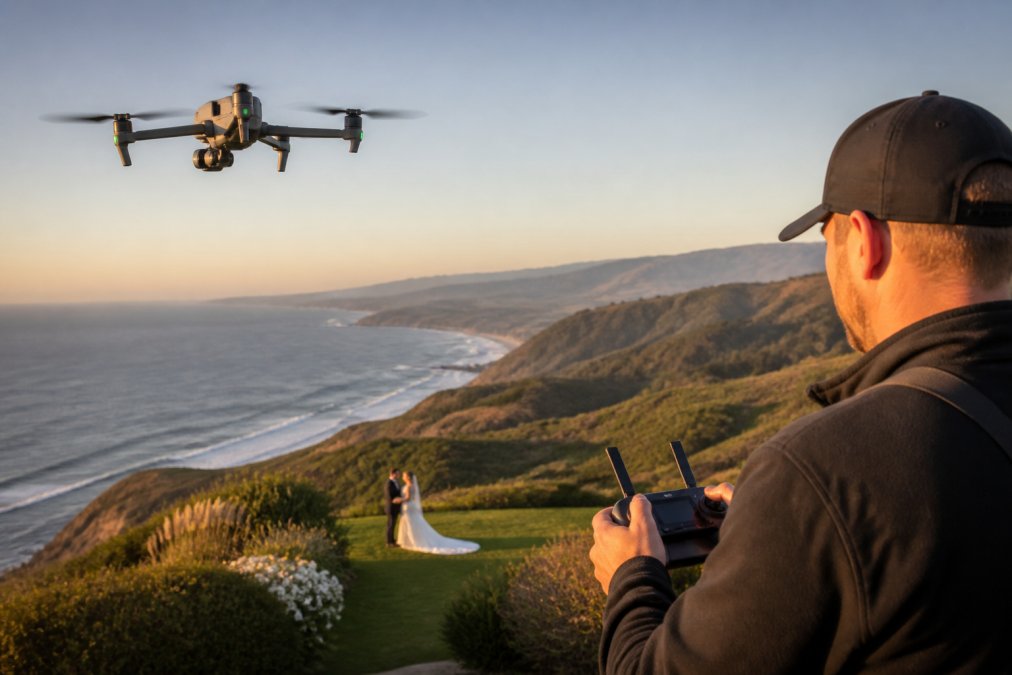
Drone wedding videography transforms how couples experience their celebration. At Gods Eye Drone, we've seen firsthand how aerial perspectives capture moments that ground-level cameras simply cannot reach. A bird's-eye view of your ceremony reveals the full scale of your venue, the arrangement of guests, and the emotional geography of your day in ways that feel cinematic and immersive.
The difference between traditional videography and drone wedding videography comes down to perspective. When your videographer stays on the ground, they're limited to eye-level shots. Add a drone to your coverage, and suddenly you have access to sweeping reveals, dynamic transitions, and establishing shots that make your wedding film feel like a professional production. The real skill is selecting moments that tell your story, not just capturing endless footage.
[The FAA's official guidance on Part 107(/post/what-an-faa-part-107-drone-pilot-does) commercial drone operations | faa.gov]
FAA Part 107 Wedding Drone Requirements and Legal Compliance
If you're hiring a drone operator for your wedding, they must hold a Remote Pilot Certificate under FAA Part 107. This is the legal requirement for any commercial drone work in the United States. Your operator needs to have passed the knowledge test, demonstrated flight proficiency, and maintained their certification through recurrent training.
Here's what this means for your wedding day. Your drone pilot must:
- Maintain visual line of sight with the aircraft at all times
- Keep the drone below 400 feet above ground level
- Avoid flying over people (with limited exceptions for small drones in controlled airspace)
- Not fly at night without special FAA waiver approval
- Follow all local airspace restrictions, which vary by venue
Before you book a drone operator, ask to see their Part 107 certificate. The FAA's Part 107 certification requirements outline exactly what operators must know and demonstrate.
Your venue may also require additional permits. Some wedding locations, parks, historic sites, and private estates have their own drone policies. A professional operator like Gods Eye Drone handles these coordination details, checking local regulations and obtaining necessary approvals before your wedding date. Weather also factors into legal considerations. The FAA requires Part 107 pilots to assess conditions before flight. If winds exceed safe operating limits, visibility is poor, or precipitation is present, your operator should decline the flight rather than push forward.
Building Your Drone Wedding Video Shot List
A shot list is your blueprint for drone coverage. Without one, you end up with hours of footage that doesn't tell a coherent story. Collaborate with your drone operator weeks before your wedding to identify specific moments and locations where aerial footage will have the most impact.
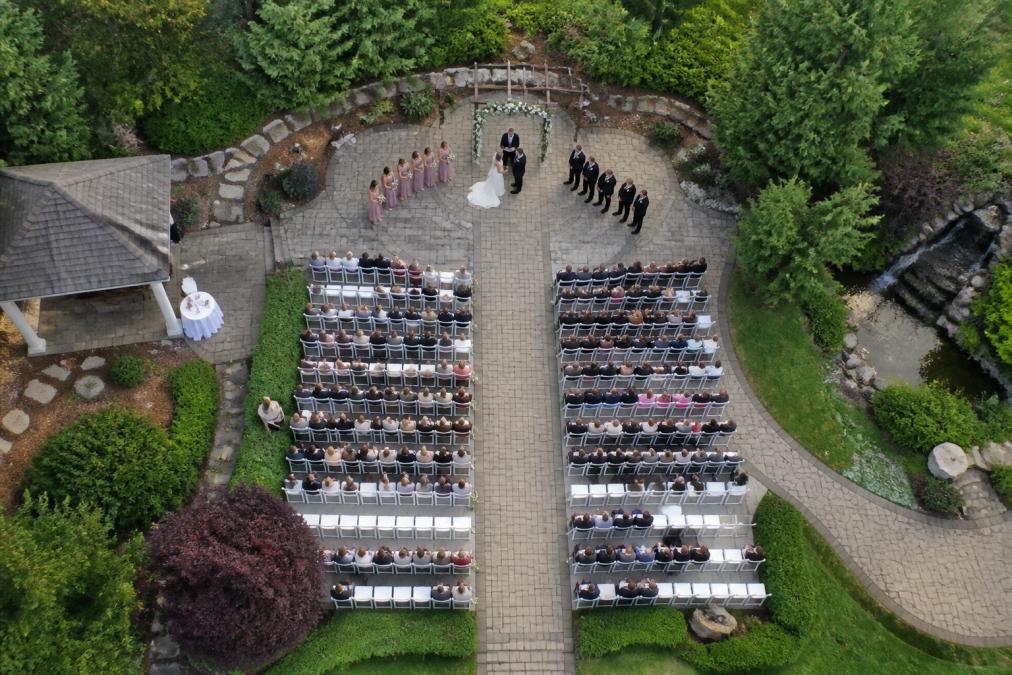
Essential Shots for the Ceremony
Your ceremony is the emotional anchor of your wedding film. Drone shots here should establish the moment and capture the scale of your celebration.
Venue reveal. As guests arrive, a drone shot pulling back from the altar reveals your full venue, flowers, seating arrangement, and landscape beyond. This shot works best 15-30 minutes before the ceremony starts.
Processional coverage. A drone positioned to the side or behind the altar captures the full processional, bridesmaids, groomsmen, and the bride's entrance, in one fluid shot, giving your editor material for a seamless montage.
Ring exchange and first kiss. A drone shot from above captures the symbolic gestures while showing guests' reactions, conveying both intimacy and celebration.
Recessional. As you walk back down the aisle as a married couple, a drone shot following you creates a triumphant, cinematic moment with forward momentum.
Reception and Celebration Footage
Reception footage is where drone videography truly shines. Ground cameras capture speeches and dancing, but a drone captures the energy of the entire space.
Aerial reception overview. Early in the reception, capture a sweeping shot of the full space, tables, dance floor, and venue setup to establish the party's energy.
First dance. A drone positioned above and slightly back from the dance floor captures your first dance in context, showing the venue and guests watching, one of the most requested shots.
Cake cutting and toasts. Position the drone to capture these moments from above, showing the gathering of guests and the action unfolding.
Dancing and celebration. Wide shots of the dance floor show energy and movement, creating a sense of celebration that close-up shots alone cannot convey.
Sunset or golden hour shots. If your reception extends into evening, capture the changing light. A drone shot of your venue bathed in golden hour light creates a romantic, cinematic moment.
Equipment, Weather, and Flight Safety for Wedding Drones
The drone itself matters, but it's only one part of the equation. A professional operator brings the right equipment, understands weather limitations, and prioritizes safety throughout the day.
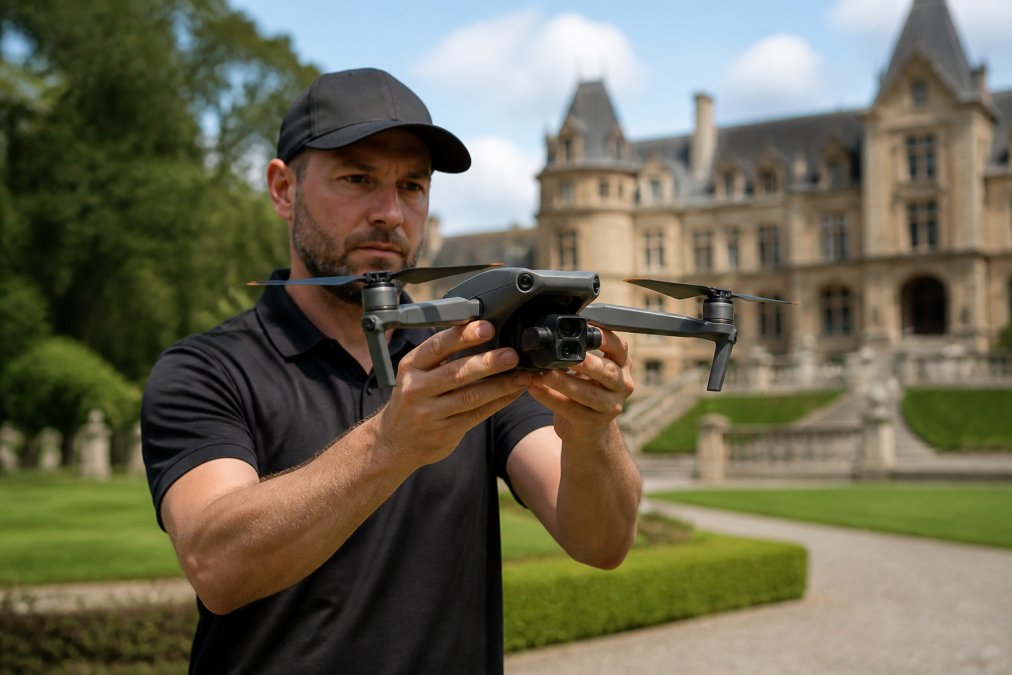
Professional-grade drones. The DJI Mavic 3 Pro and DJI Air 3 are industry standards for wedding videography, offering 4K video at 60 frames per second, gimbal stabilization, and flight times allowing extended coverage without constant battery swaps. A professional operator invests in multiple batteries, backup drones, and redundant equipment because weddings don't have do-overs.
Gimbal stabilization and image quality. The gimbal mechanically stabilizes the camera, absorbing wind movement and pilot inputs to deliver smooth, cinematic footage. When you watch a drone shot that feels effortless and flowing, that's gimbal stabilization at work.
Weather assessment. Wind is the primary constraint. Drones like the DJI Air 3 and Mavic 3 are rated to handle winds up to 27 mph (12 m/s), but performance may deteriorate at around 75% of these limits (dji.com). Your operator checks wind forecasts days in advance and makes real-time assessments on your wedding day. Rain and low visibility also limit operations, as drone sensors struggle in heavy fog or precipitation.
Battery management and flight time. A typical drone battery lasts 25-35 minutes of actual flight time. For a full wedding day, your operator needs multiple batteries to cover ceremony footage, reception highlights, and golden hour shots.
Safety protocols. Before every flight, your operator performs a pre-flight checklist: verifying GPS signal, checking battery health, confirming airspace clearance, and assessing wind conditions. During flight, they maintain visual line of sight and stay aware of obstacles and hazards.
How to Process Raw Drone Footage Into Finished Wedding Video
Raw drone footage is only the beginning. The real artistry happens in post-production, where color grading, editing, and sound design transform raw files into a finished wedding film.
Most professional drone operators deliver footage in 4K resolution. Your editor imports this into editing software like Adobe Premiere Pro or DaVinci Resolve and begins selecting the best takes, color grading for consistency, and assembling sequences that tell your story.
Color grading and consistency. Drone footage shot at different times of day has different color temperatures. A skilled colorist adjusts these to create visual consistency throughout your film, ensuring transitions between shots feel intentional.
Editing for pacing and emotion. Your editor selects the best moments, trims unnecessary sections, and sequences shots to build emotional momentum. Drone shots are woven in at moments where the aerial perspective adds meaning, the ceremony reveal, first dance, and celebration.
Audio and sound design. Your wedding film needs audio, typically your vows and ceremony audio, music, and ambient sound from the reception. Drone footage wind noise is removed or minimized, and music is layered in to support the emotional arc.
Turnaround time expectations. A professional wedding film typically takes 4-12 weeks from delivery of raw footage to final deliverable. Gods Eye Drone provides clear timelines upfront so you know when to expect your finished film.
Insurance, Liability, and Vendor Coordination
Before your drone operator arrives at your wedding, several logistical and legal details need to be in place.
Liability insurance. A professional drone operator carries commercial liability insurance covering bodily injury and property damage. Ask your operator for a certificate of insurance naming your wedding venue as an additional insured.
Venue permits and airspace clearance. Some venues require advance notice or permits for drone flights. Your operator should handle this coordination, but you can expedite things by providing venue contact information and any existing restrictions.
Vendor coordination. Your drone operator needs to know the ceremony timeline, guest arrival time, and any restricted areas. Communicate these details at least a week before your wedding. Your operator also needs to coordinate with your photographer and videographer to avoid conflicts.
Privacy and footage rights. Clarify upfront what happens to your raw footage. Most professional operators deliver edited final films but retain the raw files for their portfolio. Ask whether you'll have access to the raw footage and what rights you have to use it.
Weather contingency. Discuss what happens if weather prevents drone flights on your wedding day. A reputable operator will offer to reschedule the drone coverage for a future date or provide a partial refund if rescheduling isn't possible. Get this in writing before you book.
Choosing a Professional Drone Operator for Your Wedding
Not all drone operators are created equal. The difference between a certified professional and someone who bought a drone and started taking gigs can be substantial.
Verify Part 107 certification. Ask to see your operator's Remote Pilot Certificate. A professional will have no problem providing this documentation, confirming they've passed the FAA knowledge test and demonstrated flight proficiency.
Review portfolio work. Ask for examples of wedding films. Watch how they've used drone footage in context, does it enhance the story or feel inserted for the sake of it? Do the color grades look professional? Does the editing feel intentional?
Ask about equipment. What drone do they fly? What backup equipment do they have? A professional carries multiple batteries, a backup drone, and redundant equipment. If they show up with a single battery and no backup plan, that's a red flag.
Understand their process. Do they create a shot list with you in advance? Do they scout your venue beforehand? Professional operators invest time in planning because it produces better results.
Check references and reviews. Ask for references from previous weddings. Real couples can tell you whether the operator was professional, delivered on time, and was easy to work with on the wedding day.
Discuss pricing and deliverables. What's included in the package? How many hours of drone coverage? What format will you receive the finished film in? How many revisions are included? Clear pricing prevents surprises later. Gods Eye Drone provides transparent pricing and detailed deliverables.
Assess communication and professionalism. How responsive are they to emails and calls? Do they answer your questions clearly? A professional operator communicates well before your wedding day, which means they'll be organized and prepared when they arrive.
Drone wedding videography isn't a luxury add-on, it's a way to preserve your wedding day in a way that traditional videography cannot match. A professional operator like Gods Eye Drone brings certified expertise, professional-grade equipment, and a deep understanding of how to use aerial perspectives to tell your story. When choosing a drone operator, prioritize experience, certification, and a clear planning process. The result is a wedding film that captures not just what happened, but how it felt to be there.
=== FAQ ANSWERS (audit these too, same rules) ===
[1] Q: What makes professional drone wedding videography different from DIY drone footage? A: Professional drone wedding videography combines technical expertise with creative storytelling. Certified drone operators understand flight paths, gimbal stabilization, and shot composition to capture cinematic perspectives that amateur footage cannot achieve. They plan a comprehensive shot list before the event, manage battery and flight time efficiently, and deliver color-graded, edited footage ready for viewing. DIY footage often lacks smooth transitions, proper exposure, and the technical polish that elevates a wedding film.
[2] Q: Do I need a remote pilot certificate to fly a drone at a wedding? A: Yes, if you are operating a drone commercially (which wedding videography is), you must hold a Part 107 remote pilot certificate from the FAA. This requires passing a written exam covering airspace regulations, safety protocols, and operational limitations. The pilot must maintain visual line of sight, respect altitude restrictions (400 feet above ground level), and follow all local airspace restrictions. Hiring a certified drone operator ensures your wedding footage is captured legally and safely.
[3] Q: How long does it take to receive finished drone wedding video after the event? A: Post-production turnaround typically ranges from 4 to 12 weeks, depending on the amount of raw footage, editing complexity, and color grading requirements. Professional editors must review hours of flight footage, organize clips by scene, sync audio, apply color grading, and add transitions. Expedited turnaround is possible but may increase costs. Discuss timeline expectations with your drone operator before booking to ensure the final video aligns with your needs, such as sharing clips on social media or screening at a reception.
[4] Q: What insurance and liability coverage do I need for drone wedding videography? A: Professional drone operators carry general liability insurance covering accidental property damage or injury during flights. Many carry coverage up to $1 million or more. Some operators obtain event-specific liability coverage that names the venue or wedding couple as additional insureds, protecting all parties. Verify that your operator's insurance policy covers drone operations and that coverage limits are adequate for your venue. Request a certificate of insurance before the wedding date to confirm active coverage.
Frequently Asked Questions
What makes professional drone wedding videography different from DIY drone footage?
Professional drone wedding videography combines technical expertise with creative storytelling. Certified drone operators understand flight paths, gimbal stabilization, and shot composition to capture cinematic perspectives that amateur footage cannot achieve. They plan a comprehensive shot list before the event, manage battery and flight time efficiently, and deliver color-graded, edited footage ready for viewing. DIY footage often lacks smooth transitions, proper exposure, and the technical polish that elevates a wedding film.
Do I need a remote pilot certificate to fly a drone at a wedding?
Yes, if you are operating a drone commercially (which wedding videography is), you must hold a Part 107 remote pilot certificate from the FAA. This requires passing a written exam covering airspace regulations, safety protocols, and operational limitations. The pilot must maintain visual line of sight, respect altitude restrictions (400 feet above ground level), and follow all local airspace restrictions. Hiring a certified drone operator ensures your wedding footage is captured legally and safely.
How long does it take to receive finished drone wedding video after the event?
Post-production turnaround typically ranges from 4 to 12 weeks, depending on the amount of raw footage, editing complexity, and color grading requirements. Professional editors must review hours of flight footage, organize clips by scene, sync audio, apply color grading, and add transitions. Expedited turnaround is possible but may increase costs. Discuss timeline expectations with your drone operator before booking to ensure the final video aligns with your needs, such as sharing clips on social media or screening at a reception.
What insurance and liability coverage do I need for drone wedding videography?
Professional drone operators carry general liability insurance covering accidental property damage or injury during flights. Many carry coverage up to $1 million or more. Some operators obtain event-specific liability coverage that names the venue or wedding couple as additional insureds, protecting all parties. Verify that your operator's insurance policy covers drone operations and that coverage limits are adequate for your venue. Request a certificate of insurance before the wedding date to confirm active coverage.
This article was written using GrandRanker