 listicle
Drone Roof Inspection: Why Professional Pilots Matter
Table of Contents
- Why Drone Roof Inspection Outperforms Traditional Methods
- Thermal Roof Inspection Services and Infrared Technology
- High-Resolution Aerial Photography for Damage Detection
- FAA Part 107 Certified Drone Pilots: What You Need to Know
- Drone Roof Inspection Cost: Understanding Pricing Factors
- Insurance Claims and Documentation Benefits
- Choosing Between DIY and Professional Drone Inspections
- Frequently Asked Questions
Last Updated: September 25, 2026
Why Drone Roof Inspection Outperforms Traditional Methods
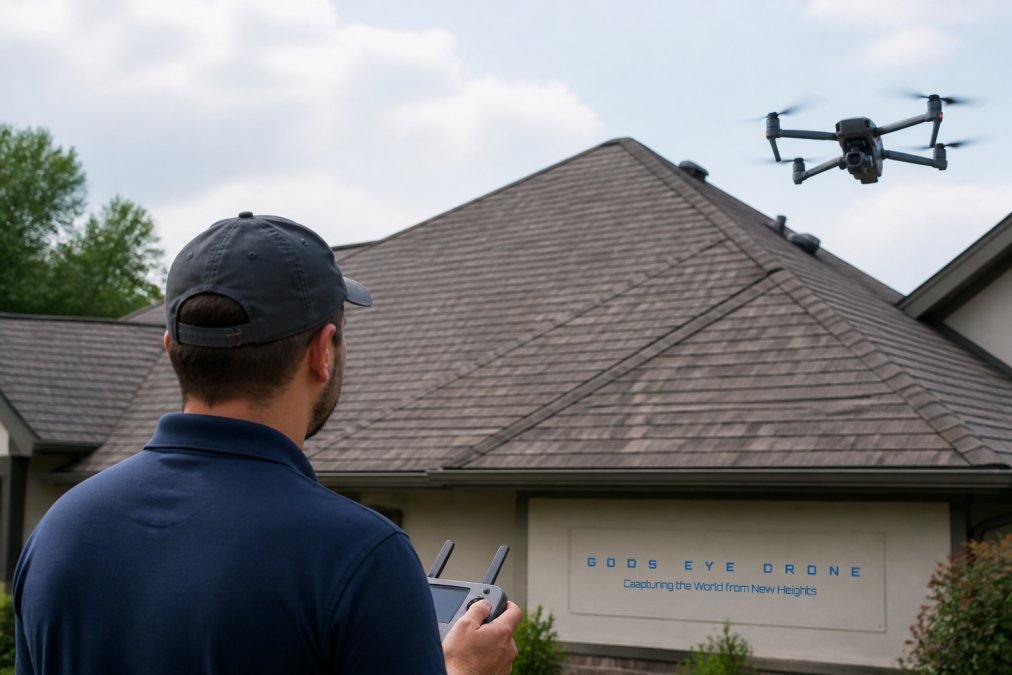
A drone roof inspection delivers complete visual documentation without putting workers at risk. Traditional methods require climbing onto roofs and navigating steep pitches; a single misstep ends in injury. A drone captures every square foot in high-definition from a safe distance.
When a drone roof inspection documents damage, you get timestamped imagery that insurance companies and contractors can reference. The aerial perspective reveals patterns invisible from the ground: water pooling in valleys, damage progression across roof sections, and structural issues only visible from above.
Professional drone inspection delivers faster damage assessment, clearer documentation for claims, and repair estimates that match actual conditions. Property owners stop arguing with adjusters because the evidence is irrefutable.
Thermal Roof Inspection Services and Infrared Technology
Thermal imaging detects problems invisible to the human eye. Moisture trapped beneath the surface looks normal visually but reveals itself instantly in thermal imaging because water holds heat differently than dry materials.
Infrared thermography maps temperature variations across your roof. Missing insulation shows as cold spots; leaks appear as wet zones with distinct thermal signatures. The technology catches issues months before visible damage or mold growth develops, preventing catastrophic failures in commercial buildings.
Professional-grade thermal equipment detects temperature differences as small as 0.05 degrees Celsius, translating into actionable diagnostics that guide repair priorities.
Thermal roof inspection services work best on clear, dry days during late afternoon or early evening when solar heating creates the contrast needed for accurate readings.
High-Resolution Aerial Photography for Damage Detection
High-resolution imagery is the foundation of every professional drone roof inspection. Modern commercial drones capture 20-megapixel photos, revealing individual shingles, fastener conditions, and flashing details from 100 feet in the air.
Damage detection becomes systematic: missing shingles stand out immediately, lifted or curled shingles show clearly, and cracked tiles, bent gutters, and compromised flashing are documented in context with the roof's overall structure and drainage patterns.
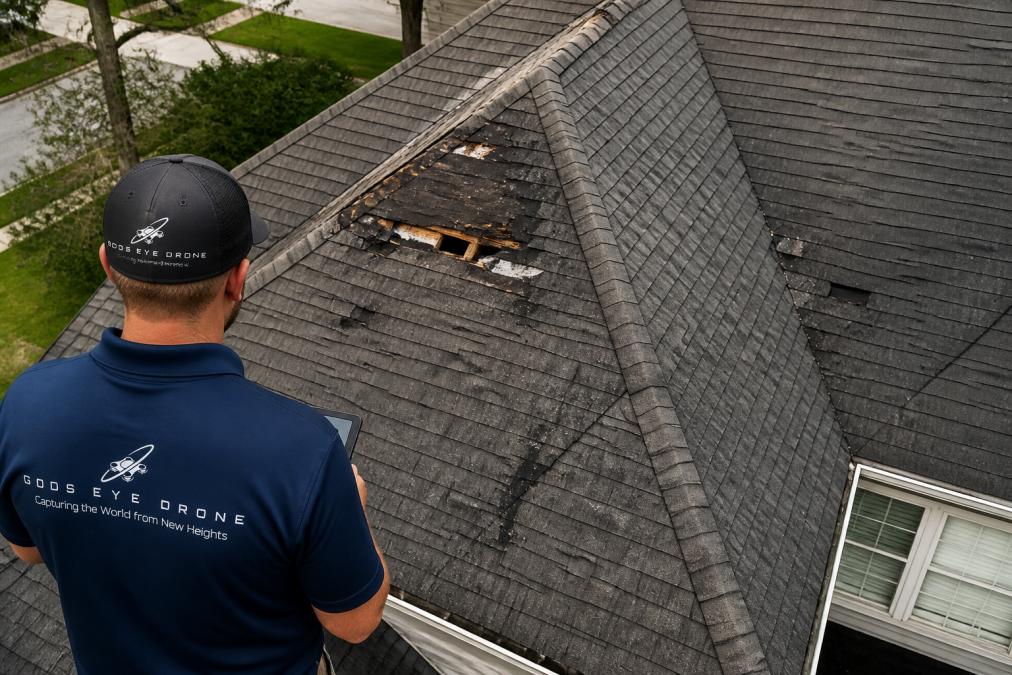
This documentation serves multiple purposes: insurance adjusters validate claims, contractors plan repairs and order materials, and property managers track roof condition year over year as part of the property's maintenance record.
Orthomosaic mapping stitches overlapping images into a single georeferenced map where every pixel has a GPS coordinate, allowing distance measurement, area calculation, and damage progression tracking across seasons.
FAA Part 107 Certified Drone Pilots: What You Need to Know
Operating a commercial drone legally requires FAA Part 107 certification. Violations carry fines up to $32,000 per incident. A certified pilot has passed written exams, demonstrated flight proficiency, and maintains currency through ongoing training.
Certified pilots understand restricted airspace, maintain visual line of sight, follow altitude restrictions, and operate safely near people and structures. They carry liability insurance that protects both operator and client.
Hiring a certified operator ensures your roof inspection meets federal requirements, your documentation is admissible in insurance claims, and your data stands up to regulatory scrutiny.
Uncertified operators are operating illegally. Their footage isn't admissible for insurance purposes, and claims get rejected when documentation comes from unlicensed sources.
Drone Roof Inspection Cost: Understanding Pricing Factors
Property Size and Roof Square Footage
Roof area is the primary cost driver.
Thermal Imaging and Specialized Services
Roof Complexity and Accessibility
Simple pitched roofs cost less than complex roofs with multiple equipment, valleys, dormers, or flat sections. A gable roof takes 30-45 minutes; complex commercial roofs require 60-90 minutes.
Urban properties with restricted airspace may incur a 10-20 percent premium; rural properties with open airspace cost less.
Travel Distance and Scheduling
Report Format and Deliverables
Basic deliverables cost less than comprehensive reports.
Typical Cost Examples
Getting Accurate Quotes
Request quotes that itemize services separately: base inspection fee, thermal imaging cost, orthomosaic mapping, report generation, and any travel charges. Compare what each certified operator includes in their estimate.
For current pricing specific to your property, contact certified operators in your area with details about roof size, complexity, and whether you need thermal imaging. A consultation provides a transparent quote based on your actual requirements rather than generic pricing ranges.
Insurance Claims and Documentation Benefits
Insurance adjusters need clear, timestamped documentation to process claims fairly. A drone roof inspection provides exactly that. The imagery shows damage in context. The thermal data supports claims about water intrusion or insulation failure. The timeline proves when the damage occurred relative to the weather event.
Claims that include professional drone documentation process faster. Adjusters don't need to schedule their own inspections. They don't need to request additional photos. The evidence is comprehensive and professional. This speeds approval and payment.
Roof damage from hail, wind, or storm impact shows distinctly in high-resolution imagery. The drone captures the damage pattern across the entire roof, which helps establish causation. Insurance companies can see whether damage is isolated or widespread, recent or weathered. This context supports fair claim settlement.
Thermal imaging proves water intrusion before visible mold or structural damage develops. Documentation of early-stage moisture problems justifies preventative repairs. Insurance may cover emergency mitigation work if the thermal evidence shows active water intrusion risk.
Property owners who document roof condition before major weather events have baseline imagery for comparison. Post-event drone inspections show exactly what changed, which strengthens damage claims. The before-and-after comparison is powerful evidence.
Choosing Between DIY and Professional Drone Inspections
Some property owners consider purchasing a consumer drone and conducting their own roof inspection to avoid service fees. The appeal is obvious: no recurring costs, complete control over timing, and direct access to imagery. The practical and legal reality is significantly more complicated.
Equipment Limitations
The resolution gap is visible immediately: consumer imagery shows that a shingle looks damaged; professional imagery reveals whether damage is fresh, weathered, or cosmetic. Consumer thermal sensors detect general heat patterns; professional thermal cameras pinpoint exact moisture intrusion locations with temperature mapping.
Consumer drones also lack the stability and precision needed for systematic roof documentation. Wind gusts that barely affect professional aircraft can destabilize consumer models. Flight time is limited to 20-30 minutes, which is insufficient for large commercial roofs. Battery performance degrades in cold weather, reducing flight time further. Most property owners underestimate the learning curve, capturing complete, properly-framed coverage of a complex roof typically requires multiple flights and significant practice.
FAA Regulatory Compliance
Federal Aviation Regulation Part 107 applies to all commercial drone operations, including roof inspections of your own property if the imagery will be used for insurance claims, contractor estimates, or property documentation. Operating a drone commercially without Part 107 certification is a federal violation carrying fines up to $32,000 per incident. The FAA has increased enforcement in recent years, particularly for unlicensed commercial operations.
A certified Part 107 pilot has passed written exams covering airspace rules, safety protocols, and operational limitations. They understand restricted airspace, maintain visual line of sight, follow altitude restrictions, and know how to operate safely near structures and people. They carry liability insurance, typically $1-2 million in coverage, that protects both operator and client if an accident occurs.
If you operate a consumer drone without certification and it causes property damage or injury, your homeowner's insurance likely will not cover the incident because you were conducting an unlicensed commercial operation. You become personally liable for damages.
Insurance Claim Admissibility
Insurance companies explicitly require professionally documented roof inspections for storm damage claims. Adjusters will not accept imagery from consumer drones or unlicensed operators because the documentation chain is not verifiable. They cannot confirm:
- When the imagery was captured (timestamp authenticity)
- That the drone was operated safely and legally
- That the operator had liability insurance
- That the imagery has not been altered or misrepresented
When a claim includes DIY drone footage, adjusters typically request their own inspection or reject the claim as insufficiently documented.
Liability and Legal Risk
When DIY Inspection Might Be Acceptable
Frequently Asked Questions
How much does a drone roof inspection cost?
Drone roof inspection pricing depends on roof size, property complexity, location, and whether thermal imaging or additional analysis is required. For an accurate quote tailored to your specific property and needs, contact a certified drone inspection provider directly. Pricing varies significantly based on deliverables and turnaround time.
Are drone roof inspections safer than traditional methods?
Yes. Drone inspections eliminate the need for workers to climb ladders or access steep roofs, removing fall risks and injury hazards. FAA-certified pilots operate aircraft remotely from the ground, capturing detailed imagery without personnel exposure. This approach protects your team while delivering comprehensive documentation of roof condition, structural integrity, and damage assessment with zero on-roof risk.
What qualifications should an FAA Part 107 certified drone pilot have?
FAA Part 107 certification requires pilots to pass a written exam, demonstrate knowledge of airspace rules, and maintain currency through recurrent training. Certified pilots understand weather impacts, regulatory compliance, and safe operation near structures. When selecting a drone inspection provider, verify Part 107 credentials and ask about liability insurance coverage. Certification ensures your inspection meets federal standards and professional quality benchmarks.
Can thermal roof inspection services detect moisture and leaks?
Thermal imaging identifies temperature variations on roof surfaces that indicate moisture retention, air leaks, and areas of compromised insulation. Infrared thermography reveals hidden problems not visible in standard photography, such as water trapped beneath shingles or failed vapor barriers. Thermal roof inspection services provide actionable data for preventative maintenance and insurance documentation, catching issues before they cause structural damage.
Protecting your property starts with knowing its actual condition. A professional drone roof inspection from Gods Eye Drone delivers the clarity you need to make informed decisions about maintenance, repairs, or insurance claims. Our certified pilots use state-of-the-art thermal imaging and high-resolution aerial photography to document every detail. Get a complete assessment without the risk of climbing. Book Now and see your roof from a higher perspective.