 comparison
Drone Inspection vs Scaffolding: Cost & Safety
Table of Contents
- Drone Inspection vs Scaffolding: Key Differences
- Cost Breakdown: Drone Inspection vs Scaffolding
- Safety Benefits: Why Drone Inspections Reduce Risk
- OSHA Scaffolding Safety Requirements and Compliance
- Drone Roof Inspection Cost and Accuracy
- Drone Inspection Turnaround Time vs Project Duration
- When to Choose Drones and When Scaffolding Still Makes Sense
- Conclusion
- Frequently Asked Questions
Last Updated: August 23, 2026
Drone Inspection vs Scaffolding: Key Differences
When you need to inspect a building facade, roof, or tall structure, you face a fundamental choice: deploy a drone or erect scaffolding. The decision isn't just about cost, it's about safety, speed, accuracy, and what your project actually requires. Both approaches have distinct advantages and real limitations.
Drone inspection technology has matured significantly. Modern drones equipped with high-resolution cameras, thermal imaging, and 3D mapping capabilities can capture detailed data in hours rather than days. Scaffolding, by contrast, remains the traditional method, a labor-intensive but sometimes necessary approach for certain structural work. The core tension: drones are faster and safer for pure inspection, but scaffolding provides physical access for repairs and hands-on assessment that drones cannot replicate.
At Gods Eye Drone, we've evaluated hundreds of projects where clients initially assumed they needed scaffolding, only to discover that drone inspection delivered what they actually needed at a fraction of the cost and timeline. Understanding the real differences between these methods helps you make the right call for your specific situation.
Cost Breakdown: Drone Inspection vs Scaffolding
The cost comparison between drone inspection and scaffolding is where the business case becomes clear, though the numbers vary significantly based on project scope.
Drone Inspection Costs
Drone inspection pricing depends on several factors: the size of the area being surveyed, the type of imagery required (standard photography, thermal imaging, 3D modeling), data processing complexity, and turnaround time. For residential roof inspections, many drone operators charge a flat rate. For commercial properties with larger facades or complex thermal analysis, pricing scales with project complexity. Gods Eye Drone offers high-resolution aerial photography, with specialized services like thermal imaging commanding fees based on the specific deliverables required. Pricing depends on quantity, dates, and delivery. Please visit our website for current prices or a quote.
The key cost advantage of drone inspection is predictability. You pay for flight time, data processing, and deliverables, not for equipment rental, crew logistics, or extended project timelines. A typical commercial facade inspection that would require scaffolding for 3-5 days can be completed by drone in a single flight, with processed imagery delivered within days.
Scaffolding Costs
Scaffolding involves multiple cost layers: equipment rental, installation labor, daily crew wages, safety equipment, permits, and insurance. For a mid-rise commercial building, scaffolding rental alone can run into thousands per week. Add the labor to erect and dismantle the system, plus the wages for workers during the inspection period, and costs escalate quickly. A project that takes 5-10 days of scaffolding deployment can easily exceed the total cost of a drone inspection by a factor of 3-5x.
Beyond direct costs, there's operational downtime. If you're inspecting a building facade while tenants occupy the space, scaffolding creates disruption, blocked views, noise, restricted access. Drone inspections happen in the air with minimal ground-level impact.
Safety Benefits: Why Drone Inspections Reduce Risk
Safety is where drone inspection demonstrates its most compelling advantage. Workers at height face real hazards, falls, equipment failure, weather exposure, and the physical strain of working on ladders or suspended platforms.
Drone inspections eliminate the worker-at-height risk entirely (the CDC). Instead of deploying personnel to a facade 10, 15, or 20 stories up, a certified pilot operates the drone from ground level. The drone captures the same visual data, sometimes with greater detail and consistency, without exposing anyone to fall risk, weather exposure, or equipment failure at height.
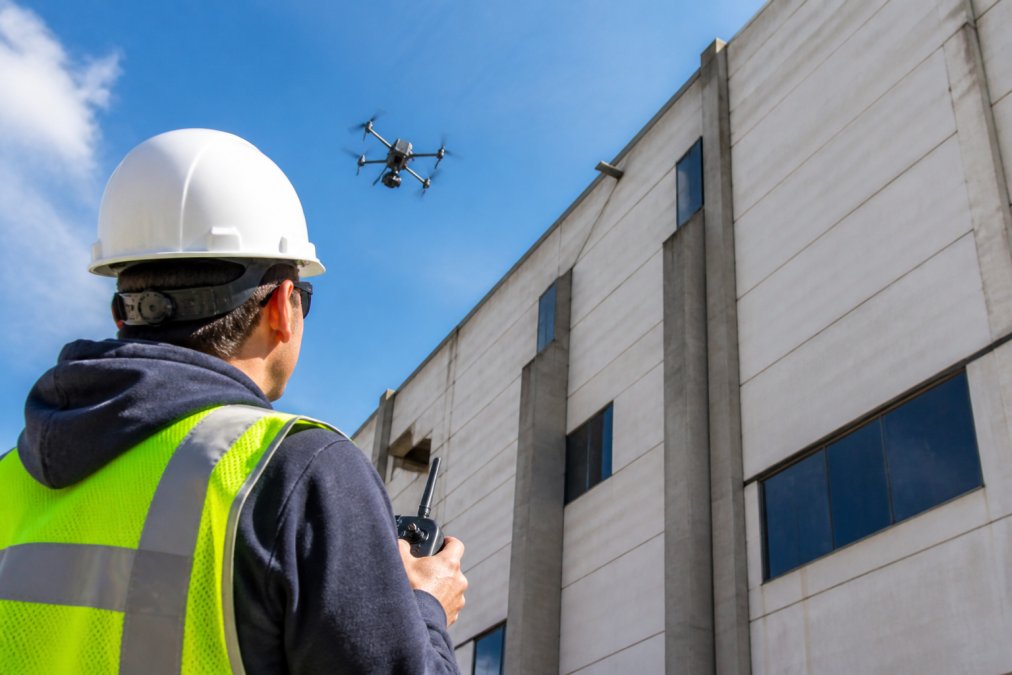
For thermal imaging inspections, drones provide another safety advantage: they can assess structural conditions without requiring workers to be present in potentially hazardous environments. A building with suspected water intrusion, mold, or thermal loss can be fully evaluated from the air, with the thermal camera detecting temperature differentials that indicate problems.
The safety case extends to operational continuity. With scaffolding, you're managing crew safety protocols, fall protection equipment, and compliance with OSHA regulations, all adding complexity and liability. Drone operations follow FAA Part 107 certification standards, which trained operators manage systematically. Gods Eye Drone's certified pilots maintain the training and insurance protocols that professional drone operations require, reducing liability exposure for the property owner.
OSHA Scaffolding Safety Requirements and Compliance
If you choose scaffolding, you're entering a heavily regulated space. OSHA scaffolding standards (29 CFR 1926, Subpart L) define detailed requirements for erection, use, and dismantling. Non-compliance isn't a minor violation, it carries significant penalties and liability exposure.
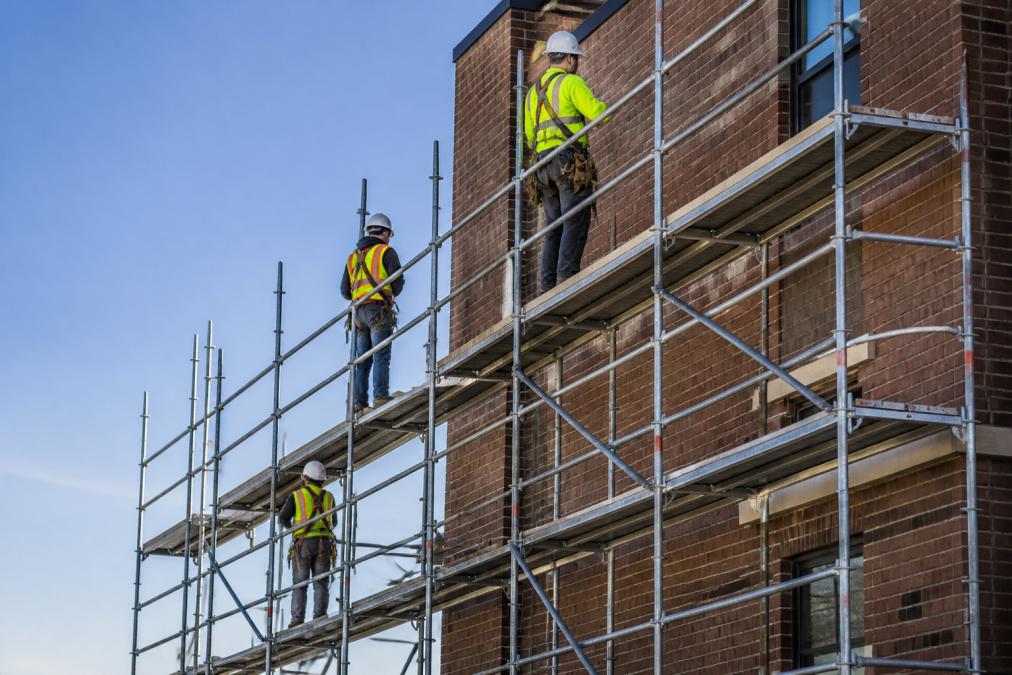
Key OSHA requirements include:
- Competent Person Oversight: A trained, competent person must design the scaffolding system and inspect it before use and daily during operation.
- Fall Protection: Workers must be protected from falls of 10 feet or more through guardrails, safety nets, or personal fall arrest systems (osha.gov).
- Load Capacity: Scaffolding must support its own weight plus four times the maximum load (osha.gov).
- Access and Egress: Safe means of access (ladders, stairs) must be provided. Workers cannot climb the framework itself.
- Weather and Inspection: Scaffolding must be inspected after weather events and removed if damage is suspected.
- Training Documentation: All workers must receive training, and documentation must be maintained.
For a commercial building inspection, compliance means hiring a qualified scaffolding contractor, paying for the competent person's inspection and sign-off, and ensuring all workers have current fall protection training. These aren't optional, they're legal requirements. A property owner who deploys scaffolding without proper OSHA compliance faces fines and liability if an accident occurs.
Drone inspections operate under a different regulatory framework. FAA Part 107 certification requires training and ongoing compliance, but the requirements are less complex than OSHA scaffolding standards. A certified drone pilot manages the regulatory burden, not the property owner.
Drone Roof Inspection Cost and Accuracy
Roof inspections represent a specific use case where drone technology has proven particularly effective. Traditional roof inspections require workers to climb onto the roof itself, creating immediate fall risk, or require expensive aerial lifts and safety equipment.
Drone roof inspections capture high-resolution imagery of the entire roof surface from a safe distance. Modern drones can hover at precise altitudes, capturing overlapping photographs that can be stitched into a complete 3D model of the roof using photogrammetry. This level of detail often exceeds what a ground-level inspector can see.
For residential properties, drone roof inspection costs are typically lower than traditional methods. For commercial properties with large roof areas or complex geometry, the cost advantage grows. A large warehouse or office building roof that would require multiple days of traditional inspection can be fully documented by drone in a few hours.
Accuracy matters because roof condition directly affects insurance coverage, property valuation, and maintenance planning. High-resolution drone imagery provides a permanent, timestamped record of roof condition. This documentation proves valuable for insurance claims, property sales, and maintenance scheduling. If damage occurs later, you have a baseline to prove the roof's condition on the inspection date.
Gods Eye Drone's roof inspection services deliver high-resolution aerial photography and 3D mapping capabilities that identify missing shingles, flashing issues, debris accumulation, and structural concerns with precision. The deliverables, detailed photos, 3D models, and thermal data where relevant, give property managers and insurance adjusters the information they need without requiring workers at height.
Drone Inspection Turnaround Time vs Project Duration
Time is where drone inspection demonstrates its clearest advantage over scaffolding. The difference in project duration affects not just cost but operational impact.
A drone roof or facade inspection typically requires one flight day, sometimes a few hours if weather cooperates. Data processing and report generation add a few days. Total timeline: one to two weeks from booking to deliverables in hand.
Scaffolding projects follow a different timeline. Equipment must be ordered, site preparation completed, and the system erected by certified crews. For a mid-rise building, erection alone takes 2-5 days. The actual inspection or work happens during the scaffolding deployment period. Then the system must be dismantled, which takes another 2-5 days. Total project duration: two to four weeks minimum, often longer if weather delays erection or if the inspection reveals issues requiring extended access.
For property owners, this timeline difference creates real operational impact. A building with tenants can't have scaffolding blocking windows and entrances for weeks. A facade that needs inspection before a property sale or refinancing can't wait for a multi-week scaffolding deployment. Drone inspections fit into tight timelines; scaffolding projects require advance planning and extended disruption.
The turnaround time advantage extends to data delivery. Drone operators process imagery and deliver results within days. Scaffolding projects produce reports based on observations made during the deployment period, data that may be incomplete if the inspection reveals issues requiring extended access or follow-up work.
When to Choose Drones and When Scaffolding Still Makes Sense
Despite drone technology's advantages, scaffolding remains necessary for specific project types. The decision comes down to what you actually need to do.
Choose Drone Inspection When:
- You need visual documentation of building condition (facade, roof, exterior walls)
- You're conducting a pre-purchase or pre-sale property assessment
- You need thermal imaging to identify insulation gaps, water intrusion, or structural thermal loss
- You're monitoring construction progress or documenting project status
- You need 3D mapping or high-resolution imagery for maintenance planning
- You want to minimize operational disruption and timeline impact
- Budget is constrained and you need cost-effective documentation
Choose Scaffolding When:
- Workers need physical access to perform repairs, maintenance, or detailed structural assessment
- You're conducting hands-on inspections that require touching surfaces, testing materials, or taking samples
- You need to perform work at height, cleaning, painting, facade restoration, or equipment installation
- You're working on a building with complex geometry or obstructions that prevent drone access
- Your inspection reveals issues requiring immediate remediation while workers are already at height
- Local regulations or building codes require physical inspection by a qualified tradesperson
- You're conducting detailed structural assessment that requires close-range visual and tactile evaluation
The practical reality: many projects start with drone inspection to assess condition, then deploy scaffolding only if hands-on work is required. This two-phase approach minimizes scaffolding duration and cost while ensuring thorough documentation.
Conclusion
The choice between drone inspection and scaffolding isn't about which technology is "better", it's about which method matches your actual need. Drone inspection excels at documentation, assessment, and data collection. It's faster, safer, and more cost-effective for pure inspection work. Scaffolding remains necessary when workers need physical access to perform repairs, maintenance, or hands-on structural evaluation.
For most property inspections, drone technology has fundamentally changed the equation. What once required weeks of scaffolding deployment and significant safety risk can now be accomplished in days with drone inspection. Gods Eye Drone delivers high-resolution aerial photography, thermal imaging, and 3D mapping with certified pilots who understand both the technical capabilities and the regulatory requirements that professional inspections demand. When you need reliable, documented inspection data, whether for roof assessment, facade evaluation, or structural monitoring, drone inspection provides the speed, safety, and accuracy that modern property management requires.
Book a consultation with Gods Eye Drone to discuss your specific inspection needs and discover whether drone inspection can deliver the documentation and insights your project requires.
=== FAQ ANSWERS (audit these too, same rules) ===
[1] Q: How much money can you save by using drones instead of scaffolding for inspections? A: Drone inspections typically eliminate labor-intensive setup costs, equipment rental fees, and extended project timelines associated with scaffolding. Savings depend on building height, inspection scope, and site access complexity. However, some projects require scaffolding for structural repairs or detailed hands-on assessment, making drones most cost-effective for inspection-only work.
[2] Q: What are the safety benefits of drone inspections over traditional scaffolding? A: Drone inspections eliminate worker exposure to falls, a leading cause of construction injuries. They reduce on-site personnel requirements, minimize operational downtime, and provide real-time high-resolution imagery without workers at height. Thermal imaging capabilities detect structural issues early, supporting preventative maintenance. Drones also reduce liability exposure and insurance claims related to fall protection, harness systems, and rescue operations required with scaffolding work.
[3] Q: How long does a drone inspection take compared to setting up scaffolding? A: Drone inspections typically complete in hours, including flight time and initial image capture. Scaffolding projects require days or weeks for mobilization, safety setup, inspections, and dismantling. This turnaround time advantage reduces project delays and operational disruptions.
[4] Q: Do drone inspections meet OSHA safety standards for building maintenance? A: Drone inspections themselves comply with FAA Part 107 regulations and do not fall under OSHA scaffolding requirements since workers remain at ground level. However, if inspection findings require hands-on repairs, OSHA scaffolding safety requirements apply to that follow-up work. Drones provide documentation supporting OSHA compliance by capturing detailed imagery for risk assessment and maintenance planning before workers access heights. This documentation supports safer, more informed work planning.
[5] Q: Are drone inspections as accurate as manual scaffolding inspections? A: High-resolution drone imagery and thermal imaging provide data accuracy comparable to or exceeding manual methods for most inspection types. Drones capture 4K video, thermal data, and photogrammetry for precise measurements without human positioning limitations. However, hands-on tactile assessment, sample collection, or detailed internal inspections still require scaffolding access. For facade condition assessment, structural integrity evaluation, and roof damage documentation, drone data is highly reliable and often more comprehensive due to consistent camera angles and thermal insights.
Frequently Asked Questions
How much money can you save by using drones instead of scaffolding for inspections?
Drone inspections typically eliminate labor-intensive setup costs, equipment rental fees, and extended project timelines associated with scaffolding. Savings depend on building height, inspection scope, and site access complexity. However, some projects require scaffolding for structural repairs or detailed hands-on assessment, making drones most cost-effective for inspection-only work.
What are the safety benefits of drone inspections over traditional scaffolding?
Drone inspections eliminate worker exposure to falls, a leading cause of construction injuries. They reduce on-site personnel requirements, minimize operational downtime, and provide real-time high-resolution imagery without workers at height. Thermal imaging capabilities detect structural issues early, supporting preventative maintenance. Drones also reduce liability exposure and insurance claims related to fall protection, harness systems, and rescue operations required with scaffolding work.
How long does a drone inspection take compared to setting up scaffolding?
Drone inspections typically complete in hours, including flight time and initial image capture. Scaffolding projects require days or weeks for mobilization, safety setup, inspections, and dismantling. This turnaround time advantage reduces project delays and operational disruptions.
Do drone inspections meet OSHA safety standards for building maintenance?
Drone inspections themselves comply with FAA Part 107 regulations and do not fall under OSHA scaffolding requirements since workers remain at ground level. However, if inspection findings require hands-on repairs, OSHA scaffolding safety requirements apply to that follow-up work. Drones provide documentation supporting OSHA compliance by capturing detailed imagery for risk assessment and maintenance planning before workers access heights. This documentation supports safer, more informed work planning.
Are drone inspections as accurate as manual scaffolding inspections?
High-resolution drone imagery and thermal imaging provide data accuracy comparable to or exceeding manual methods for most inspection types. Drones capture 4K video, thermal data, and photogrammetry for precise measurements without human positioning limitations. However, hands-on tactile assessment, sample collection, or detailed internal inspections still require scaffolding access. For facade condition assessment, structural integrity evaluation, and roof damage documentation, drone data is highly reliable and often more comprehensive due to consistent camera angles and thermal insights.
This article was written using GrandRanker