 listicle
Cinematic Wedding Drone Videography Packages: 2026 Guide
Table of Contents
- What Makes Cinematic Wedding Drone Videography Different
- Best Drone Shots for Weddings and What They Deliver
- Average Cost of Wedding Drone Videography and Package Structures
- FAA Part 107 Certified Wedding Videographer Requirements
- Legal Considerations and Venue Restrictions for Wedding Drones
- Post-Production and Delivery: From Raw Footage to Final Film
- What to Look for in a Wedding Drone Videography Partner
- Conclusion
- Frequently Asked Questions
Last Updated: August 10, 2026
What Makes Cinematic Wedding Drone Videography Different
Cinematic wedding drone videography packages transform how couples experience their wedding day through aerial perspectives that ground-based cameras cannot capture. Unlike traditional videography, which relies on fixed or handheld angles at eye level, drone footage adds dimension, scale, and storytelling power that elevates the entire wedding film.
When a drone pulls back to reveal your ceremony surrounded by landscaping, guests, and natural scenery, it creates a sense of place and grandeur that makes viewers feel the significance of the moment. Cinematic storytelling through drone footage relies on smooth gimbal stabilization to eliminate jitter, high-definition 4K capture to preserve detail, and strategic timing to catch moments when they matter most. Any reputable operator must hold FAA Part 107 certification, carry liability insurance, and understand airspace restrictions, these aren't optional considerations, they're the foundation of safe, legal operation.
Best Drone Shots for Weddings and What They Deliver
The most memorable drone footage comes from understanding which shots serve your story. Knowing when to deploy the drone is what separates mediocre footage from cinematic gold.
Establishing and Venue Flyovers
An establishing shot from the air tells viewers where your wedding took place and sets the emotional tone for everything that follows. The classic establishing shot begins with a wide pull-back from the ceremony site, revealing the full venue, surrounding landscape, and the scale of the celebration.
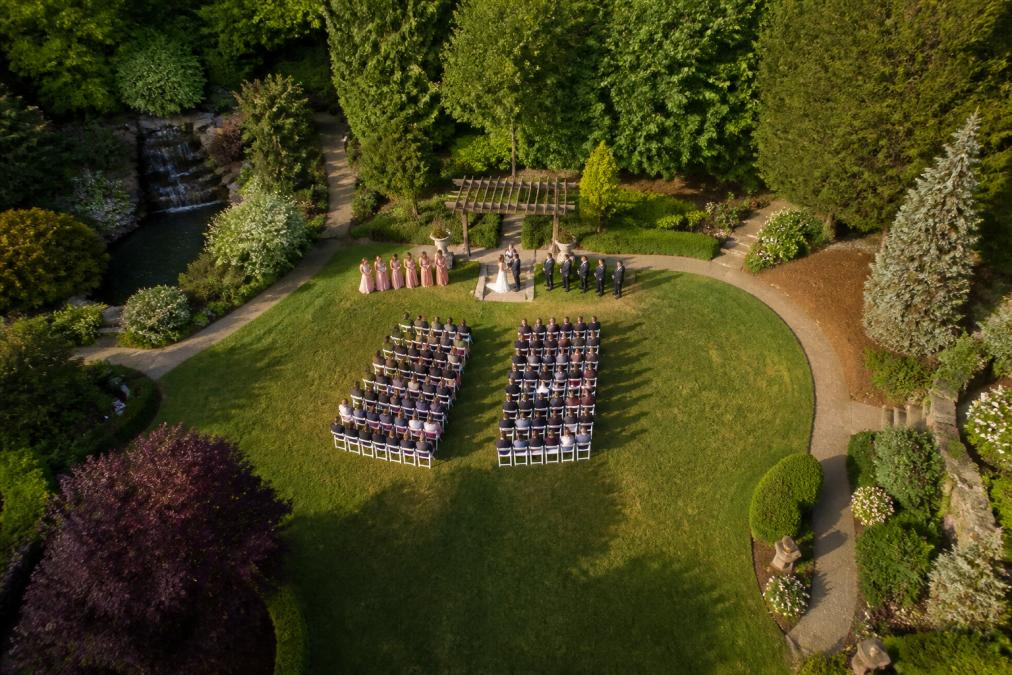
Venue flyovers work best when they follow a logical path, starting wide, then moving closer to the ceremony or reception area. The movement should feel intentional, creating narrative momentum. A 10-15 second flyover that circles the venue or approaches from a specific direction is most effective.
The best establishing shots happen during golden hour, roughly one hour before sunset. The angled light creates depth, shadows define the landscape, and natural warmth enhances the emotional tone. If your ceremony is at noon, the establishing shot might need to happen during cocktail hour instead to capture better light.
Group Shots and Tracking Coverage
Drone footage of your wedding party, family groups, or the full guest count creates moments of joy and connection that traditional cameras miss. A drone capturing your entire family gathered together adds scale and energy to the film.
Tracking shots, where the drone follows the couple as they walk, dance, or move through the venue, create dynamic, cinematic moments. A 20-30 second tracking shot of you walking into the reception or dancing together on the lawn becomes a signature moment in your film.
Group shots from above also solve a practical problem: getting everyone in frame at once. A drone 80-100 feet up captures the entire wedding party or full guest count in a single, perfectly composed shot that ground-level cameras cannot achieve.
Average Cost of Wedding Drone Videography and Package Structures
Understanding pricing for wedding drone videography packages requires knowing how operators structure their services and what factors influence cost.
Drone Footage as an Add-On vs. Included Service
Some videography companies include drone footage in their base packages; others offer it as an add-on, priced separately. When drone footage is included, it's typically integrated throughout the film. When it's an add-on, you're paying extra for aerial coverage, but you have the option to skip it if budget is tight.
Included packages often cost more upfront but avoid surprise add-on fees. Add-on pricing gives you flexibility, but you need to plan for the additional expense.
Coverage Hours and Pricing Tiers
Cinematic wedding drone videography packages typically scale with coverage hours. A 6-hour package covers ceremony and early reception. An 8-hour package extends into the full reception. A 10-hour package captures the entire day.
More hours generally result in a more comprehensive final film, though quality depends on the moments captured and editing skill. Pricing varies significantly based on operator experience, equipment quality, and location. Most professional operators offer tiered packages, basic, standard, and premium, with drone footage included or available as an add-on at each tier.
FAA Part 107 Certified Wedding Videographer Requirements
Any drone operator capturing commercial footage, including wedding videography, must hold FAA Part 107 certification. This is the legal requirement for operating an unmanned aerial vehicle commercially in U.S. airspace.
Why Certification and Insurance Matter
FAA Part 107 certification requires passing a written exam covering airspace regulations, weather, aircraft performance, and safety procedures. Certified pilots understand altitude restrictions (typically 400 feet above ground level for wedding footage), line-of-sight requirements, and airspace classifications.
Liability insurance protects you and the operator if something goes wrong. A drone malfunction, loss of signal, or unexpected wind could damage property or injure someone. Insurance covers those scenarios. A reputable operator carries minimum coverage of $1 million.
The combination of certification and insurance demonstrates professionalism and risk management.
What to Verify Before Booking
Ask potential operators for proof of FAA Part 107 certification and current liability insurance. You should see:
- A valid FAA Remote Pilot Certificate (Part 107)
- Proof of liability insurance with your wedding date covered
- Documentation of any special waivers if your venue requires them
Don't book based on price alone. A cheaper operator who cuts corners on certification or insurance isn't saving you money, they're exposing you to liability.
Legal Considerations and Venue Restrictions for Wedding Drones
Beyond FAA regulations, venue-specific restrictions and airspace classifications determine whether drone flights are legally possible at your wedding.
Airspace Clearance and Flight Safety
Some wedding venues sit near airports or in controlled airspace requiring special clearance. A drone operator needs to check the airspace classification for your venue and determine if a waiver or authorization is required. Certain venues, particularly those with historic significance or near government facilities, may have additional restrictions.
Weather conditions also affect flight safety. Wind speeds above 25-30 mph can destabilize the drone, reducing footage quality and increasing safety risk. A professional operator will postpone aerial shots if conditions aren't safe.
Weather and Environmental Limitations
Rain and heavy cloud cover reduce visibility and create safety hazards. Most operators won't fly in precipitation. Overcast skies reduce visual quality but flying is still possible.
Temperature extremes can affect battery performance. Cold weather reduces flight time; hot weather can damage batteries. Wind is the most common weather factor affecting drone flights, gusts above 25 mph create instability. A professional will monitor conditions throughout the day and adjust timing to capture footage during calmer windows.
Post-Production and Delivery: From Raw Footage to Final Film
Raw drone footage is only the beginning. The real work happens in post-production, where raw clips transform into a cohesive, emotionally resonant film.
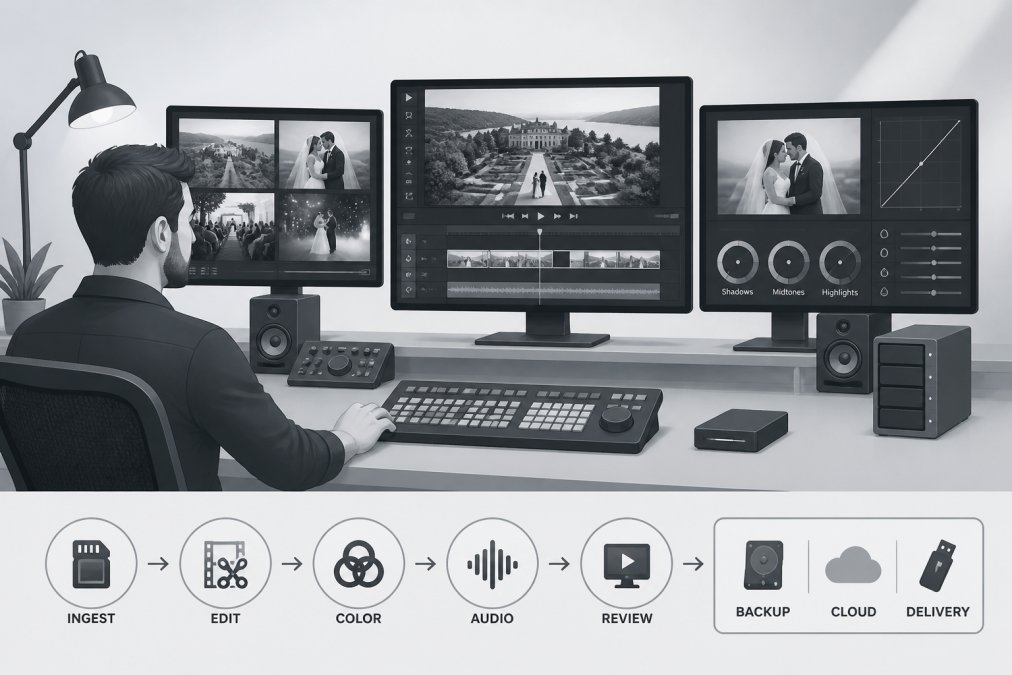
Post-production workflow involves reviewing and organizing raw files, color grading to match the aesthetic of ground-level footage, sound design and music selection, and final editing to create a narrative arc.
Color grading is critical. Drone footage often has a different color temperature and contrast than ground-level footage. A skilled editor color-grades the aerial shots to seamlessly blend with traditional videography, creating visual consistency throughout the film.
The final deliverable typically includes a highlight reel (3-5 minutes), a full-length film (20-45 minutes), and sometimes a teaser or social media edit. Turnaround time varies, most operators deliver final films within 4-8 weeks of the wedding. Rush delivery may incur additional fees.
What to Look for in a Wedding Drone Videography Partner
Choosing the right operator matters more than the specific package structure. The wrong choice can result in mediocre footage; the right choice delivers a film you'll treasure for decades.
Equipment Quality and Gimbal Stabilization
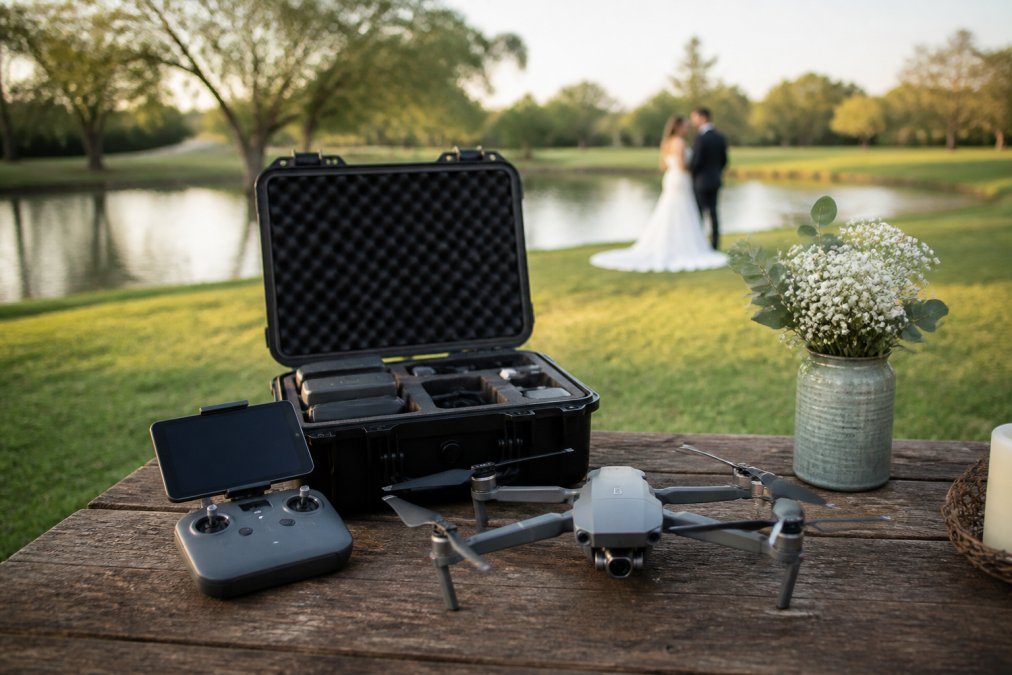
Professional drone videography requires high-quality equipment with stabilized gimbals, the mechanical system that keeps the camera steady even when the drone moves. A stabilized gimbal eliminates jitter and drift, producing smooth, cinematic footage.
4K resolution is now standard for professional wedding videography. If an operator is still shooting in 1080p or lower, that's a red flag.
Portfolio and Experience with Similar Venues
Ask to see the operator's portfolio, specifically wedding films shot at venues similar to yours. A portfolio tells you what the operator considers their best work. Pay attention to editing style, color grading, music choices, and how drone footage is integrated with traditional videography.
Experience with your specific venue is valuable. If the operator has shot at your location before, they understand airspace restrictions, best times of day for lighting, and optimal camera positions.
Ask for references from couples married at your venue or similar locations. A genuine reference will tell you about the operator's professionalism, communication, reliability, and final product quality.
Conclusion
Cinematic wedding drone videography packages have become essential for couples seeking a comprehensive, visually stunning record of their wedding day. The aerial perspective transforms standard videography into a cinematic experience, capturing moments and scales that ground-based cameras cannot reach.
The investment in professional drone footage, from a certified, insured operator, pays dividends in the final film. Gods Eye Drone brings veteran-owned expertise and state-of-the-art equipment to wedding videography, delivering high-quality aerial footage seamlessly integrated into your complete wedding film. Our FAA Part 107 certified pilots understand Kansas City airspace, manage weather variables, and execute the technical and creative work required for truly cinematic results. Book Now with Gods Eye Drone and transform your wedding memories into a film you'll cherish forever.
Frequently Asked Questions
How much does wedding drone videography cost?
The average cost of wedding drone videography varies based on coverage hours, package tier, and whether drone footage is included or an add-on. Entry-level packages start around $1,200-$2,000, while comprehensive cinematic packages with full-day coverage and professional editing range from $3,500-$6,000 or more. Pricing depends on your specific needs, venue location, and the videographer's experience level. Contact Gods Eye Drone for a personalized quote based on your wedding day requirements.
Do wedding videographers need FAA Part 107 certification to film with drones?
Yes. Any commercial drone operation, including wedding videography, requires the operator to hold an FAA Part 107 certification. This federal requirement ensures the pilot has passed knowledge tests, understands airspace regulations, and operates within safe flight parameters. An FAA Part 107 certified wedding videographer demonstrates they are legally compliant and insured, protecting you and your venue from liability. Always verify your videographer's current Part 107 license and insurance coverage before booking.
What are the best drone shots for weddings?
The best drone shots for weddings include sweeping establishing shots of the venue and landscape, aerial group photos with all guests visible, tracking shots following the couple's first dance or recessional, and cinematic flyovers that reveal the venue's full scale. High-definition footage captured with a stabilized gimbal creates smooth, professional-looking aerial cinematography. These shots add cinematic storytelling depth that ground-level cameras cannot achieve, transforming your wedding film into a complete visual narrative.
Can drone footage be used if my venue doesn't permit flights?
Many venues restrict drone flights due to airspace limitations, safety concerns, or local regulations. Some videographers offer stock drone footage or alternative aerial shots if live flight is prohibited. Always discuss venue restrictions with your videographer during the booking process. Gods Eye Drone works with you to understand your venue's requirements and ensures all flight operations comply with local regulations and venue permissions before your wedding day.
Is wedding drone videography worth the investment?
Wedding drone videography adds a cinematic dimension to your wedding film that standard ground-level coverage cannot provide. Aerial perspectives reveal the scale of your venue, the landscape setting, and unique angles of key moments. If your venue permits flights and your budget accommodates the add-on, drone footage creates memorable, professional-quality footage that enhances your wedding story for decades. It's particularly valuable for outdoor or destination weddings where landscape and venue scale matter.
This article was written using GrandRanker