 ultimate-guide
Cable Camera Systems for Stadium Events: A 2026 Guide
Table of Contents
- What Cable Camera Systems Are and Why Stadiums Use Them
- System Overview and Architecture
- Cable Cam Safety Standards and Regulatory Requirements
- Technical Specifications and Broadcast Integration
- Installation, Rigging, and Venue Compatibility
- Broadcast Camera Rental Services and Cost-Benefit Analysis
- Stadium Broadcast Camera Rigs: Dynamic Movement and Automated Tracking
- Maintenance, Pre-Event Inspection, and Production Workflow
- Frequently Asked Questions
Last Updated: October 1, 2026
What Cable Camera Systems Are and Why Stadiums Use Them
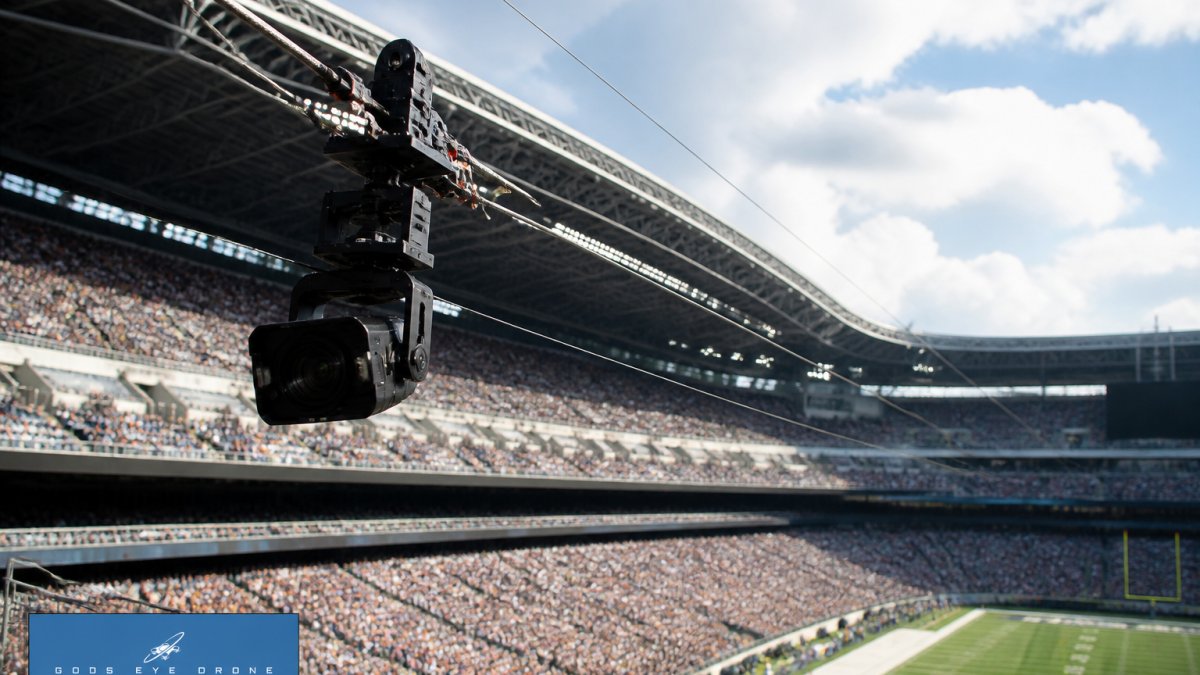
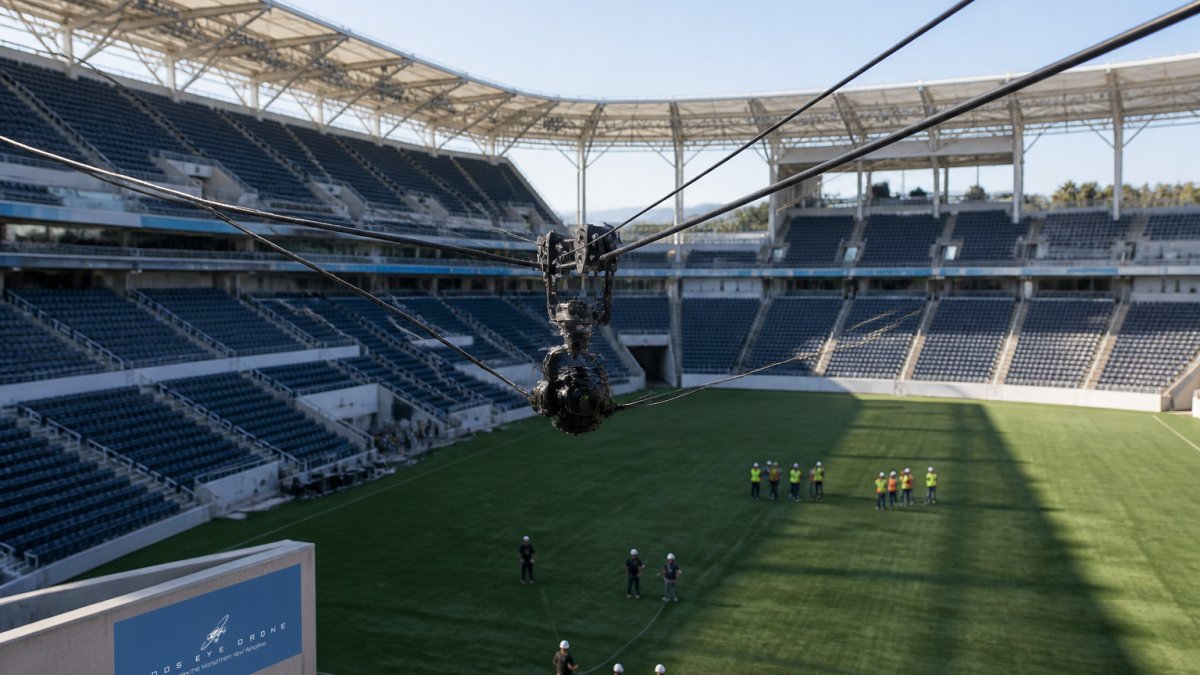
Cable camera systems are suspended camera platforms that move along tensioned cables stretched across a venue, enabling dynamic cinematic shots that follow action and deliver coverage angles impossible from fixed cameras or handheld equipment.
Cable camera systems combine mechanical rigging, electronic control systems, and broadcast-grade transmission. Unlike drones or cranes, they operate within a defined span between anchor points, offering the stability and repeatability live sports production demands, with a single operator executing complex movements via computer-controlled remote operation.
System Overview and Architecture
A cable camera system integrates the cable, tensioning mechanisms, camera head, transmission systems, and control electronics, each engineered for your venue's specific demands.
Core Components
Professional systems use steel cables ranging from 3/8 inch to 1/2 inch in diameter, anchored to structural points like upper deck seating, roof structures, or temporary rigging towers.
The camera head is the motorized platform carrying the broadcast camera, lens package, and stabilization equipment. It features pan-tilt-roll control and connects via a carriage system with wheels that distribute load evenly.
Motorized winches at anchor points pull the camera head across the span with variable speed control for dramatic or fast-action movement.
Fiber-optic transmission carries video and control data, eliminating signal degradation over long distances and providing immunity to electrical interference.
Cable Tensioning and Load-Bearing Capacity
Proper tensioning minimizes sag and vibration while avoiding excessive stress on anchor points. Professional systems typically maintain tension between 5,000 and 15,000 pounds.
A typical broadcast camera package weighs 80-150 pounds. Most professional stadium installations support payloads of 200-400 pounds, with engineers calculating safe working load based on cable specifications, anchor point strength, and span distance.
Dynamic loads from acceleration and deceleration multiply effective cable load; control systems limit acceleration rates and use smooth motion profiles to prevent shock loading.
Cable Cam Safety Standards and Regulatory Requirements
Cable camera systems must comply with OSHA standards for rigging, load limits, and fall protection when crew members work beneath them.
Professional systems meet ASTM standards for theatrical rigging, with manufacturers providing certification showing systems tested to 5:1 or greater safety factors.
Insurance typically requires third-party inspection verifying cable condition, anchor point integrity, and proper installation before deployment.
Pre-event inspection includes visual cable examination, anchor point verification, tension confirmation, and functional testing of motorized systems.
Technical Specifications and Broadcast Integration
Cable camera systems must integrate with broadcast production workflows, meeting standards for video format, control protocols, and latency.
The camera must support broadcast format (typically 1080p60 or 4K60) with lens package providing adequate focal length range across the venue.
Control integration requires real-time feedback on camera position and movement status via proprietary protocols over fiber-optic lines, ensuring low-latency response.
High-Speed and Slow-Motion Capture
Cable camera systems excel at high-speed and slow-motion capture, maintaining smooth motion at 120fps or 240fps recording rates.
Slow-motion capture at 240fps requires approximately 4 times the light of standard 60fps recording; venues may need supplemental lighting near the cable camera.
High-speed cable movement combined with high frame rate recording creates dramatic slow-motion effects that emphasize venue scale and athletic speed.
Fiber-Optic Transmission and Signal Integrity
Fiber-optic transmission solves the signal degradation problem inherent in long cable runs. Copper coaxial cable, the traditional broadcast standard, experiences signal loss over distances beyond 300 feet. A cable camera system spanning 400 feet or more needs fiber-optic transmission to maintain signal integrity.
Fiber-optic systems convert video signal to light pulses transmitted through a thin glass fiber. The conversion happens at the camera head via an encoder, and the signal is decoded back to video at the production truck. This approach eliminates electrical noise, ground loop issues, and signal degradation. The fiber cable itself is immune to electromagnetic interference, making it ideal for venues with extensive electrical infrastructure and RF broadcast equipment.
Latency, the delay between camera movement and video output, matters for operator control. Fiber-optic systems typically introduce 1-2 milliseconds of latency, which is imperceptible to the operator and audience. Wireless systems, by contrast, often introduce 50+ milliseconds of latency, making precise camera control difficult.
Installation, Rigging, and Venue Compatibility
Installing a cable camera system requires careful assessment of the venue's structural capacity, anchor point locations, and operational requirements. The installation process involves site survey, engineering, rigging, and functional testing.
Span Distance and Structural Requirements
Span distance, the horizontal distance between anchor points, is the primary factor determining system feasibility. Longer spans require larger diameter cables, higher tension, and more strong anchor points. Typical stadium installations span 300-600 feet, though some modern venues accommodate spans exceeding 800 feet.
Anchor points must be capable of withstanding the tension load. For a system under 10,000 pounds of tension, anchor points need structural capacity of at least 25,000-50,000 pounds (accounting for safety factors and dynamic loads). Steel structural members like roof trusses or upper deck support columns are ideal. Temporary rigging towers can be installed if permanent structures are inadequate, though this adds cost and complexity.
The cable path must clear all obstacles, light rigs, signage, scoreboards, and crowd areas. The lowest point of the cable sag must maintain clearance above any equipment or personnel below. Engineers calculate sag based on span distance, cable diameter, tension, and payload. A 400-foot span with typical tension might sag 8-15 feet at the midpoint.
Stadium vs. Arena Deployment
Stadium installations typically involve longer spans and outdoor environmental factors. Open-air stadiums require weather-resistant components and must account for wind loading on the camera head. Wind speeds above 25 mph can create lateral forces that degrade camera stability. Many outdoor systems include wind speed monitoring that prevents operation in high wind conditions.
Arena installations operate in controlled indoor environments, which simplifies deployment. Shorter spans are typical, 200-400 feet, because arena structures provide multiple anchor point options. Indoor systems don't face weather challenges, but they must account for lower ceiling heights and spectator safety concerns. The cable must be positioned to avoid interference with overhead scoreboards, lighting, or sound systems.
Both stadium and arena deployments require coordination with venue management, structural engineers, and safety professionals. Insurance carriers often require documented engineering analysis before installation approval.
Broadcast Camera Rental Services and Cost-Benefit Analysis
Most venues don't own cable camera systems, they rent them for specific events. This rental model makes economic sense because systems represent significant capital investment and require specialized expertise to operate and maintain.
Rental services typically include equipment delivery, installation, operator training, and post-event removal. The rental company handles all rigging, safety certification, and technical integration with the broadcast truck. This approach transfers operational complexity and liability to specialists.
The cost-benefit analysis depends on event scope and production value. Major sporting events, college football games, professional sports, championship tournaments, justify rental costs because the cable camera system enables broadcast quality that attracts larger audiences and commands higher advertising rates. Smaller events or limited broadcast productions may not generate sufficient additional value to offset rental expense.
Rental companies maintain insurance coverage and safety certifications for their equipment, which satisfies venue insurance requirements. This eliminates the need for venues to purchase separate insurance for the system. The rental company's liability coverage protects both the venue and the broadcaster.
Stadium Broadcast Camera Rigs: Dynamic Movement and Automated Tracking
Modern cable camera systems incorporate computer-controlled movement and automated tracking capabilities that enhance production value. These features enable operators to execute complex camera moves with precision and consistency.
Pan-Tilt-Roll Control and Cinematic Tracking
The camera head's pan-tilt-roll mechanism allows three-axis camera movement independent of the cable movement. Pan rotates the camera left-right, tilt moves it up-down, and roll rotates around the lens axis. These three movements combine with the cable movement (along the span) to create four-axis cinematography.
Cinematic tracking involves coordinating cable movement with pan-tilt-roll to follow athletic action smoothly.
Computer-Controlled Remote Operation
The operator controls all camera movements from a remote control panel, typically located in the broadcast truck or a dedicated control position in the venue. The panel displays real-time video from the camera head, showing the operator exactly what the camera is framing. Control inputs are transmitted via fiber-optic cable to motorized systems on the camera head.
Maintenance, Pre-Event Inspection, and Production Workflow
Proper maintenance ensures system reliability and safety. Cable camera systems require regular inspection, lubrication, and component replacement based on usage and environmental exposure.
Frequently Asked Questions
What are the main safety regulations for operating cable camera systems in stadiums?
Cable camera systems must comply with OSHA standards for rigging and load-bearing equipment, as well as venue-specific safety protocols. Systems require certified operators, regular load testing, and documented safety inspections before each event. The stabilized camera head must be secured with redundant cables, and all rigging points must support at least 5 times the system's total load. Insurance and liability coverage are mandatory, and operators must follow EFP (Electronic Field Production) broadcast standards for live sports coverage.
How much does a professional stadium cable camera system cost?
Pricing for cable camera systems varies significantly based on span distance, venue requirements, and whether you're purchasing or renting. Broadcast camera rental services typically charge daily rates that reflect equipment value, operator expertise, and installation complexity. For accurate pricing specific to your venue and event needs, contact a professional broadcast production company directly. Rental models often prove more cost-effective for occasional events, while permanent installations benefit larger venues with frequent live sports coverage.
What is the difference between a cable camera system and standard broadcast equipment?
Cable camera systems offer dynamic movement across large spans, sometimes 200+ feet, enabling cinematic tracking shots impossible with traditional fixed cameras. They use computer-controlled remote operation and pan-tilt-roll stabilization to follow fast-moving athletes during high-speed filming and slow-motion capture. Standard broadcast cameras are stationary or crane-mounted; cable systems integrate with OB (Outside Broadcast) vans via fiber-optic transmission for real-time signal integrity and latency-free HD feeds to production control rooms.
How long does it take to install and set up a cable camera system for a stadium event?
Installation time depends on venue complexity, span distance, and rigging accessibility. Typical setup requires 4-8 hours for structural assessment, cable tensioning, camera payload mounting, and system testing. Pre-event inspection checklists must be completed to verify load-bearing capacity and safety protocols. Professional teams coordinate with venue management and production staff to minimize downtime. Advance planning with your broadcast production partner ensures installation fits your event schedule.