 how-to
Hiring Professional Drone Services for Weddings
Table of Contents
- Why Aerial Videography Matters for Your Wedding
- Understanding FAA Part 107 Certification Requirements
- Key Questions to Ask Wedding Drone Pilots
- Average Cost of Wedding Drone Videography
- Venue Restrictions and Legal Clearance
- How to Choose a Professional Drone Pilot
- Booking Your Drone Services: A Step-by-Step Process
- Integration with Your Primary Photographer
- Frequently Asked Questions
Last Updated: August 9, 2026
Why Aerial Videography Matters for Your Wedding
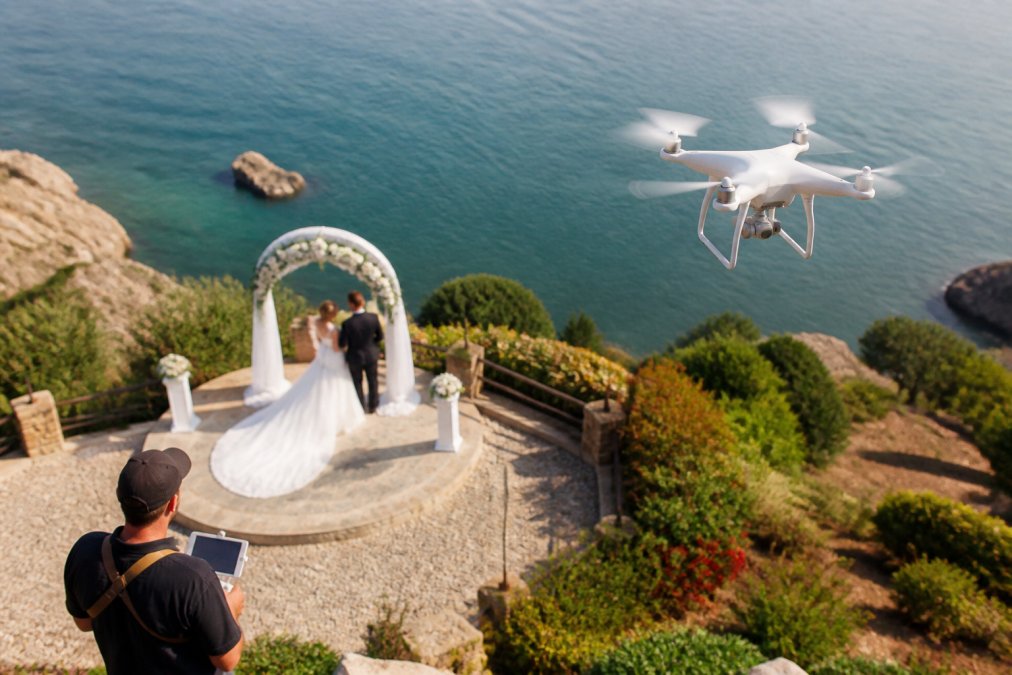
Aerial cinematography has transformed how couples capture their wedding day. What was once a luxury reserved for celebrity events is now accessible to any couple willing to invest in professional drone services for weddings.
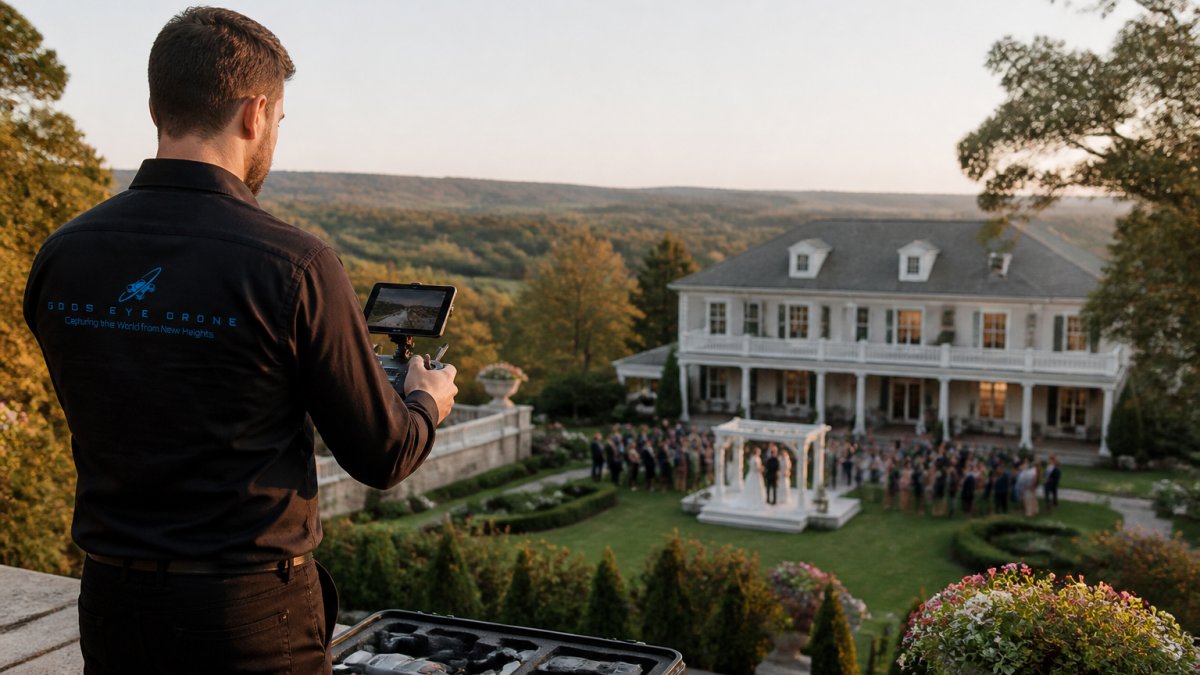
Ground-level videography captures emotion and detail. Aerial footage captures context and scale. A drone shot of your venue reveals the landscape, guest arrangement, and relationship between ceremony and reception spaces. When integrated thoughtfully into your film, these perspectives create a cinematic quality that separates professional wedding films from amateur footage.
Gods Eye Drone has worked with couples across the Kansas City region to understand what aerial coverage actually delivers. The best drone footage feels like a natural part of your story, revealing details about your venue and the day that ground-level cameras simply cannot capture.
The investment in professional aerial coverage depends on your venue, your videographer's experience, and your vision for the final film. Understanding these distinctions upfront helps you make an informed decision about whether drone services for weddings makes sense for your event.
Understanding FAA Part 107 Certification Requirements
If you're hiring a professional drone pilot, your pilot must hold an FAA Part 107 commercial drone license. This is not optional and not negotiable. The Federal Aviation Administration requires any operator flying a drone for commercial purposes, including wedding videography, to pass a knowledge test, demonstrate flight proficiency, and maintain current certification.
What Part 107 Means for Your Drone Pilot
FAA Part 107 certification establishes the legal framework for commercial drone operation in the United States. A certified pilot has demonstrated knowledge of airspace regulations, weather limitations, emergency procedures, and the specific rules governing where and how drones can legally fly.
For your wedding specifically, Part 107 certification means your pilot understands the restrictions that apply to your venue. Many outdoor wedding locations fall within controlled airspace, require airspace clearance, or have altitude limitations. Your pilot's certification ensures they know how to navigate these requirements and obtain necessary authorizations before your wedding day.
The certification process includes passing the FAA's Unmanned Aircraft General Knowledge Test, which covers airspace classification, weather interpretation, flight restrictions, and safety protocols. Pilots must renew their certification every 24 months. When you hire a professional, ask to see their current Part 107 certificate. Gods Eye Drone maintains current Part 107 certification for all pilots on staff.
Insurance and Liability Coverage
Professional drone operators carry liability insurance that covers property damage and bodily injury claims. Standard commercial drone insurance typically covers $1 million in liability. When vetting a drone pilot, ask about their insurance coverage limits and request a certificate of insurance before booking.
Your own wedding liability insurance may or may not cover drone operations. Check with your event insurance provider before hiring a drone pilot, as some policies exclude aerial operations or require additional riders.
Key Questions to Ask Wedding Drone Pilots
Before you book a drone pilot, you need answers to specific questions about their experience, equipment, and how they handle the logistics of your event.
Portfolio and Experience Questions
Ask to see examples of drone footage from other weddings. Look for consistency in image quality, smooth gimbal stabilization, and creative composition. A pilot with 50+ wedding projects has encountered most scenarios and demonstrated adaptability.
Ask about their equipment. Professional wedding drone pilots typically use DJI Mavic or Air series drones, which offer high-resolution 4K recording, gimbal stabilization, and reliable flight performance. Request references from couples who hired the pilot in the past year and ask specifically about on-time delivery, footage quality, and how the pilot handled unexpected challenges.
Logistics and Delivery Questions
Ask about the pilot's delivery timeline. How long after your wedding will you receive the raw footage? How long until the final edited video is ready? A typical timeline runs 2-4 weeks for final delivery.
Clarify what's included in the deliverables. Do you receive raw footage files, edited highlights, or both? Ask about file formats and resolution. Professional wedding drone footage should be delivered in 4K (3840 x 2160) at minimum, in standard formats like ProRes or H.264.
Discuss contingencies: What happens if weather prevents the drone flight on your wedding day? Most professional pilots offer a reschedule option for a future date or partial refunds if flights are impossible.
Average Cost of Wedding Drone Videography
Drone services for weddings vary in cost based on flight duration, editing complexity, and the pilot's experience level. A basic drone package with one to two hours of flight time and edited highlights reflects professional videography services. More comprehensive packages with extended flight time, multiple angles, and integration with your primary videographer's footage command higher prices.
When evaluating cost, consider what you're paying for: the pilot's certification and insurance, equipment investment, flight planning and venue coordination, editing time, and experience. A cheaper quote often reflects less experience or simpler editing. Gods Eye Drone provides custom quotes based on your specific event needs, including venue size, airspace clearance complexity, flight hours required, and post-production editing level.
Venue Restrictions and Legal Clearance
Not every wedding venue allows drone flights. Some restrictions are regulatory; others are imposed by the venue itself.
Regulatory restrictions come from the FAA. If your venue falls within controlled airspace, your pilot must obtain airspace clearance before the wedding through a LAANC (Low Altitude Authorization and Notification Capability) request, typically taking 24-48 hours. Some airspace is permanently restricted and cannot be cleared for drone operations.
Venue-specific restrictions are imposed by the property owner or event coordinator. Some venues prohibit drones entirely due to liability concerns, noise, or guest privacy. Others require advance notice, proof of insurance, or a separate permit.
Before you hire a drone pilot, contact your venue directly and ask about their drone policy in writing. Provide this information to your pilot so they can assess feasibility and determine what clearances are required.
FAA Part 107 limits drone flight to 400 feet above ground level in most scenarios. Some venues have additional restrictions. Your pilot should understand these constraints and work within them.
How to Choose a Professional Drone Pilot
Selecting a drone pilot requires evaluating their credentials, experience, and fit with your vision for your wedding film.
Evaluating Experience and Track Record
Start by checking whether the pilot holds current FAA Part 107 certification. Ask to see their certificate and verify the expiration date. Review their portfolio in detail, looking for smooth gimbal work, good exposure control across different lighting conditions, and creative framing that complements ground-level videography.
Check online reviews on Google, wedding planning sites, and referral networks. Look for patterns in feedback about reliability and quality. Ask about the pilot's experience with your specific venue type. A pilot who has worked at similar locations understands the specific challenges your venue presents.
Weather Contingency and Safety Protocols
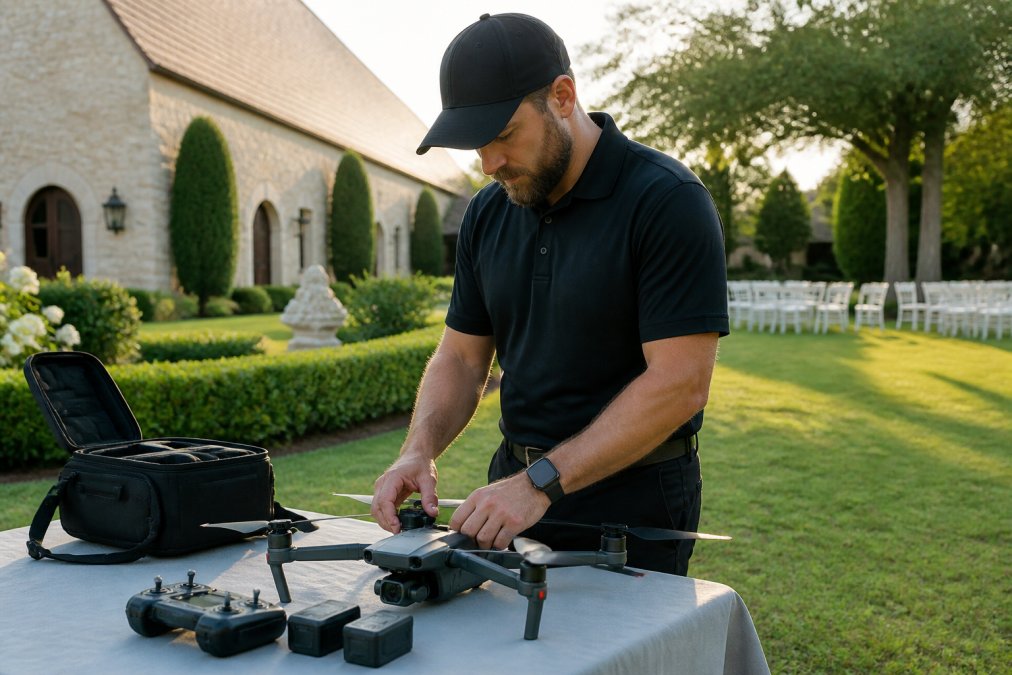
Ask the pilot how they handle weather challenges. Wind is the primary limitation for drone flight. Most professional drones can operate safely in winds up to 25-30 mph, but gusty conditions can make flight risky. A professional pilot will monitor weather forecasts and make a call 24-48 hours before your wedding about whether conditions are safe for flight.
Ask what happens if weather prevents the flight on your wedding day. Do they offer a reschedule option? A partial refund? The best pilots build flexibility into their contracts.
Discuss safety protocols. How does the pilot manage the drone during the ceremony? How do they coordinate with your venue coordinator and primary videographer to ensure the drone doesn't interfere with photography or guest experience? Ask about backup equipment in case the drone malfunctions during your wedding.
Booking Your Drone Services: A Step-by-Step Process
Hiring a drone pilot involves several distinct steps that ensure you've vetted the pilot thoroughly and have clear agreements in place before your wedding day.
Step 1: Research and Shortlist Pilots
Start by identifying drone pilots who serve your area and have experience with wedding events. Search online for "wedding drone pilot [your city]" or ask your primary videographer for referrals. Review the portfolios of 3-5 pilots and eliminate anyone whose work doesn't meet your standards or whose experience seems insufficient.
Step 2: Request Quotes and Review Packages
Contact your shortlisted pilots and request detailed quotes. Provide information about your wedding date, venue, ceremony and reception duration, and the type of coverage you want. Compare what each pilot includes in their package and clarify whether there are additional fees for airspace clearance, venue coordination, or extended editing.
Step 3: Verify Credentials and Insurance
Before moving forward with any pilot, request proof of current FAA Part 107 certification and liability insurance. Ask for a certificate of insurance and verify the coverage limits. A professional operator will provide these documents without hesitation.
Step 4: Confirm Venue Clearance and Flight Plans
Share your venue information with the pilot and ask them to assess feasibility. Contact your venue coordinator directly and confirm their drone policy. The pilot should file any necessary airspace clearance requests 24-48 hours before your wedding.
Step 5: Finalize Contract and Payment Terms
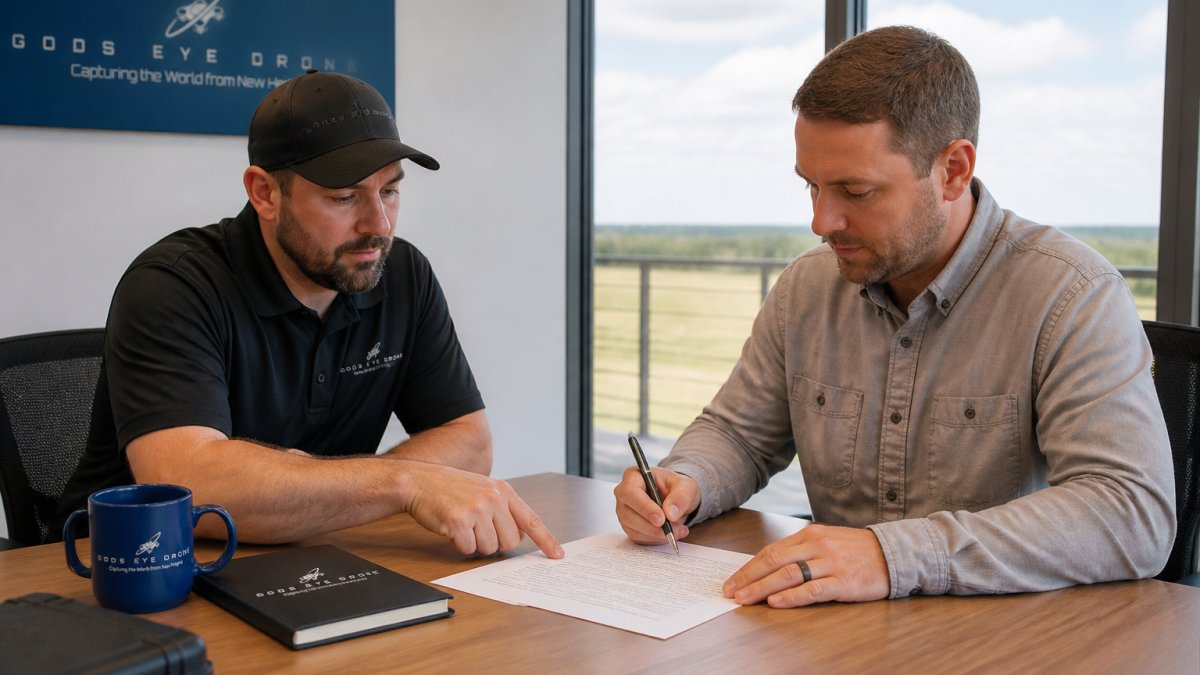
Sign a detailed contract that specifies the scope of work, deliverables, timeline, payment terms, and contingencies. The contract should include flight duration and specific coverage, deliverables and file formats, delivery timeline, weather contingencies, cancellation terms, liability and insurance information, and payment schedule.
A professional pilot will provide a contract. Review it carefully and ask questions about any terms you don't understand. Typically, pilots request a deposit (25-50% of the total cost) to secure your date, with the remainder due before the wedding or shortly after.
Integration with Your Primary Photographer
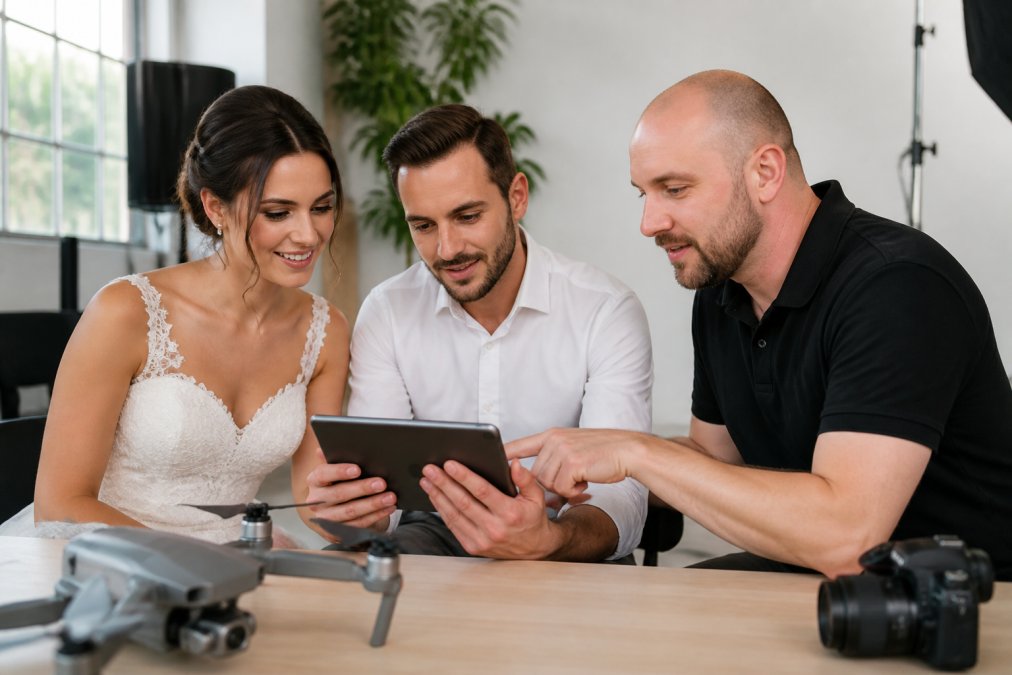
Your drone pilot works best when coordinated with your primary videographer and photographer. Clear communication between these professionals prevents overlapping coverage, ensures consistent editing style, and creates a cohesive final product.
Before your wedding, the drone pilot and your primary videographer should discuss the overall vision for your film. What role will drone footage play? How will it be integrated into the editing workflow?
Discuss logistics on the wedding day. When will the drone pilot position themselves? How will they communicate with the videographer and photographer to avoid interference?
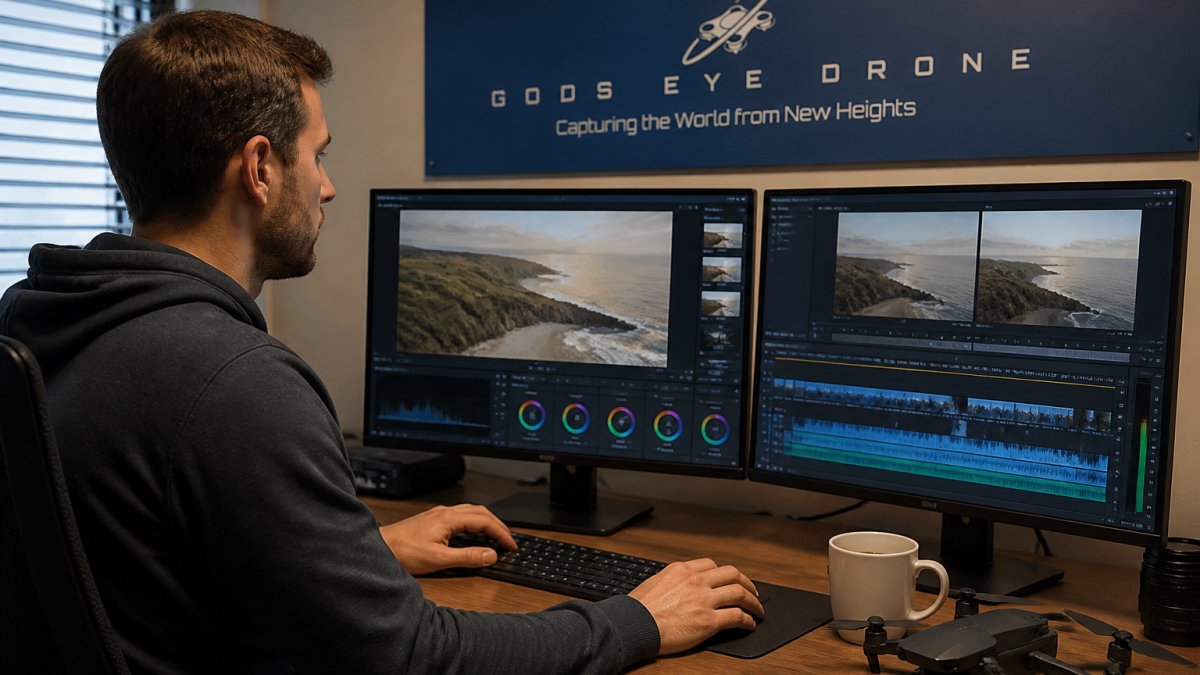
After the wedding, the drone pilot should deliver footage in formats that your videographer can easily incorporate into the final edit. Clarify these technical details in advance so the final product comes together without delays.
Gods Eye Drone works regularly with primary videographers across the Kansas City region and understands the importance of seamless collaboration. The team coordinates timing, shares footage in compatible formats, and maintains communication throughout the process to ensure the final film reflects a unified vision.
Hiring a professional drone pilot transforms your wedding film from good to exceptional. The aerial perspective reveals details about your venue and your day that ground-level cameras cannot capture. The investment only pays off when you hire a pilot with current FAA Part 107 certification, professional-grade equipment, proven experience, and clear communication about what's possible at your venue. Gods Eye Drone delivers all of these elements, combining certified expertise with state-of-the-art technology and a commitment to understanding your specific vision for your wedding day. Book a consultation with the Gods Eye Drone team to discuss your wedding coverage and receive a custom quote based on your venue, timeline, and creative goals.
Frequently Asked Questions
What FAA certifications should a professional wedding drone pilot have?
Your drone pilot must hold an FAA Part 107 Remote Pilot Certificate, which requires passing a knowledge test and demonstrating flight proficiency. Part 107 certification ensures the pilot understands airspace regulations, safety protocols, and operational limits. Verify the pilot's certificate through the FAA's database. Additionally, confirm they carry commercial liability insurance specifically covering drone operations, which protects you in case of accidents or property damage during your wedding.
How much does it typically cost to hire drone services for a wedding?
Pricing for wedding drone videography varies based on flight time, venue complexity, pilot experience, and deliverable specifications. Costs depend on quantity, dates, and delivery requirements. Contact Gods Eye Drone or other licensed operators for current quotes tailored to your specific wedding. Most professional services include pre-flight planning, airspace research, flight time, and raw or edited footage delivery within your package.
Do I need to check if my wedding venue allows drones?
Yes, absolutely. Many venues have airspace restrictions, insurance requirements, or specific policies against drone flights. Contact your venue directly before booking a drone pilot. Some venues require pilot insurance certificates or written approval from management. Additionally, if your venue is near an airport or restricted airspace, your pilot must file for flight authorization through the FAA's LAANC (Low Altitude Authorization and Notification Capability) system. Always confirm venue clearance before finalizing your drone services contract.
What questions should I ask a wedding drone pilot before hiring?
Ask about their Part 107 certification, insurance coverage, portfolio of wedding events, experience with your specific venue, backup equipment if weather delays the flight, turnaround time for final deliverables, and what happens if conditions prevent flying. Request references from previous couples and clarify whether they provide raw footage, edited video, or both. Confirm their safety protocols, contingency plans for bad weather, and how they integrate with your primary photographer to avoid conflicts or duplicate coverage.
This article was written using GrandRanker