 how-to
Book Professional Aerial Videography Services: A 2026 Guide
Table of Contents
- What to Expect When You Book Professional Aerial Videography Services
- Why FAA Part 107 Certified Drone Pilots Matter for Your Project
- Understanding Drone Videography Pricing Guide and Budget Planning
- Industries and Use Cases for Professional Aerial Videography
- Your Drone Video Production Checklist Before Booking
- How to Vet Professional Aerial Videography Providers
- Timeline, Deliverables, and What Happens After Booking
- Frequently Asked Questions
Last Updated: August 12, 2026
What to Expect When You Book Professional Aerial Videography Services
Booking professional aerial videography services means partnering with trained operators who bring specialized equipment, regulatory expertise, and production experience to your project. When you book professional aerial videography services, you're not just getting a drone in the sky, you're getting a team that understands flight planning, weather contingencies, post-production workflows, and the specific requirements of your industry.
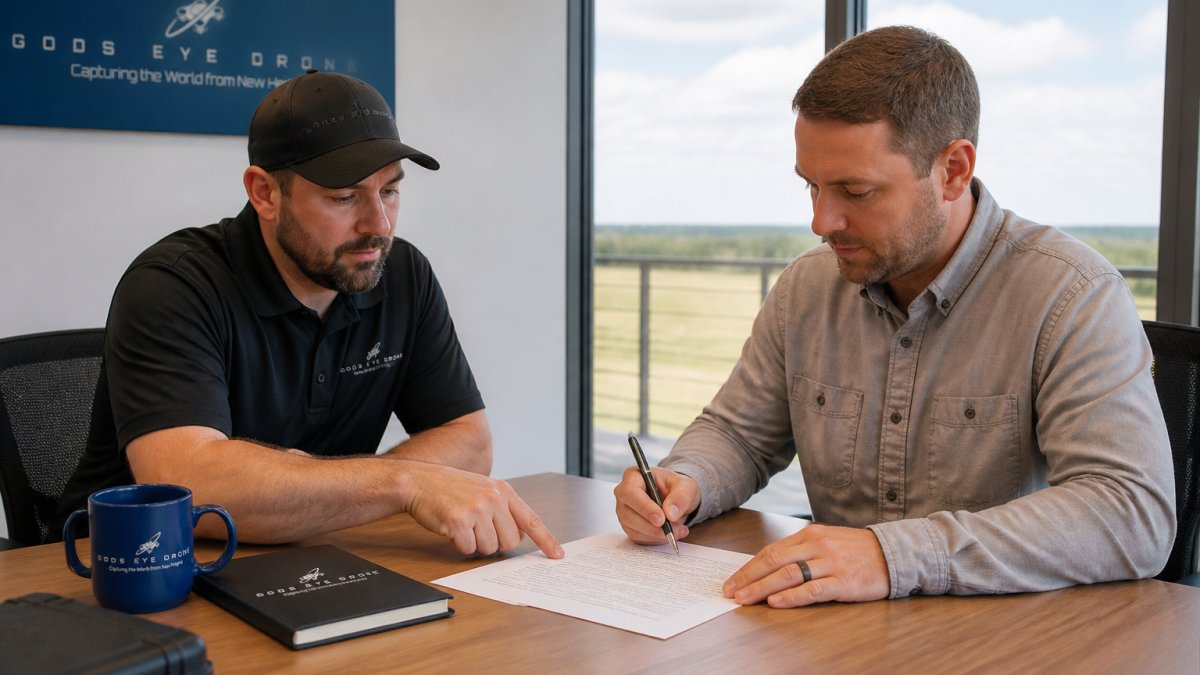
The process typically begins with a consultation where you discuss your project scope, location, timeline, and deliverables. A professional operator will assess airspace restrictions, identify potential permits needed, and outline what weather conditions work best for your shoot. Unlike amateur drone work, professional aerial videography services include site surveys, shot lists, and contingency plans for when conditions don't cooperate.
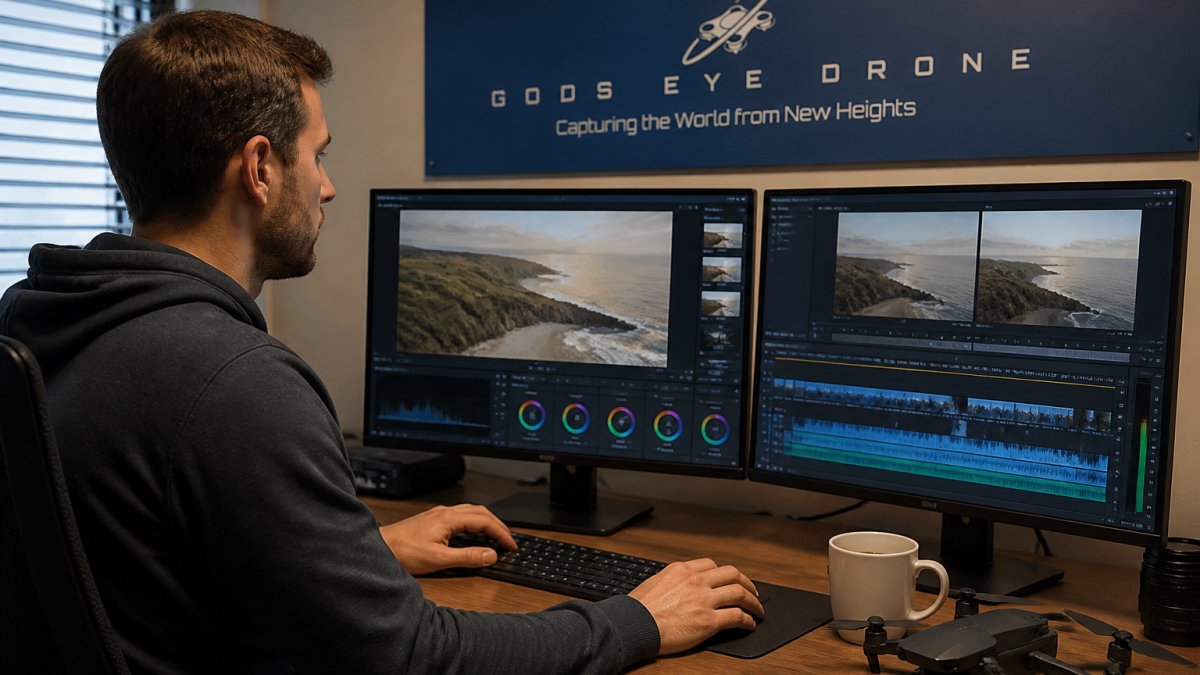
Most projects involve a pre-flight briefing, the actual capture day, and a post-production phase where raw footage gets edited, color-graded, and delivered in your preferred format. The entire timeline depends on project complexity, simple real estate shoots might take a week from booking to delivery, while complex industrial inspections or event coverage could take several weeks.
Gods Eye Drone handles this end-to-end process with certified pilots and state-of-the-art equipment. The team coordinates permits, manages flight operations, and delivers polished final content ready for your marketing, documentation, or broadcast needs.
Why FAA Part 107 Certified Drone Pilots Matter for Your Project
An FAA Part 107 certified drone pilot has passed the knowledge test, demonstrated flight proficiency, and maintains currency with federal regulations. This certification isn't a formality, it directly impacts safety, insurance validity, and your legal protection.
Verifying Pilot Credentials
Before you book professional aerial videography services with any operator, verify their credentials directly. Ask for their Part 107 certificate number and confirm it with the FAA's drone registry. A legitimate pilot will provide this without hesitation.
Request proof of currency, the certificate alone isn't enough if it's expired or suspended. Check whether the pilot holds any waivers, which allow operations beyond standard Part 107 limitations (night flying, flights over people, operations in controlled airspace). Waivers demonstrate advanced capability and regulatory engagement.
Ask about their flight experience hours. While the FAA requires only 55 hours of flight time for initial certification, experienced operators typically log hundreds or thousands of hours. Experience correlates directly with problem-solving ability when conditions get challenging.
Insurance and Liability Coverage
Professional liability insurance is non-negotiable. A legitimate aerial videography services provider carries commercial aviation liability insurance, typically starting at $1 million in coverage. This protects you if equipment fails, causes property damage, or injures someone.
Verify the insurance is active and includes unmanned aircraft operations. Some general liability policies exclude drones entirely. Request a certificate of insurance naming you as an additional insured, this is standard practice and protects both parties.
Ask about their claims history. Operators with clean records and reasonable premium rates indicate they maintain safe practices. If an operator seems evasive about insurance details, that's a red flag.
Understanding Drone Videography Pricing Guide and Budget Planning
Pricing for professional aerial videography services varies widely based on project scope, equipment requirements, location, and timeline. Rather than guessing, understanding what drives costs helps you budget accurately and compare quotes fairly.
What Affects Your Project Cost
Several factors influence the final price. Flight time matters, a 15-minute shoot costs less than a 2-hour event coverage. Equipment selection impacts cost too; a standard 4K camera drone costs less to operate than a cinema-grade system with heavy-lift capability.
Location accessibility affects pricing. A downtown property with airspace restrictions and permit requirements costs more than a remote rural site. Weather delays and rescheduling can add expenses if the operator factors in contingency costs.
Turnaround time influences the quote. Same-day or next-day delivery commands a premium. Standard turnaround (5-10 business days) is more economical. Post-production complexity, basic editing versus color grading, motion graphics, and custom effects, scales the cost significantly.
Getting an Accurate Quote
Provide detailed project information when requesting quotes. Include the location address, project type, specific deliverables (4K video, still photos, 360-degree imagery), preferred timeline, and any special requirements (thermal imaging, 3D mapping, live streaming).
Get quotes from multiple providers to establish market rates. Compare what's included in each quote, some bundle editing, while others charge separately. Ask about revision rounds and whether additional edits cost extra.
Request itemized quotes that break down flight time, equipment, post-production, and any permits or travel fees. This transparency helps you understand where your budget goes and identify where you might adjust scope to fit your needs.
Industries and Use Cases for Professional Aerial Videography
Professional aerial videography services serve diverse industries, each with unique requirements and expectations for the final deliverables.
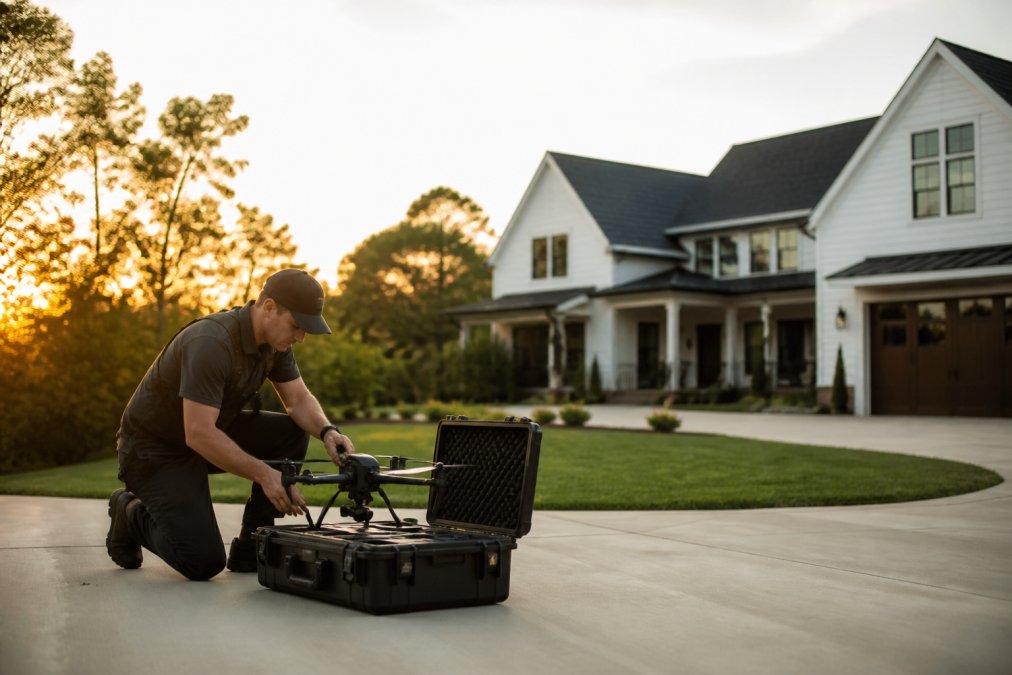
Real Estate and Property Marketing
Real estate agents use aerial videography to showcase property size, lot dimensions, and surrounding neighborhood context. A 60-90 second aerial tour of a home and its grounds dramatically outperforms static photos in online listings. Properties marketed with drone footage sell faster and at higher prices compared to those without.
Commercial real estate benefits from aerial videography too. Office parks, retail centers, and industrial properties need to demonstrate scale, parking, and accessibility. Investors evaluating potential acquisitions use drone footage to assess property condition and site layout without visiting in person.
Construction, Infrastructure, and Inspections
Construction managers use aerial videography for progress documentation, stakeholder updates, and project completion records. Monthly aerial shots create a visual timeline showing project advancement.
Infrastructure inspections, bridges, power lines, cell towers, roofs, become safer and faster with drone imagery. Instead of sending workers to dangerous heights, operators capture high-resolution video and thermal imaging from the air. This reduces risk, speeds inspections, and provides detailed documentation for compliance and insurance.
Events, Weddings, and Special Occasions
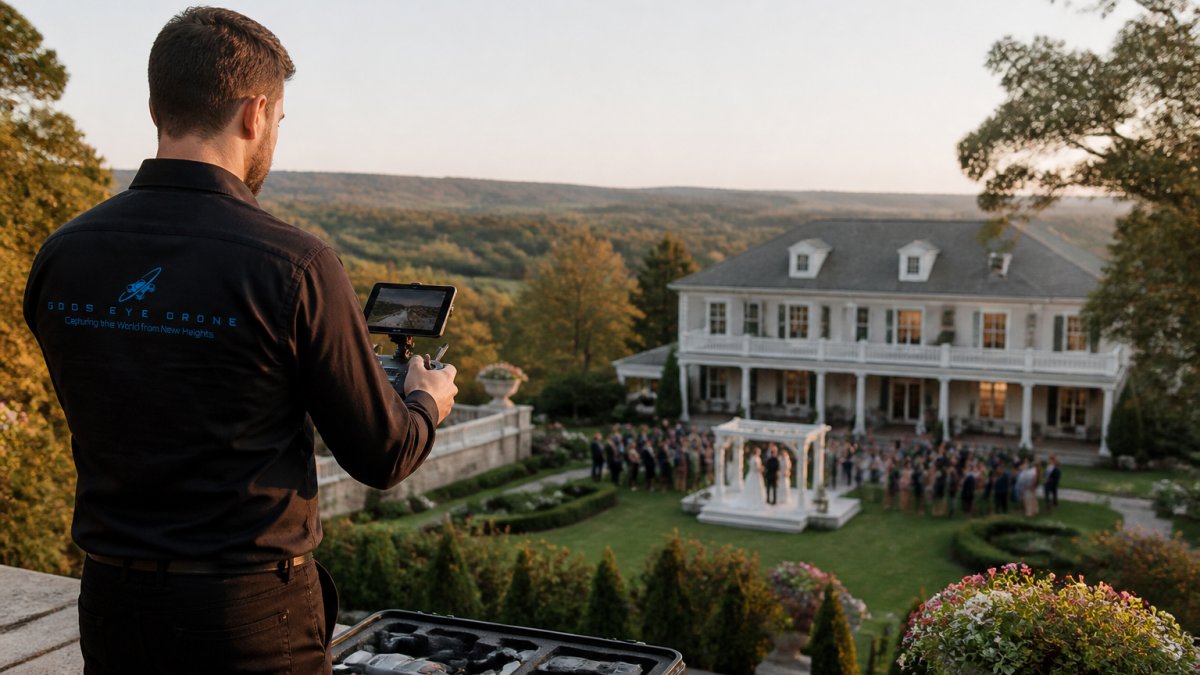
Weddings and events capture cinematic memories from perspectives ground-level cameras can't reach. Drone footage of the ceremony venue, guest arrivals, and reception setup creates compelling highlight videos.
Corporate events, product launches, and conferences use aerial videography to document attendance scale, venue setup, and crowd energy. Live streaming drone feeds to remote attendees expands event reach.
Your Drone Video Production Checklist Before Booking
Preparation determines success. Before you book professional aerial videography services, work through these planning steps to ensure smooth execution and satisfactory results.
Define Your Project Scope and Deliverables
Write down exactly what you need. Are you booking for a single property tour, multi-location coverage, or full-day event filming? Specify video resolution (4K, HD), frame rate, and format (horizontal, vertical, square).
List specific shots you want. "Aerial tour of the property" is vague. "Establishing shot of the home's front elevation, aerial pan around the perimeter, overhead shot of the backyard pool and landscaping" is actionable.
Clarify deliverable format. Do you need raw footage, a edited highlight video, still photos extracted from video, or all three? How many revision rounds are included? What file formats do you need for your intended use?
Verify Permits, Airspace, and Regulatory Compliance
Research local airspace restrictions before booking. Many areas require FAA airspace authorization (LAANC approval) or Part 107 waivers. Some municipalities require local drone permits in addition to federal clearance.
Contact your local airport or heliport if your project site is near controlled airspace. Provide the operator with location details so they can handle necessary authorizations.
Ask the operator what permits they'll secure and what you need to handle. Clear communication here prevents last-minute complications that could delay or cancel your shoot.
Review Portfolio and Ask the Right Questions
Examine the operator's previous work. Do their videos match your vision in terms of style, color grading, and shot composition? Real estate portfolios should show properties similar to yours. Event portfolios should demonstrate smooth camera movement and good audio quality.
Ask specific questions: How do you handle weather delays? What's your backup plan if equipment fails? How many revision rounds are included? Do you own your equipment or rent it? How quickly can you turnaround final deliverables?
Request references from past clients in your industry. A quick call to a previous customer reveals how responsive the operator is, whether they deliver on time, and if the final product met expectations.
How to Vet Professional Aerial Videography Providers
Choosing the right operator is critical. A poor choice results in mediocre footage, missed deadlines, or worse, safety incidents and liability issues.
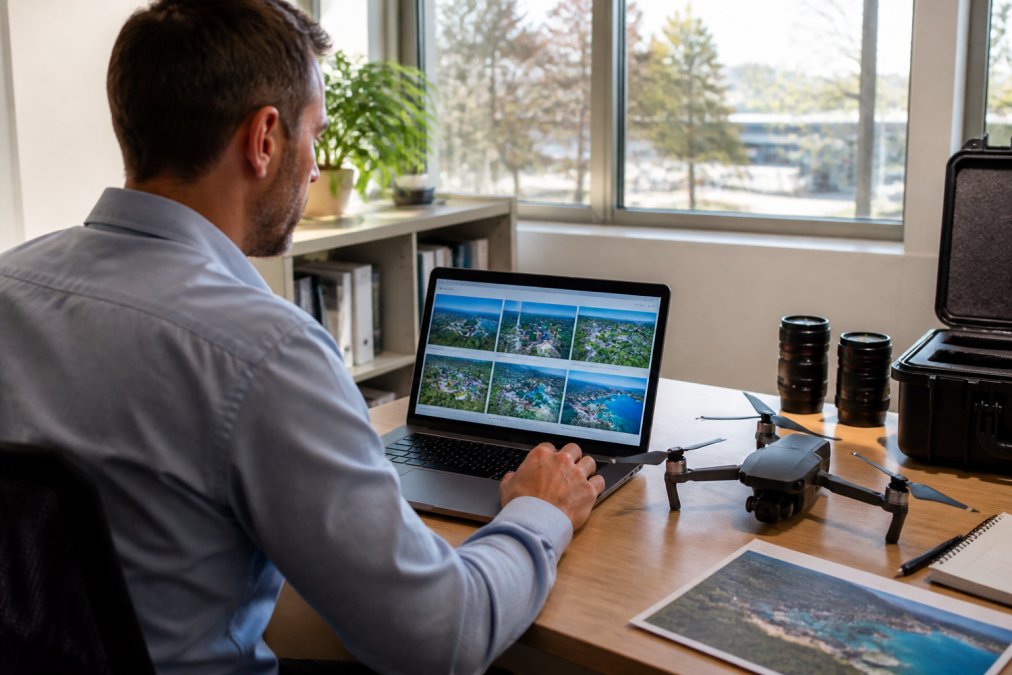
Red Flags to Avoid
Avoid operators without verifiable FAA Part 107 certification. If they won't provide their certificate number or it doesn't check out, move on. This isn't negotiable, federal regulations exist for safety and liability reasons.
Operators who can't provide proof of insurance are a major red flag. Commercial aviation liability insurance is standard for professional work. An operator without it is either uninsured (exposing you to risk) or operating illegally.
Extremely low pricing compared to market rates suggests corners are being cut. Cheap operators might skip site surveys, rush through shoots, or deliver poor-quality post-production. Professional work requires investment in equipment, training, and time.
Operators who seem evasive about safety procedures, weather contingencies, or their experience level are concerning. Legitimate professionals discuss these topics openly because they take them seriously.
Questions to Ask Before Committing
Ask how many projects the operator has completed in your specific industry. Someone with 500 hours of general drone flying might have limited experience with real estate, construction inspections, or event coverage.
Inquire about their equipment. What drone models do they use? What camera systems? Do they have backup equipment if primary gear fails? Advanced operators invest in quality equipment and maintain redundancy.
Ask about their post-production process. Do they color-grade footage? Add music and titles? How many revision rounds are included before additional fees apply?
Request their cancellation and rescheduling policy. What happens if weather prevents the shoot? Can you reschedule at no additional cost, or do you forfeit payment?
Ask for at least two references from recent projects similar to yours. Contact those clients and ask about responsiveness, professionalism, and whether the final product met expectations.
Timeline, Deliverables, and What Happens After Booking
Understanding the complete timeline from booking through delivery sets realistic expectations and prevents frustration.
After you book professional aerial videography services, expect an initial consultation call to confirm details, discuss any special requirements, and establish a shoot date. The operator will confirm location access, parking for equipment vehicles, and any site-specific restrictions.
The day before the shoot, the operator will conduct a final weather check and confirm the shoot is still scheduled. On shoot day, arrive early to meet the team, review the shot list, and address any last-minute questions.
Post-production typically takes 5-10 business days for standard editing. Complex projects with extensive color grading, motion graphics, or custom effects take longer. Rush delivery is available at premium rates.
Final deliverables include edited video files in your requested formats, color-corrected and ready for use. Some operators provide cloud storage links for download; others deliver via USB drive or file transfer service.
Most professional operators offer a revision period, typically one or two rounds of changes at no additional cost. Additional revisions beyond that incur extra fees.
Booking professional aerial videography services transforms how you showcase properties, document projects, and capture events. The difference between amateur drone footage and professional work shows immediately, in image quality, color grading, smooth camera movement, and polished final delivery.
Gods Eye Drone brings veteran expertise, state-of-the-art FLIR equipment, and certified pilots to every project. Whether you need real estate marketing footage, construction progress documentation, or cinematic event coverage, the team delivers precise aerial intelligence and high-quality videography that drives results. Book Now to discuss your project requirements and get an accurate quote for professional aerial videography services tailored to your specific needs.
Frequently Asked Questions
What certifications should a professional aerial videography provider have?
A professional aerial videography provider should hold FAA Part 107 certification, which requires passing a knowledge test and demonstrating competency in drone operations. Beyond this, verify they carry commercial liability insurance (typically $1 million minimum), maintain current drone registration, and have additional waivers if they operate near people or at night. Ask for proof of credentials and check the FAA's airman registry online. Certified operators understand airspace restrictions, weather limits, and safety protocols that protect your project and ensure legal compliance.
How much should I budget for professional aerial videography services?
Pricing for aerial videography depends on several factors: project scope, location, footage duration, post-production complexity, and whether permits are required. A simple real estate property shoot may cost less than a multi-day commercial production or infrastructure inspection. Contact providers directly for quotes tailored to your needs. When comparing pricing, factor in the provider's experience, equipment quality (4K capability, FLIR thermal imaging, etc.), insurance coverage, and turnaround time. The cheapest option often means fewer deliverables or less experienced pilots.
How do I verify if a drone operator is FAA Part 107 certified?
You can verify FAA Part 107 certification through the FAA's Airman Certification Search at faa.gov. Ask the provider for their certificate number or pilot name and check it directly. A legitimate operator will provide this information without hesitation. Also request proof of commercial liability insurance, drone registration, and any special waivers (for night operations, flights over people, etc.). Certified pilots have demonstrated knowledge of airspace rules, safety procedures, and weather limitations required for professional commercial operations.
How long does it take from booking to receiving final aerial videography footage?
Turnaround time varies based on project complexity and post-production needs. Simple shoots may deliver edited footage in 3-7 business days, while complex projects with extensive color grading, motion graphics, or multiple locations may take 2-4 weeks. Discuss timelines upfront and confirm in writing. Weather delays can extend schedules, so book with buffer time before your deadline. Many providers offer expedited delivery for rush projects, though this may increase cost. Ask about their typical workflow and whether they provide raw footage preview while editing occurs.
This article was written using GrandRanker