 ultimate-guide
Cost-Benefit Analysis of Commercial Drone Services
Table of Contents
- Understanding the Economics of Commercial Drone Services
- Capital and Startup Costs for Drone Programs
- Recurring Operational Expenses and Hidden Costs
- Drone Services Pricing Models and Revenue Potential
- In-House Drone Program vs. Outsourcing: A Cost Comparison
- ROI of Drone Inspections Across Industries
- Calculating Your Break-Even Point and Financial Payback
- Frequently Asked Questions
Last Updated: August 28, 2026
Understanding the Economics of Commercial Drone Services
The cost-benefit analysis of commercial drone services is essential for businesses evaluating whether to invest in drone technology or contract with service providers. The complexity lies not just in upfront equipment costs, but in hidden operational expenses, regulatory requirements, and how dramatically ROI varies across industries.
At Gods Eye Drone, we've worked with real estate agents, agricultural managers, construction firms, and emergency response teams, and we've seen firsthand how drastically ROI varies depending on use case, operational model, and how thoroughly you account for all expenses. The fundamental question isn't "Are drones worth it?" but "Are drones worth it for my specific situation?"
Federal Aviation Administration Part 107 regulations govern commercial drone operations in the United States, and compliance costs, certification, insurance, and airspace management factor directly into your financial model.
Capital and Startup Costs for Drone Programs
Starting an in-house drone program requires significant upfront capital. A professional-grade drone system typically runs between $5,000 and $25,000 (faa.gov). Add a backup drone, and you're already past $40,000 before hiring a pilot or purchasing processing software.
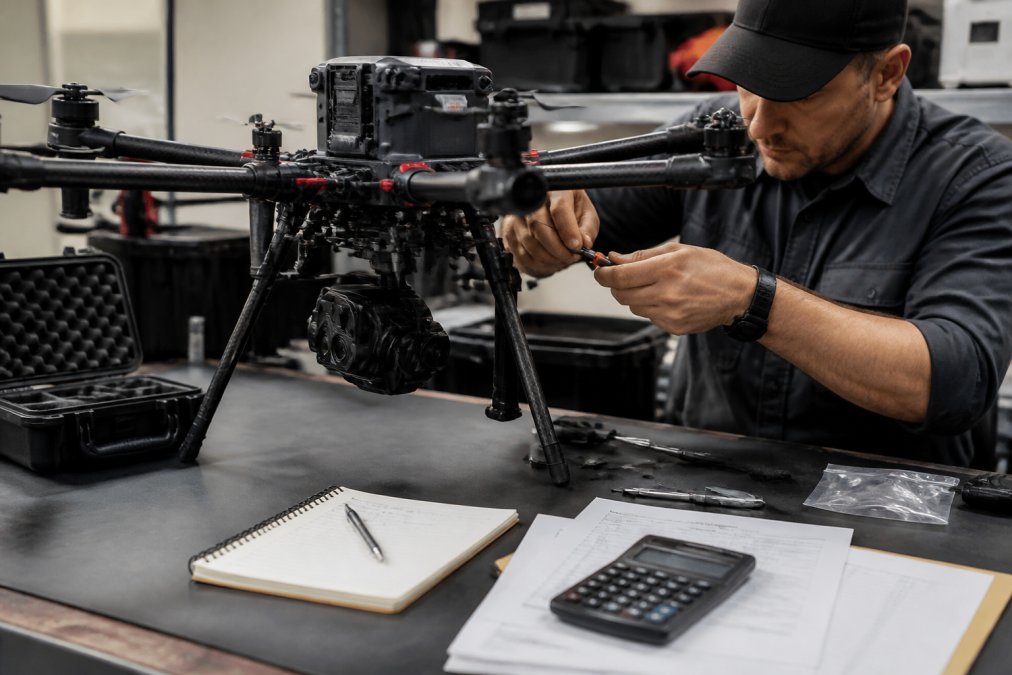
Pilot certification requires passing the FAA Part 107 knowledge test and practical exam, roughly $200-$500 in direct costs. If hiring certified pilots rather than training existing staff, expect to pay 15-20% more in salary for that credential.
Professional photogrammetry software like PIX4Dmapper costs around $3,500 annually. Cloud-based platforms like DroneDeploy run approximately $329 monthly when billed annually. Fleet management software adds another $120-$240 per drone per year. Total software budget easily reaches $5,000-$10,000 annually.
Commercial drone liability insurance typically costs $500-$2,000 annually depending on operation scope. Most commercial operators maintain at least one backup unit to prevent costly project delays.
The true capital expenditure for a functional in-house program rarely falls below $50,000 in year one, and often exceeds $100,000 when including all equipment, software, insurance, and training.
Recurring Operational Expenses and Hidden Costs
Capital costs are just the entry point. Operational expenses are where most businesses underestimate true program costs.
Battery replacement is the most underestimated recurring expense. Professional drone batteries cost $200-$500 each and degrade with every charge cycle. Most commercial operations need 3-4 backup batteries, requiring replacement every 18-24 months at $1,500-$2,000 annually.
Maintenance and repairs compound quickly. Propellers wear out ($50-$150 per set), gimbals require calibration or replacement ($300-$1,500), and sensors drift. Expect annual maintenance costs of $2,000-$5,000 depending on flight hours and environmental conditions.
Hidden costs many operators miss include downtime during equipment failure (lost revenue while equipment is in the shop), regulatory compliance overhead (airspace authorization and potential waiver consultation fees), data storage and security ($100-$500 monthly), and staff training and certification renewal.
For most in-house operations, total recurring operational expenses run $8,000-$20,000 annually. This is where many business cases fall apart.
Drone Services Pricing Models and Revenue Potential
Understanding how commercial drone services generate revenue helps evaluate whether an in-house program makes financial sense.
Hourly billing typically ranges from $150-$500 per hour depending on operator experience, equipment quality, and geographic market.
Project-based pricing ties cost to deliverables. Commercial real estate photography packages might be priced at $1,500-$3,500. Agricultural multispectral crop analysis covering 500 acres could run $2,000-$5,000.
Subscription or retainer models work for recurring needs. Construction companies might contract for weekly site documentation at $1,500-$2,500 monthly. Agricultural operations might retainer services at $2,000-$4,000 monthly during growing season.
Data processing and analysis add premium pricing. Processed orthomosaics, 3D models, thermal analysis, or multispectral indices command higher fees than raw footage.
Revenue potential depends on use rate and specialization. A drone operator flying 200 billable hours annually at $300/hour generates $60,000 in revenue. Specialization in thermal imaging, multispectral analysis, or precise measurement commands premium pricing and higher margins than commodity aerial photography.
In-House Drone Program vs. Outsourcing: A Cost Comparison
The decision between building an in-house program and outsourcing hinges on volume, specialization, and hidden costs.
| Factor | In-House Program | Outsourced Service |
|---|---|---|
| Initial Capital | $50,000-$150,000 | $0 |
| Annual Operational | $8,000-$20,000 | $0 |
| Per-Project Cost | $50-$200 (variable) | $300-$600 (fixed) |
| Use Requirement | 200+ billable hours/year | No minimum |
| Flexibility | High (on-demand) | Scheduled (1-3 days notice) |
| Quality Control | Dependent on staff | Vendor-dependent |
| Specialization | Limited to your capabilities | Access to specialized equipment |
| Scalability | Limited by staff | Unlimited |
When in-house makes sense: High-volume operations with consistent demand. A construction company conducting weekly site surveys, an agricultural operation monitoring multiple fields seasonally, or a real estate firm listing 50+ properties monthly can justify fixed costs through use. Breakeven typically occurs around 300-400 billable hours annually.
When outsourcing makes sense: Irregular or specialized demand. A real estate agent with 15-20 listings monthly doesn't generate enough volume to justify $15,000+ in annual overhead. An emergency response team needing occasional thermal imaging can't amortize equipment costs. Outsourcing transfers risk, equipment failure, regulatory compliance, insurance liability, and staff training become the service provider's responsibility.
Gods Eye Drone operates as a specialized outsourced provider, giving clients access to state-of-the-art FLIR thermal imaging equipment, certified pilots, and data processing expertise without building that infrastructure internally.
ROI of Drone Inspections Across Industries
Return on investment varies dramatically across industries based on how drones reduce costs or improve decision-making.
Real estate and property development: Drone photography increases listing appeal and reduces time-on-market. Properties with drone photography can sell faster, potentially reducing carrying costs. For a $500,000 property where every month on market costs $4,000, reducing time-to-sale by 30 days saves $4,000. A $400 drone photography service pays for itself immediately.
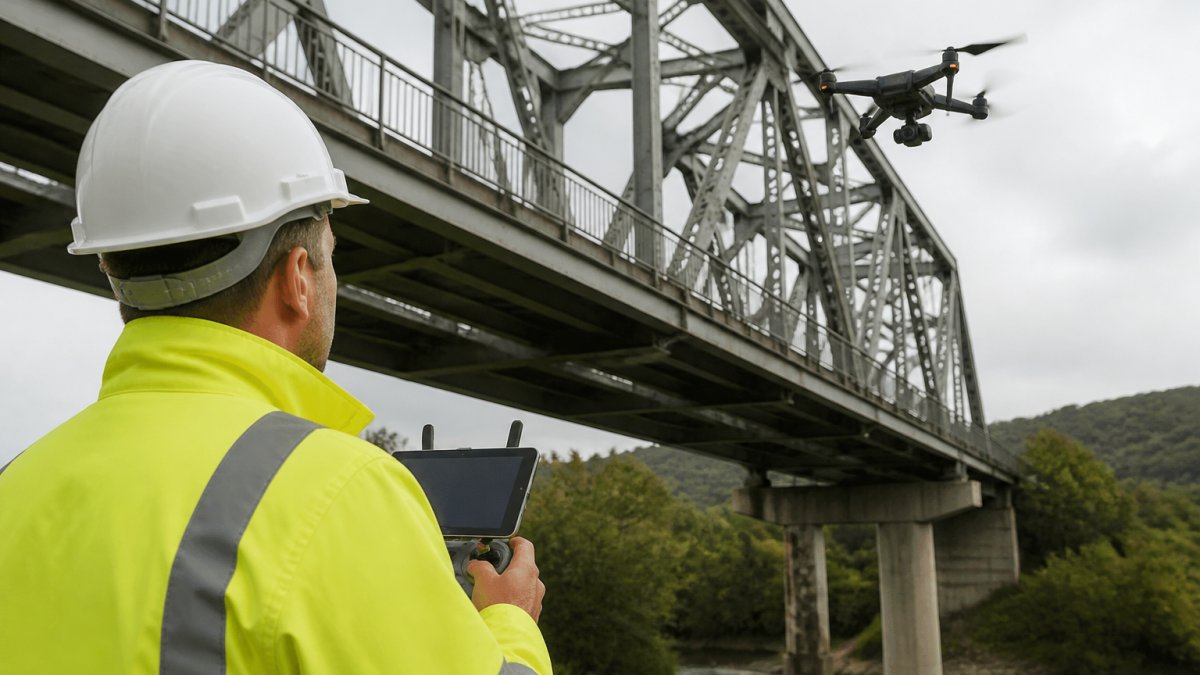
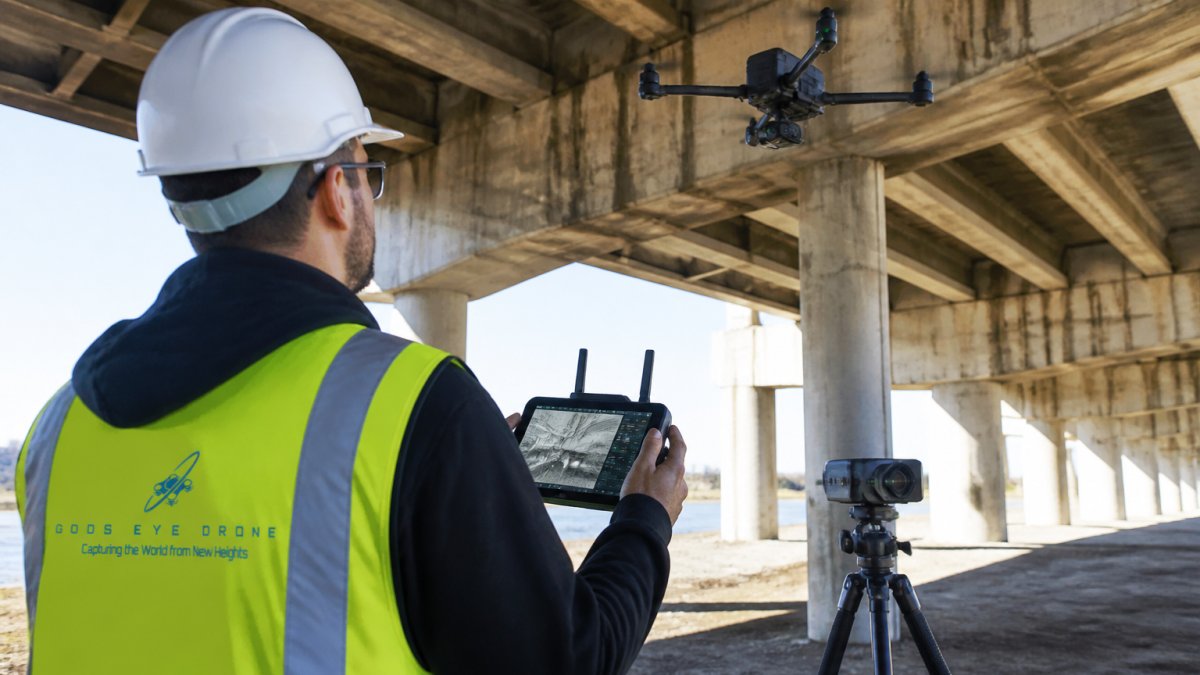
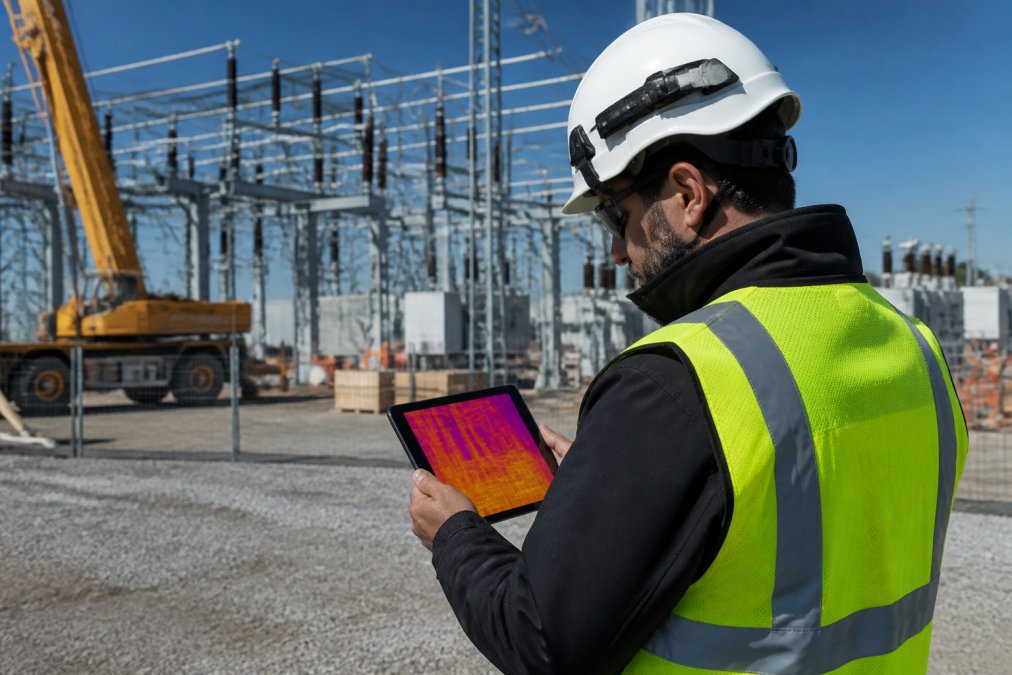
Construction and infrastructure: Drone inspections reduce safety risks and project delays. Traditional bridge inspections require scaffolding and traffic control costing $50,000-$150,000 per inspection. Drone-based thermal and visual inspection can eliminate these costs and reduce project timeline.
Agriculture: Multispectral crop monitoring detects irrigation issues, pest pressure, and nutrient deficiencies before they become catastrophic. USDA research on precision agriculture ROI demonstrates that farms using multispectral monitoring can reduce input costs while maintaining or improving yields. For a 500-acre operation spending $150 per acre on inputs, a 12% reduction saves $9,000 annually. Regular multispectral drone analysis costs $2,000-$4,000 annually, generating 2-4x return.
Emergency response and search and rescue: Thermal imaging dramatically reduces search time for missing persons. Thermal drone imaging covers 100+ acres per hour and detects body heat through vegetation and darkness, reducing resource deployment and risk to rescue personnel.
Calculating Your Break-Even Point and Financial Payback
Break-even analysis requires honest accounting of all capital and operational costs against realistic revenue projections.
Step 1: Calculate total first-year investment
- Equipment (drone, backup, accessories): $40,000-$60,000
- Software licenses (annual): $4,000-$8,000
- Certification and training: $2,000-$3,000
- Insurance: $1,000-$2,000
- Contingency (15%): $9,000-$13,000
- Total Year 1: $56,000-$86,000
Step 2: Project annual revenue
- Estimate billable hours per month (realistic: 15-25 hours)
- Multiply by average project rate ($250-$400/hour)
- Example: 20 hours/month × $300/hour = $72,000/year
Step 3: Calculate annual operational costs (Year 2+)
- Battery replacement: $1,500-$2,000
- Maintenance and repairs: $2,000-$4,000
- Software licenses: $4,000-$8,000
- Insurance: $1,000-$2,000
- Storage and overhead: $3,000-$6,000
- Total Annual Operational: $11,500-$22,000
Step 4: Determine payback period
- Year 1 net: $72,000 revenue - $86,000 investment = -$14,000
- Year 2 net: $72,000 revenue - $16,500 operational = +$55,500
- Breakeven: approximately 2.5 years
This assumes consistent 20 billable hours monthly. Weather delays, seasonal demand, and equipment downtime reduce actual use. Stress-test your assumptions: What if use is 30% lower? What if equipment costs run 50% higher?
For many businesses, this analysis reveals that outsourcing makes more financial sense than in-house operations. A business generating $72,000 in annual drone service demand might pay $40,000-$50,000 annually for outsourced services, eliminating the $86,000 initial investment and $16,500 annual overhead.
The cost-benefit analysis of commercial drone services requires honest accounting of capital expenditure, recurring operational expenses, and realistic revenue projections specific to your industry. For most businesses, the financial case for in-house programs is weaker than it initially appears.
Gods Eye Drone provides access to state-of-the-art thermal imaging equipment, certified pilots, and specialized data processing without requiring your business to build that infrastructure. Whether you're managing real estate portfolios, conducting infrastructure inspections, monitoring agricultural assets, or supporting emergency response operations, outsourcing drone services eliminates capital risk while delivering specialized expertise. Book Now to discuss your specific project needs and receive a customized cost analysis for your situation.
Frequently Asked Questions
How do you calculate the ROI of commercial drone services?
ROI is calculated by comparing total investment (equipment, certification, insurance, software) against revenue generated or costs saved. For inspection services, measure labor hours saved and safety improvements. For real estate or agriculture, track revenue per project and job volume. Break-even analysis shows how many months until cumulative profit exceeds startup costs. Tools like the ChartAtlas Drone Business ROI Calculator help model scenarios based on expected job pricing, monthly volume, and operational expenses over 12 months or longer.
What are the hidden costs of managing an in-house drone program?
Beyond hardware and software, hidden costs include pilot certification and recertification, FAA compliance and airspace permits, liability insurance, equipment maintenance and repairs, battery replacement cycles, data processing software subscriptions, weather-related project delays, and downtime due to equipment failures. Predictive maintenance platforms like Airdata UAV can help identify issues before they cause costly failures. Many businesses underestimate the time and expense of regulatory compliance and ongoing pilot training, which significantly impact unit economics.
Is it more cost-effective to hire a drone service or buy equipment?
For businesses with sporadic needs (15-20 projects monthly), outsourcing to a professional drone service typically costs less than owning equipment. Ownership makes sense when you have consistent, high-volume demand that justifies capital expenditure, hardware depreciation, and recurring operational expenses. Consider your project frequency, required expertise, and timeline. Professional services eliminate upfront costs and maintenance risk; in-house programs offer long-term scalability and data control. Many hybrid approaches, outsourcing routine work while maintaining internal capabilities for specialized projects, balance cost efficiency with operational control.
What factors influence the pricing of commercial drone services?
Pricing depends on flight hours required, payload complexity (thermal imaging, LiDAR, multispectral sensors), data processing and deliverable type, project location and airspace restrictions, regulatory compliance requirements, equipment specifications, and pilot certification level. Real estate photography differs from infrastructure inspection, which differs from search and rescue thermal imaging. Rush timelines, difficult weather conditions, and specialized equipment increase costs. Professional operators factor in insurance, fuel, maintenance, and labor into hourly or project rates. Request a detailed quote that breaks down equipment, flight time, processing, and deliverables.
This article was written using GrandRanker